


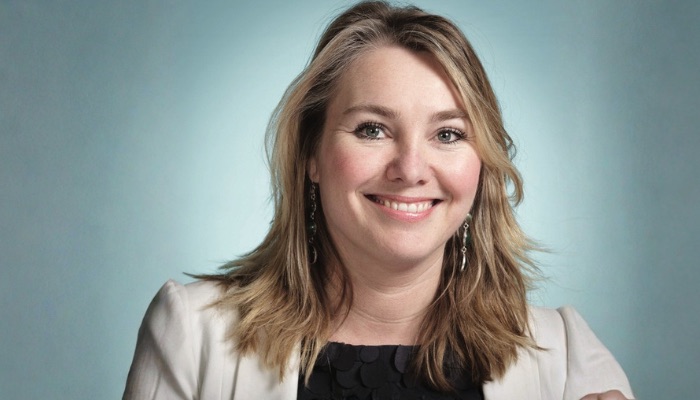
Caspian Energy (CE): Ms. Schultz, looking back on the results of 2012 which achievements of your department are you proudest of?
Melanie Schultz van Haegen-Maas Geesteranus, Minister of Infrastructure and the Environment, the Netherlands: “First of all, I look back on a very fruitful visit to Azerbaijan, last march. I was impressed by both the speed of economic development and the eagerness to improve safety policies, for example in flood protection and water management.
As for the achievements of my department, I think of the work we started to optimize the use of our infrastructure. I’m happy we were able to add 600 kms of driving lanes to our highway network over the last years. But The Netherlands is a small country and we need to use the limited space we have as efficiently as possible. We therefore need to spread our commuting hours across the entire day and not just limit travel to the morning and evening. This of course requires the cooperation of local authorities, employers and employees.
Secondly, we increased the maximum speed to 130 kilometres per hour on our highways. This is an important measure as it greatly influences the driver’s experience and increases fluidity on our roads.
Third achievement I’m rather proud of is that we managed to come to a decision on the development of one of our most important business districts, the so-called ZuidAs (‘Southern Axis’) in Amsterdam. This district happens to be a transport hub of great importance as well. Which is why we’re going to improve public transport facilities, improve traffic flow, build housing and make sure the district remains a magnet to international businesses by developing office space fit for the twenty-first century. The scope of the project is enormous.”
CE: How would you evaluate the contribution of the transport sector to the economy of the Netherlands?
Melanie Schultz van Haegen-Maas Geesteranus: “The contribution of the transport sector is priceless. Let me give you some numbers: the logistics sector in The Netherlands earns us 126 billion euros per annum. That’s 11 percent of our gross domestic product. More than one million people work in this sector, which is about 12 percent of our total labour force. We excel in this country when it comes to transport and logistics. Take two of our seaports for instance; the one in Rotterdam is by far the largest in Europe and still growing. The harbour in Amsterdam is Europe’s fourth largest. Our national airport, Amsterdam Schiphol takes fourth place within Europe when it comes to volume of goods and passengers. So you can imagine that the transport routes from these hubs into the European hinterland are very important in sustaining the harbours and airport. I dare say we are one of the best countries in Europe regarding transport and logistics. It’s the reason why the Dutch government has named this sector as one of nine ‘Top-sectors’ in which we invest heavily. We do this by working together with businesses, research centres and universities on innovation.”
CE: The EU is allocating millions of euros to fund the Dutch infrastructure within the TEN-T program. Which projects will be implemented in the Netherlands within the frames of this program in forthcoming years?
Melanie Schultz van Haegen-Maas Geesteranus: “The Netherlands has indeed received financial support from the EU for ITS (Intelligent Transport Systems) and conventional projects. In total we now have more than 100 million euros in funding. In 2012 alone about a dozen projects were approved totalling to 20 million euros. These included projects for clean fuel infrastructure, ERTMS (new European Rail Safety System) and River Information Services.
The present 7-annual TEN-T programme expires by the end of this year. From 2014 onward, there will be a new programme. Important Dutch pre-identified projects include the modernization of a number of locks around the country and improvements for navigation on the rivers Meuse and Rhine. These projects are very important to us as they improve the quality of our network of waterways. We also hope to work on the upgrade of several rail connections (e.g. Rotterdam-Antwerp, Amsterdam-German border).
There is, however, no guarantee the funds will be allocated such as is the case with cohesion funds. Every project will have to make a separate and full application, in competition with many others. So, as yet I don’t know how large our TEN-T budget will be.”
CE: Also, it is known that the Netherlands will implement several projects together with other countries within the frames of the TEN-T program. Could you, please, specify countries to be involved in and provide more information of projects to be implemented?
Melanie Schultz van Haegen-Maas Geesteranus: “Dutch operators and authorities will continue to make proposals on innovation (Intelligent Transport Systems, sustainable transport) together with foreign partners. As for infrastructure, we will cooperate closely with Flemish authorities on the Terneuzen locks. Furthermore, I take a large interest in the French/Belgian proposals on the Seine-Nord canal and the proposals on the rail connection between Amsterdam and Germany. Of course, part of this corridor lies within the Federal Republic of Germany. My German counterpart and I will be collaborating closely.”
CE: The Netherlands has one of the most perfect road networks worldwide. Which new road construction projects will be implemented in coming years in the Netherlands?
Melanie Schultz van Haegen-Maas Geesteranus: “For the next couple of years my focus is on building those links still missing within our road network. This needs to be done to accommodate the expected growth in traffic. In those places experiencing congestion, roads will be widened and driving lanes added. But in addition to this old-school approach, we’re also implementing dynamic traffic-management. This means different maximum speeds on the same stretch of road, depending on the flow of traffic. The traffic control centres will also improve their supervision. Roughly speaking, the majority of our activities will be on those roads surrounding our largest urban or metropolitan areas: Amsterdam, Rotterdam, The Hague and Utrecht. And of course those roads connecting our logistics hubs with our neighbours, Belgium and Germany will also be demanding our attention.”
CE: Which innovation technologies will be involved in the process of implementation of these projects?
Melanie Schultz van Haegen-Maas Geesteranus: “I am always on the look out for innovations for our infrastructure. For example, we can save a lot when it comes to lighting along our highways. The coming years we’ll fit more LED lamps along roads, waterways and at locks. Our very own Department of Waterways and Public Works has developed a Fibre LED lamp to be used in the electronic traffic signs. These new lamps make for a trust worthier and cheaper road sign.
Another great example of innovation is the new, energy-neutral Ramspolbrug. Besides these innovations I’m also interested in reusing asphalt or other more sustainable products than asphalt. You see, innovation is not only about the latest techniques; it’s about a different mind-set. Optimizing the use of our roads is an example of this. I have made it a priority policy.”
CE: The population density in the Netherlands is one of the highest in the world and as a result it creates a large traffic stream on roads. How does the Netherlands address the problem of traffic jams?
Melanie Schultz van Haegen-Maas Geesteranus: “In many ways. The last couple of years we have proven that widening and expanding roads has a positive effect on the flow of traffic. It’s why we will stick to this solution as one of the ways of solving traffic congestion. Obviously, this is not enough. As I’ve said, we’re going to have to make better use of what’s already there. My goal is to minimize traffic-jams by 20 percent. This means we need to move a lot of goods now transported by trucks on roads to ships on waterways and trains on tracks. There’s a lot to be gained from this: especially our waterways have a lot of unused capacity. Again, it’s about a different mind-set; don’t just focus on roads, look at the bigger picture. You understand I need the cooperation of the businesses for this.“
CE: Transport systems are the major sources of GHG emissions. Which measures are taken in the Netherlands to address this urgent problem?
Melanie Schultz van Haegen-Maas Geesteranus: “We’re tackling this at the source by using European laws regarding ‘greener’ modes of transport. Everything on wheels needs to be cleaner and quieter. New laws force car manufacturers to build cleaner and quieter cars. I make so-called ‘green deals’ with companies in which I vow to support their sustainable initiatives.
There are other means of reducing our carbon output. Working at home, taking the train to work instead of the car or riding a bike. The Netherlands is very suited for this because we are small and the distances between places are relatively short. The bike is still our most-used mode of transport.”
CE: Which “green transport” projects will be in progress in the Netherlands in the coming years?
Melanie Schultz van Haegen-Maas Geesteranus: “Let me stress that for us to achieve substantial environmental improvement we need the transport sector to act. It’s why I am so pleased to see a growing commitment within the sector in combing smarter logistics and a reduction of carbon-offset. During the past couple of years 250 large companies – those transporting freight on roads as well as waterways – committed themselves to a 20 percent reduction of CO2 within five years. This combined with the effort to become more efficient transporters. You can imagine what this increase in demand for biogas engines and high capacity and quieter vehicles has done for the innovation industry. The freight shippers and truckers combined forces on this, so all I’ve had to do is organise the process.
Another example is the private agreement between the Port of Rotterdam and the new leaseholders for the newly built part of the harbour to come to a modal split where road transport will decrease from 47 to 35 percent.”
CE: The Netherlands has the richest traffic planning experience. Does the country organize projects for sharing experience in this field? If yes, could you, please, specify which countries cover such projects? Are there plans to establish such projects with the Caspian states, in particular with Azerbaijan?
Melanie Schultz van Haegen-Maas Geesteranus: “The Netherlands collaborates mainly with public works departments in other European countries via the Easyway-program. Easyway organizes a yearly forum, the last being in November 2012 in London. Sometimes we work with colleagues in the US and China.
As we speak there are no such collaborations with Azerbaijan, but if a request is made I shall look at it in earnest. I’m happy that our countries are working together closely in the fields of water management and flood protection.”
CE: The first energy neutral Ramspol Bridge, with no analogues in the world, has been recently commissioned in the Netherlands. Which technologies were involved in implementation of this “green” project and which goals and objectives were achieved after completion of this project?
Melanie Schultz van Haegen-Maas Geesteranus: “This bridge has an extremely economical drive mechanism. The energy expelled by the breaks of the bridge is delivered back to the power grid. The engine room is heated and cooled by the water in the canal and we use 320 square metres of solar panels to generate energy. All this is enough to cover the bridge’s need of energy for a year. The bridge does have two batteries in case an emergency supply is needed. In theory the bridge is energy neutral, but we’re closely monitoring it to make sure this is the case in practice also.”
CE: Could you, please, share plans and goals for 2013?
Melanie Schultz van Haegen-Maas Geesteranus: “This year I want to focus on the continuity of some important plans. Optimizing the infrastructure we already have for instance, which is a long-term goal. I’m expecting some good results from those regions in our country that have started implementing this strategy. Numerous projects around the major cities are already underway. Some big road works should finish up this year. As said, we added 600 kms of new driving lanes to our highways in the last years. In the coming years I plan to match that amount.
Secondly, I will send a new bill to parliament that weighs interests of infrastructure, nature and the environment. This law would make construction of roads and buildings a lot more efficient. Now the laws are very fragmented, with different laws for nature, air quality and construction. I want to cut through all this red tape and lessen the paper work for all those involved. This new bill (called Environmental Planning Act) foresees in this reduction. About sixty minor regulations are combined into one all-encompassing law, which makes our laws more efficient for governments, business and citizens alike.
Finally, I want to make sure The Netherlands remains the safest river deltas in the world. This requires a continuous effort by all those involved in water management. We will work hard to keep our country safe from flooding. There are many projects concerning flood protection around the country, near riverbanks and on the coast. Next year I shall decide on what is to be done about this in the coming decades. These projects are mostly prepared within a national programme, called ‘Delta Programme’.
Thank you for the interview