


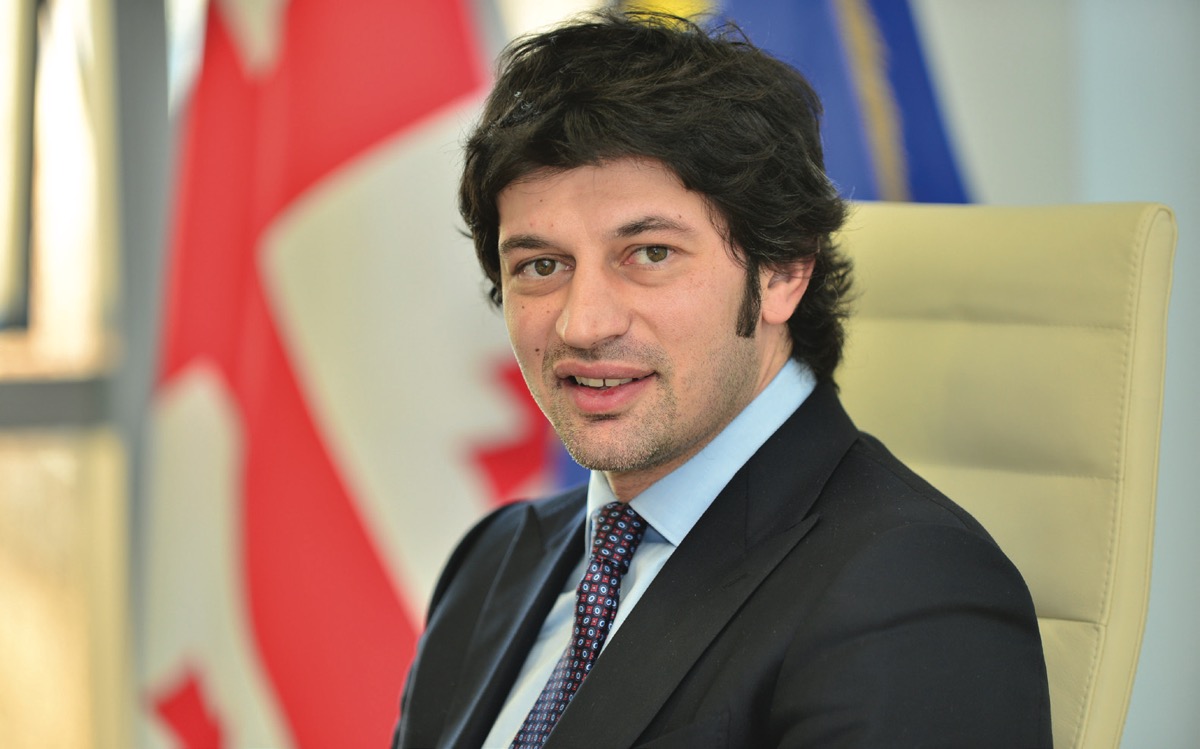
Caspian Energy (CE): Mr. Kaladze, are you satisfied with the level of energy security of Georgia?
Kakha Kaladze, Vice Prime Minister, Minister of Energy of Georgia: Currently, energy mix dependency of Georgia on external sources is around 75%-80%. It also possesses significant potential for developing hydro resources. Due to its high dependence on imports for hydrocarbons, the government’s efforts are targeted on import diversification and maximum utilization of existing renewable energy sources.
On the one hand Georgia is challenged due to the dependence on a single supplier - Azerbaijan. The majority of the imported gas is being provided from Azerbaijan (90%), which gradually replaced Russian share since 2007 on Georgian gas market. On the other hand, a strategic interrelationship developed between two countries in terms of politics and economy is one of the key aspects of the energy security of the country.
However, Georgia will need additional capacities as demand and consumption of gas in Georgia is increasing. The gas supply structure is expected to change, when additional volumes will appear after completion of Shah-Deniz 2nd phase after 2019. This enables Georgia to construct an Underground Gas Storage. The construction works are planned to be launched this year. The storage can play a crucial role in emergency situation and regulation of seasonal supply/demand misbalance and potential price differences. Also, increased gas flows from Shah Deniz II provide Georgia with an opportunity to start adding thermal capacities to the energy system by constructing TPPs with high efficiency. In this respect, the Combined Cycle Power Plant (CCPP) with the total installed capacity of 230 MW in Gardabani has already been put into commissioning. In addition, the development of another combined cycle power plant with the capacity of 500M is in progress. To diversify the generation sources within the country coal production in Georgia can be used for power generation as well and at this stage first 135 MW coal power plant project is under development in Tkibuli.
At the same time, Georgia is actively engaged in the discussions of alternative projects (AGRI, White Stream, Trans Caspian Pipeline and etc.) in the scope of Southern Gas Corridor, targeted at delivering Caspian and Central Asian energy resources.
In the long run additional nearest resource base can be also Iran. Iran is an important country in the region with hydrocarbon resources and discussions for development of regional trade for energy goods is an interesting area for multilateral cooperation which become especially promising due to the lift of international sanctions. Beyond import diversification the Government of Georgia’s target is to promote development of domestic resources, in order to reduce dependence on imported energy carriers. Utilization of untapped renewable resources (mainly hydro) is a priority direction of the energy policy. Besides developing small and medium sized HPPs, the country plans to construct large HPPs with reservoirs targeted to meet seasonal misbalance and peak demand in a most efficient way.
To sum up, there is a considerable progress already achieved by the government but a lot has to be done in future as well. I hope that we will realize our ambitious plan with the support of international energy projects, rehabilitation/expansion of strategic and other important energy infrastructure including the largest Enguri/Vardnili HPP, expanding interconnections with neighbouring countries, exploitation of domestic resources (hydro, wind and etc.) and exploration and extraction works on potential and active oil and gas fields.
Please login or subscribe to read the full article.
Login / Subscribe