


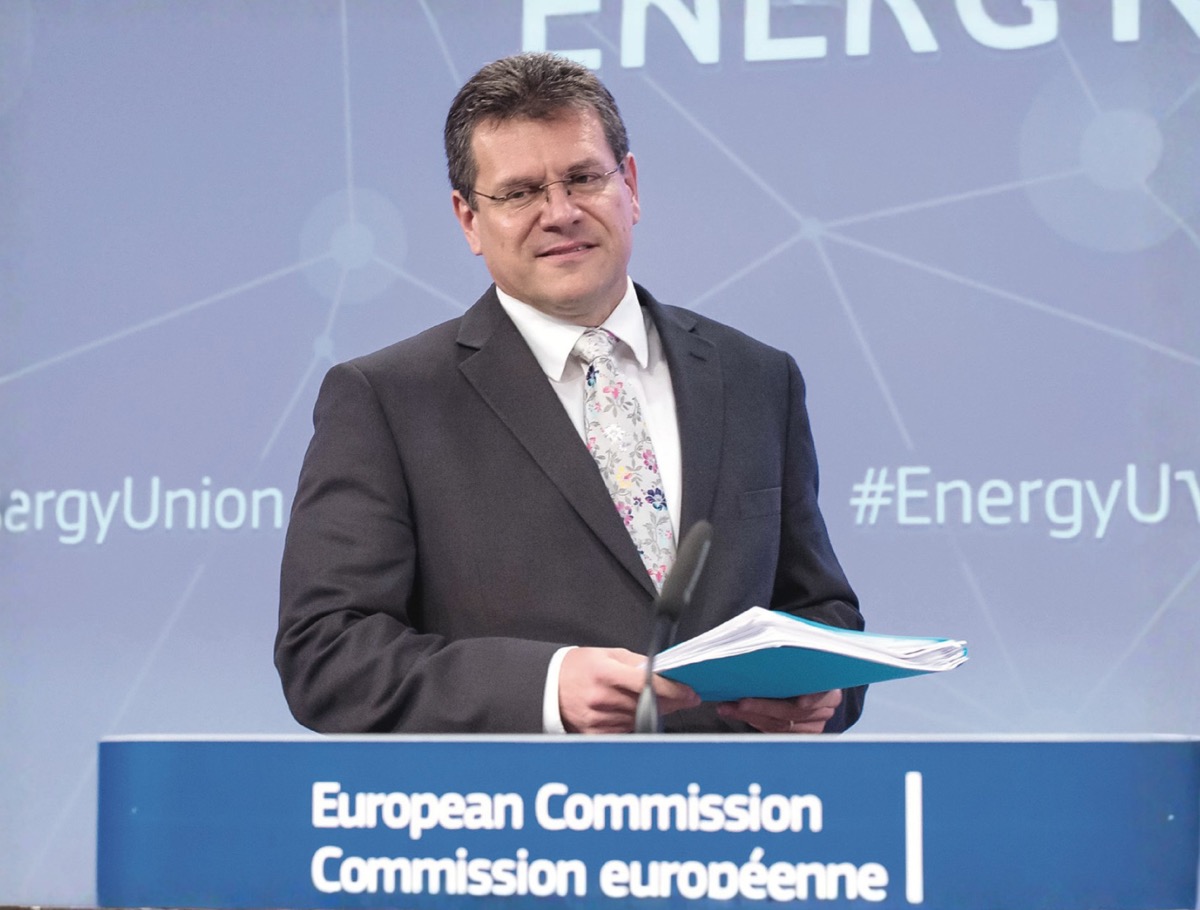
Caspian Energy (CE): Mr. Šefčovič, what impact will the huge flow of migrants from the Middle East to the EU have on the programs to be implemented by the newly established Energy Union? Will the EU continue developing the integration networks and gas pipelines connecting the Iberian Peninsula and the EU, the Balkans and the Baltic states until 2020?
Maroš Šefčovič, European Commission Vice-President for Energy Union: First, we know that geopolitical challenges will not go away and that the best way how to challenge them is to be on top of them. On 18 November I presented the first ever State of Energy Union which acknowledged importance of several important challenges and opportunities for the progress in implementation of the Energy Union such as the ongoing conflict between Russia and Ukraine, persistently low oil prices, new initiatives for additional supply infrastructure for natural gas from Russia or deal with Iran. Together with the State of Energy Union, I presented an updated roadmap for the Energy Union where we outlined all legislative and non–legislative proposals, which we want to adopt in 2016.
We take note of unpredicted geopolitical circumstances, but my responsibility as Vice-President in charge of the Energy Union – is to focus on the roadmap and follow up as much as in line with it. The Energy Union is one of the ten political priorities of the European Commission and we are deeply committed to deliver its foundations by the end of 2019. We need to continue pushing for the diversification of energy sources, routes and suppliers, e.g. through the very first in the European Union history EU Strategy for Liquefied Natural Gas and Gas Storage, which we will present in February. We need to continue discussions with third countries, in particular those in our immediate neighborhood, and especially in Energy Community countries, not only on security aspects in a narrow sense but also on issues such as renewables and energy efficiency. And – an issue to which I want to pay special attention in 2016 – we need to speed up work on infrastructure projects.
Please login or subscribe to read the full article.
Login / Subscribe