


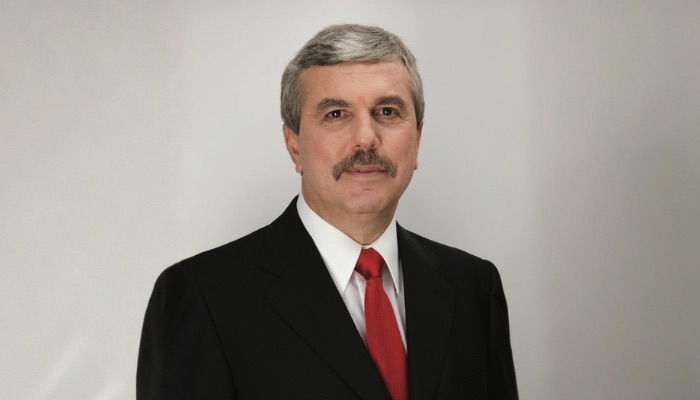
Caspian Energy (CE): How do you evaluate development of the Romanian telecommunication market in recent times?
Dan Nica: As a Member State of the European Union, Romania has harmonized its national legislation in the field of electronic communications with the EU regulatory framework and this has significantly contributed to market liberalization. Another field where regulation was introduced is related to the right of access to electronic communication networks and interconnection of electronic communication networks. The creation of the independent national regulatory authority whose role is to regulate the electronic communications service networks, has contributed to stimulating market competition.
The telecommunications market is under continuous development. There are 4 GSM operators and several other fixed line telephone service providers, with a strong competition that helps the customer to access better services at competitive rates. Regarding data services, broadband connections are available for the urban areas, and two mobile operators are providing 4G connections with connection speeds up to 100 Mbs. At present rural areas are less developed therefore we are focusing our efforts to connect remote zones as well.
Romania became the third European Union country, along with Italy, to launch the 4G technology. We had a successful spectrum auction that allowed the market reconfiguration in terms of services to be provided to Romanian people from now on. The telecommunications market grew by 3.5% in the first six months of 2012, due to the income advance from internet, mobile and audiovisual broadcasting services supplied to the end users.
CE: What could you tell about the present development of IT sector in Romania?
Dan Nica: In Romania the IT sector is one of the most promising industries. We identified this opportunity several years ago and developed public policies to foster and support its development. Romania has powerful national companies involved in software development. From cloud computing antivirus, ERP, e-learning, fair tax collection and taxation software to IT and mobile security, we create our own products and compete successfully on the international market. Some of these products were also deployed in Azerbaijan.
Romanian system integrators are also important players on the market inasmuch the international companies having registered offices in Romania. They have opened not only sales offices but they are creating here expertise centers to support their business worldwide.
Moreover, there are Governmental initiatives to develop electronic services for business and citizens. For the existing e-Government services we have about 500.000 users. The new initiatives are correlated with the guidelines of the Digital Agenda for Europe, focusing to achieve the digital inclusion of all citizens, to help the citizens and the business sector to obtain the most benefit from the digital technologies.
One notable advantage we have on the Romanian market is the highly skilled human resources which need to be capitalized on more effectively. For many years we have marketed as 'cheap labor', but now we can say that we have begun to overcome this phase, and our specialists are appreciated mainly for their skills. The Romanian education system is largely recognized as one of the best in the world of IT&C. Almost 7000 youngsters graduate every year from an IT&C related faculty. In fact, Romania is the European leader and ranks the 6th in the world, in terms of the number of certified IT specialists. Also, they are widely recognized for their creativity and professionalism.
This summer, a state aid scheme of 100 million EUR has been approved to subsidize wage costs of ICT companies that will contribute to regional development through innovation and create at least 200 jobs. The project is under the coordination of the Ministry of Finance.
CE: What are the main problems that ICT faces and how are they solved?
Dan Nica: We prefer to look at them as challenges and opportunities. As the technology evolves they are constantly changing and, at this moment, the buzz words are cloud computing, mobile devices and the expansion of 24/7 connection and access to resources.
As a Government we are interested in both getting the most out of the new technologies, using them in our e-Government programs, and updating or defining the new legal framework capable to keep pace with the new challenges.
One challenge we are currently addressing is the existence of significant areas uncovered by broadband networks due to operators’ low economic interest in such areas. Thus we accelerated the Ro-NET project. This project aims to develop an electronic network infrastructure to provide the necessary technical capabilities to provide broadband services in rural areas of Romania, which are currently not served and where no private investment is planed over the next three years.
The fragmentation of technologies and services is another problem we have undertaken to solve. Consequently, we committed ourselves to ensure the interoperability between all the public systems in order to be able to offer extensive electronic public services to citizens and businesses.
Another issue we tackled was the persistence of the digital gap among our citizens. We promoted inclusion by implementing a very successful project, Knowledge based Economy. By its primary objective – ensuring social development by supporting digital access to information for creating knowledge capital with the help of IT&C - the Project selected 255 Romanian communities with a population less than 30.000 inhabitants. Targeting 1.8 million inhabitants and approximately 20% of rural Romanian population with low and very low access to knowledge and IT&C skills, KEP sustained the Digital Revolution in the current rapidly changing social, economic and environmental context and become a part of the strategy of the European Digital Agenda 2020 by implementing knowledge, competitive local development and digital inclusion. Since 2005, Knowledge Economy Project has built up an IT infrastructure network in 255 rural communities in Romania, carried on IT training programs for the local population and the staff of the local institutions (town halls, libraries, schools), set-up public internet access centers in all targeted communities, offered support to local farmers and SMEs and to local institutions to access EU funding and implemented innovative IT&C supported educational programs in 229 schools of the targeted areas.
CE: Do you find ICT cooperation with Caspian countries perspective?
Dan Nica: At governmental level we performed important steps for developing cooperation with the countries from this region. When establishing such cooperation policies we always consider the business opportunities and the industries with a high potential for development. ICT is one of them.
In the last years Romania constantly participated at international ICT exhibitions and conferences in the Caspian Sea area, such as BakuTel in Azerbaijan. Romanian companies have already established cooperation with partners from Caspian countries.
CE: How do you evaluate possibilities of ICT cooperation between Romania and Azerbaijan? How broadly are the Azerbaijani ICT products presented at the Romanian market or Romanian ICT products in Azerbaijan?
Dan Nica: Since 2009 Romania and Azerbaijan have established a Strategic Partnership. Its core lines of development are detailed in the 2011 Plan of Action on the implementation of the Declaration on the Strategic Partnership between Romania and Azerbaijan. Among other key priorities, ICT stands out as a key priority in this partnership and in the relevant Action Plan for its implementation. The newly appointed Government of Romania remains committed to undertake further actions towards strengthening this Strategic Partnership and this approach is enshrined explicitly in the Governing Program for 2013-2016.
Several top Romanian ICT companies, mainly from the consultancy services and information security areas are already present on the Azerbaijani market, with projects already fully deployed. Other ICT projects could be developed in the fields of agriculture and health. There is a strong collaboration between Romanian and Azerbaijani specialists in this area, with a fruitful know-how and experience exchange.
Thus, we consider there is a good potential for both markets as in Romania we are also open to accommodate solutions and know-how from Azerbaijan. We are interested for example in some of the e-government services offered in Azerbaijan that use the latest technologies. One of them is implementing extended authentication mechanisms to services, including using of mobile phones for strong user identification and access.
CE: Which protection measures should be undertaken for preventing cyber threats?
Dan Nica: Reaction to cyber threats must include several response vectors: legal frame work, policies and procedures, cooperation and, of course, technical mechanisms. It is important to implement prevention mechanisms, detection that allow fast and adequate response as well as business continuity and recovery mechanisms. Another critical element is to avoid overreactions.
To control these aspects at national level Romania established a centralized CERT structure and is implementing strong systems to guarantee the confidentiality, integrity and availability of information. It provides prevention, reaction and consultancy services in the area of cyber security. Thus, it operates a database of the threats, weaknesses and incidents, undertakes research in the area and elaborates legislative recommendations to fight cybercrime, provides expertise to the Ministry of Information Society regarding policies to be undertaken in fighting against cyber-security issues, as well as consultancy services to the public authorities.
We use PKI (Public Key Infrastructures) and we are preparing for the new challenges raised by cloud computing and the extensive development of smart mobile devices.
One of the top Romanian information security software manufacturers is also present on the Azerbaijan market, providing both applications for information protection and consultancy services.
The know-how we gained from fighting cyber threats can be transferred to our peers in Azerbaijan, on all areas of interest: consultancy services, evaluation and accreditation of software deployed for data protection, establishment of CERT and defining collaboration protocols with other CERT/CSIRT (Computer Security Incident Response Team) structures. The Romanian CERT and the companies involved in information security are always available to share their experience and establish collaboration.
CE: Which projects concerning ICT development does Romania plan to introduce in near future?
Dan Nica: The ICT development is following the European Union Digital Agenda, focusing on digital inclusion and development of new services. We foster innovation and private initiatives.
We plan the development of cloud computing at Governmental level and deployment of mechanisms to allow fast, simple and secure access for the business and citizens to our services, from all the devices they use to browse the Internet. We will pay a close attention to the development of new services, together with the required security mechanisms, for the smart mobile devices and the inclusion of these mechanisms in a single, unitary, secure user access infrastructure to the e-Government services.
As most of the information we are using daily is electronic, a key element is to move also the business processes in digital format. To fulfill this objective, the Government plans several strategic projects, including the establishment of a secure electronic postal service, exchange of e-mails with legal value between business, citizens and the official institutions, deployment of electronic invoices for all public authorities, enhancement of electronic payments of taxes and other legal duties, issuance and recognition of electronic study certificates and diplomas. For all of them guaranteeing for each user identity, secure access and interoperability between systems are key elements.
CE: To what extent does internet develop efficiently in Romania?
Dan Nica: Internet development can be measured using two criteria: the development of the infrastructure providing Internet access to citizens and the development and creation of digital content relevant for the users. We are working in both directions, with programs that are creating digital inclusion of all citizens, such as Access Points to Access Information (PAPI). PAPI is helping the citizens from rural areas to use a computer and browse the Internet to find information relevant for their activity. In this way they stay informed on topics such as accessing European Union funds for agriculture, finding new markets for their products and establishing connections.
Romania has some strong advantages such as the Internet speed, which is one of the highest worldwide, and its extraordinary growth of the penetration rate over the last few years (growth by 9.1% in 2012 for connections to fixed networks and by 96.1% in mobile networks).
CE: What success has been gained in development of e-government projects?
Dan Nica: The first e-Government projects were deployed in Romania more than 10 years ago. They are operational, have been enhanced and updated while the experience gathered to build them is constantly used in order to create new systems. It is critical to keep pace with the new technologies and to offer to business and citizens the possibility to access the governmental services using tools similar to those used in conducting daily business.
One of the landmarks of the e-government projects in Romania is the e-procurement system (one of the first of its kind in Europe), used by public authorities for public procurement procedures. Other e-government services implemented in Romania include: the Virtual Payment Office, the system for electronic payment of local taxes, the Point of Single Contact (the e-government portal for entrepreneurs acting in the service sector) as well as various portals dedicated to different sectors of public administration.
If the business does not anymore print documents to send to their partners, why should they print them to communicate with the public administration? We focus, of course, to maintain a strong level of security while providing electronic services keeping in mind that the trust of the users in these systems is critical for their adoption on a large scale.
The development of e-Government is present all over the world. We received positive information about the services provided by the Azerbaijan Government and we are honored to offer our expertise and be involved in know-how exchange projects. Romanian and Azerbaijan specialists are already working together and this is a good indication that the agreements established at governmental level between the two countries start to be brought into concrete existence.
Thank you for the interview