


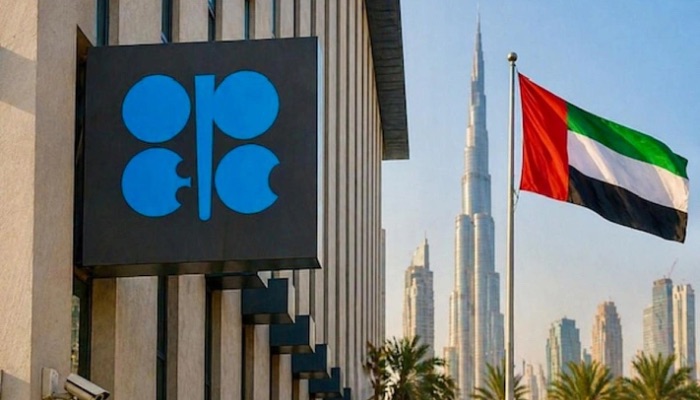
The United Arab Emirates has announced its withdrawal from OPEC and OPEC+ effective May 1, 2026; the decision was made against the backdrop of the crisis surrounding the Strait of Hormuz. The UAE has long been considered an influential participant in OPEC+. In the entire 65-year history of OPEC, this is the first withdrawal from the organization by one of its largest producers. Previously, according to the organization’s data, Gabon terminated its membership in January 1995. However, in July 2016, it rejoined the Organization. Qatar terminated its membership on January 1, 2019. Angola withdrew from the composition on January 1, 2024.
Along with Saudi Arabia, the country played the role of one of the key swing producers that can promptly change production volumes and influence the balance of the global market. In recent years, the UAE has actively invested in expanding oil infrastructure and production capacities. Prior to the blockade of the strait in February 2026, production amounted to 3.41 million bpd. This is third place after Saudi Arabia and Iraq, which corresponds to: 11.9% of all OPEC production, 8% of OPEC+ countries, and about 3–4% of global production. Prior to this, the Organization of the Petroleum Exporting Countries and its partners (OPEC+) agreed to increase oil production limits in May by 206 thousand bpd. This follows from a joint statement of eight countries—Russia, Saudi Arabia, Iraq, the UAE, Kuwait, Kazakhstan, Algeria, and Oman—published on Sunday, April 5, following a video conference. In early April, the countries made a decision on the adjustment of oil production volumes to "maintain stability in the market," the statement says. At the last such meeting, which took place in March, OPEC+ members had already increased limits by 206 thousand bpd.
Earlier, the Reuters agency, citing sources, wrote that the increase in production by OPEC+ countries should serve as a signal to the global market of the readiness for further ramp-up of oil production. In particular, the increase in May quotas should help stabilize the sentiments of petroleum product buyers against the backdrop of the blockade of the Strait of Hormuz and the war of the US and Israel with Iran, which have already led to an energy crisis. Russia, Saudi Arabia, Iraq, the UAE, Kuwait, Kazakhstan, Algeria, and Oman in September 2025 completed the early exit from cuts of 2.2 million barrels per day, and in October began the gradual phase-out of the additional production restriction of another 1.65 million barrels. For January-March 2026, the OPEC+ countries took a pause in the production increase.
The next OPEC+ meeting is scheduled for May 3.
Against the backdrop of the geopolitical crisis and intensifying political instability in the Middle East, the consequence of which has been high market volatility, large organizations such as OPEC+ cannot respond flexibly to the current situation, which is fully available to exporters not belonging to OPEC. Since the price break-even points for decision-making according to fiscal deficit indicators differ among OPEC+ countries, more and more time is required to coordinate a consistent and coordinated policy. On the other hand, the very conjuncture of the oil market is also changing inevitably in the case of the oil industry, which requires a quick reaction from the supplier. In particular, Thailand, which previously imported about half of its oil from Persian Gulf countries, has begun negotiations with Russia. India, for the first time in seven years, purchased oil from Iran. To stabilize the situation in the market, the USA also temporarily suspended the action of sanctions on oil from Russia that was loaded onto tankers before March 12, 2026.
Therefore, the longer the crisis lasts, the greater the probability of the collapse of OPEC+ up to the complete termination of its existence. For now, hypothetically, having lost the main lever of price regulation, the market will acquire even greater volatility and plunge into an abyss of uncontrolled growth and fall of prices and various kinds of market costs. Further, the resolution of the issue of energy security will call into question the globalization of the market, which will require new trade alliances, regulations of internal budgets of countries and trade, a review of investment and fiscal policy; national banks will strengthen regulation, the inevitable victim of which will be the private sector and knowledge-intensive industries; the market will undergo changes, and energy will become a luxury for the 1 billion people already lacking access to electricity.
From OPEC History: At the Baghdad Conference, which took place on September 10–14, 1960, the Organization of the Petroleum Exporting Countries (OPEC) was established. Over 65 years, it has become the largest alliance, whose members control 80% of all proven raw material reserves on the planet and 64% of its global production (and even more taking into account the OPEC+ participant countries).
OPEC was founded on September 14, 1960, by five countries: Iran, Iraq, Kuwait, Saudi Arabia, and Venezuela. Later, they were joined by Libya (1962), the UAE (1967), Algeria (1969), Nigeria (1971), Gabon (1975), Equatorial Guinea (2017), and Congo (2018). In September 1965, the headquarters of the alliance was moved to Vienna.
In December 2016, the Declaration of Cooperation (DoC) was signed, within the framework of which members of the organization and 10 exporting countries not belonging to the alliance united with the goal of restoring the oil market. The new informal format received the name OPEC+. Now OPEC includes 12 countries, and another 11, including Russia, participate in the expanded format.
The leaders in oil exports are Saudi Arabia (6 million bpd, 14% of the total volume), Russia (4.5 million bpd, 10.5%), the USA (4.1 million bpd, 9.5%), the UAE 3-3.5 million bpd (4% of world production), Canada (3.6 million bpd, 8.2%), and Iraq (3.4 million bpd, 7.8%). In total, they account for 50% of all oil export.