
Select your language

AMBASSADOR
Azerbaijan is a country that combines strategic importance with genuine human touch
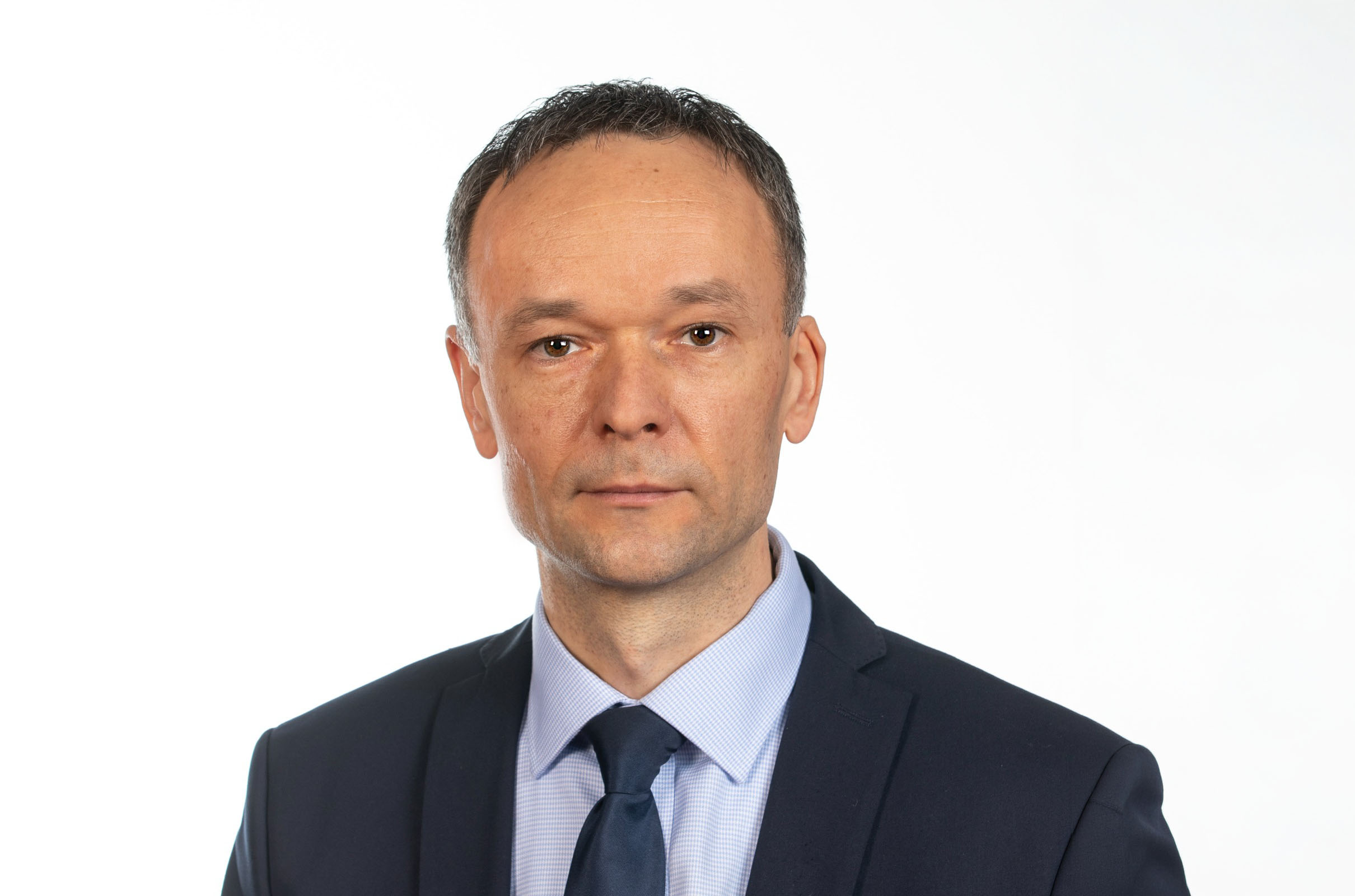
Kęstutis Vaškelevičius, Ambassador Extraordinary and Plenipotentiary of the Republic of Lithuania to the Azerbaijan Republic

Caspian Energy (CE): What inspired you to pursue diplomacy?

Kęstutis Vaškelevičius, Ambassador Extraordinary and Plenipotentiary of the Republic of Lithuania to the Azerbaijan Republic: I became interested in diplomacy via history. As a teenager, I was fascinated by the stories my father used to tell me about Lithuanian partisans fighting Soviet occupation in the nearby forests and villages of where my father was born. History taught me about the importance of international relations and diplomacy.

CE: Why is this mission in Azerbaijan significant for you?
Kęstutis Vaškelevičius
Again, history might help to reveal the importance of Lithuania-Azerbaijan relations. There were moments in our relationships, in particular in 1989-1991, when mutual understanding and solidarity helped our nations on our road to freedom. Today, both Lithuania and Azerbaijan are independent successful countries. But it doesn’t mean that challenges to our independence are over. Just across our borders, we see dangerous imperialistic ambitions. History reminds us that even the largest aggressor is afraid of solidarity among free nations. The current geopolitical environment calls for more solidarity among freedom-loving nations.

Today, I also appreciate Azerbaijan’s dynamic pace of development and its growing international role. Therefore, partnerships between Lithuania-Azerbaijan, as well as the EU and Azerbaijan, are also growing in importance. These partnerships can bring a significant contribution to strengthening the principles of international law, in isolating aggressors and in helping to advance peace and prosperity in our region and beyond.

An important part of my mission is also contributing to strengthening the friendship between the Lithuanian and Azerbaijani people. Better understanding and appreciating the rich history and culture of our peoples is something very valuable to the bilateral Lithuanian-Azerbaijani agenda.

CE: What similarities do you see between Lithuanians and Azerbaijanis?

Kęstutis VaškelevičiusBoth our nations faced numerous attempts to erase our identity and history. Therefore, both nations deeply value their independence, identity, language, and cultural heritage. Both societies are resilient and proud of their history.

What impresses me in Azerbaijan is the combination of modernity and the respect for traditions. This is something you also find in Lithuania. While Lithuanians deeply appreciate the history of their Homeland, at the same time they are very innovative and forward looking. 

This entrepreneurial spirit and the advantages of being not-a-big country create a lot of potential for the future of our countries’ economies. 

CE: Where do you see the biggest potential for economic cooperation beyond energy?

Kęstutis Vaškelevičius: Today Lithuania is increasingly known for fintech, lasers, life sciences, cybersecurity, logistics, and advanced manufacturing. Lithuania brings strong expertise in e-government platforms, with over 90% of public services available online, and advanced solutions in digital identity, and real-time data exchange. We managed to create an ecosystem, where institutions, universities and startups co-create innovative public-sector solutions—an approach that could be effectively shared through joint pilot projects or expert exchanges. Azerbaijan has a young, ambitious population and a clear interest in technological modernization. Lithuanian companies can offer practical expertise in areas such as e-governance, smart services, educational technologies, ICT and startups.

Transport and logistics also have strong potential. Lithuania has one of the most advanced logistics sectors and important access to European markets through the Port of Klaipėda. The transport and logistics sector contributes around 12% to the country’s GDP (approximately twice the EU average). It is not just statistics. It is a testament to decades of accumulated expertise that we are ready to share. This experience of ours provides a solid foundation for deeper cooperation in the transport sector.

Agriculture and food technologies are a promising area. Lithuania has strong experience in dairy technologies, sustainable farming, and agricultural innovation, while Azerbaijan is investing heavily in modern agriculture and regional development.

Exchanges among universities, research institutions and students are the area where cooperation is growing, but there is still a lot of untapped potential. 

Tourism is also growing naturally between our countries. Lithuanian spa resorts have been popular among Azerbaijanis for many decades, while Lithuanians increasingly want authentic experiences and new, interesting destinations. 

CE: How important are business platforms like Caspian Energy Club?

Kęstutis Vaškelevičius: First of all, let me express my compliments to Caspian Energy Club for being a very active and engaging partner for Lithuania, but also for many other countries. I think that international partnerships are crucial for the development of the Azerbaijani economy. These partnerships are also mutually beneficial. 

Platforms like Caspian Energy Club are very important because economic cooperation starts with trust and direct communication. Governments can create favorable conditions, but businesses create real partnerships, investments, and jobs.

 Organizations like the Caspian Energy Club play a valuable role by connecting decision-makers, entrepreneurs, and international partners. They help transform diplomatic dialogue into concrete economic results.

CE: How does your mission contribute to cooperation in security, energy, and sustainable development?

Kęstutis Vaškelevičius: Security, energy, transport, sustainability, and economic resilience are all linked together. And Lithuania’s experience clearly shows that.  The Klaipėda LNG terminal “Independence”, launched in 2014, ended dependence on a single gas supplier and opened access to global LNG markets, including the US market from which Lithuania imports the majority of its LNG. In 2022, Lithuania became one of the first EU countries to fully stop Russian gas imports. In 2025, Lithuania, Latvia, and Estonia disconnected from the Russian-Belarusian BRELL system and synchronized with the Continental European grid. The Baltic region moved from vulnerability in the energy sector to European integration and resilience.  

Lithuania’s transport and connectivity policy follows the same pattern. Projects such as Rail Baltica, Via Baltica, energy interconnectors and Three Seas cooperation are not only infrastructure projects; they strengthen military mobility, trade routes, EU market access, and regional security.  

This is why Lithuania’s example is so powerful: a relatively small state increased its strategic weight not by isolation, but by building trusted partnerships.

Part of my mission is to share this Lithuanian experience with Azerbaijani colleagues, while at the same time presenting the opportunities of cooperation with Azerbaijan in security, energy, and showing how it strengthens European energy resilience. 

Our embassy also works to identify practical areas of connectivity where institutions, companies, universities, and experts from both countries can cooperate. 

CE: What has impressed you most about Azerbaijan personally?

Kęstutis Vaškelevičius: Hospitality, respect for Azerbaijani traditions and the national cuisine – just to name a few – are what come to my mind first. There is genuine warmth in everyday interactions with people both in Baku and outside Baku. I was also impressed by a growing respect for tradition—whether toward the Azerbaijani language, music, or history. I greatly enjoy Azerbaijani cuisine — it is rich and deeply connected to traditions. When speaking with friends in Lithuania, I often say that Azerbaijan is a country that combines strategic importance with genuine human touch. As a diplomat, it is motivating to work in a country that is friendly, ambitious, confident, and looking toward the future. 

Thank you for the interview.