


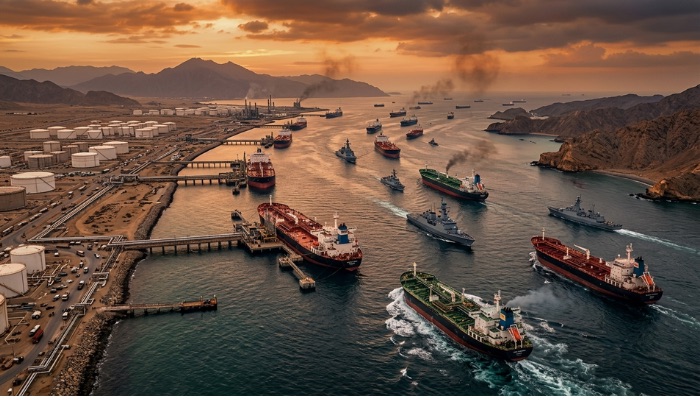
The International Energy Agency (IEA), in its April edition of the "Oil Market Report" (OMR), noted that global oil supplies fell sharply in March by 10.1 million barrels per day (mb/d) to 97 mb/d. Oil production by OPEC+ countries dropped by 9.4 mb/d compared to the previous month to 42.4 mb/d, while supplies from non-OPEC+ countries decreased by 770,000 barrels per day to 54.7 mb/d. The IEA report also estimates that these disruptions could lead to a loss of 440 million barrels in April.
Oil exports from Persian Gulf countries fell sharply, with total losses exceeding 13 million barrels per day. Deliveries through the Strait of Hormuz in early April averaged about 3.8 million barrels per day, compared to more than 20 million barrels per day in February. Exports via alternative routes—primarily from the west coast of Saudi Arabia and Fujairah on the east coast of the UAE, as well as via the ITP pipeline running from Iraq to Ceyhan in Türkiye — increased to 7.2 million barrels per day from less than 4 million barrels per day before the war.
The supply shock led to a sharp rise in oil prices. The price of North Sea Dated oil was around $130 per barrel, which is approximately $60 above pre-conflict levels, while physical oil prices jumped to $150 per barrel, significantly exceeding futures prices. Oil product markets also tightened, with middle distillate prices in Singapore reaching above $290 per barrel.
According to IEA forecasts, global oil demand in 2026 will contract by 80,000 barrels per day, which is 730,000 barrels per day less than was predicted last month. In March, demand fell by 800,000 barrels per day year-on-year, and a decrease of 2.3 million barrels per day is projected for April. The IEA estimates that the 1.5 million barrel per day year-on-year drop in the second quarter of 2026 will be the sharpest since the start of the COVID-19 pandemic.
According to IEA data, the most notable reduction is observed in the petrochemical feedstock segment. In April, demand for LPG/ethane and naphtha decreased by 1.8 mb/d, while demand for transport fuels such as gasoil, gasoline, and jet fuel fell by approximately 1% in each case.
Regional impacts vary. Demand in OECD countries is projected to decline by 240,000 barrels per day in 2026, while demand in non-OECD countries will grow by 150,000 barrels per day, partially offset by a decline of 250,000 barrels per day in the Middle East. Demand in China is projected to increase by 80,000 barrels per day, and in India by 130,000 barrels per day, while the Middle East recorded the largest regional contraction of 250,000 barrels per day.
Oil inventories were drawn down to compensate for the supply deficit. Global observed oil inventories decreased by 85 million barrels in March, including 205 million barrels outside the Persian Gulf. At the same time, floating storage in the Middle East increased by 100 million barrels, and onshore crude oil stocks in the region rose by 20 million barrels, with China adding 40 million barrels of crude oil to its storage facilities.
In April, refineries in the Middle East and Asia, experiencing feedstock shortages, reduced processing volumes by approximately 6 million barrels per day to 77.2 million barrels per day. On average, global oil refinery throughput is expected to decrease by 1 million barrels per day in 2026 to 82.9 million barrels per day.
The two-week truce announced on April 7 brought only limited relief; however, uncertainty remains as to whether it will lead to a sustainable recovery of shipping through the Strait of Hormuz, the IEA noted. The U.S. blockade of vessels entering or leaving Iranian ports will further complicate the situation.
The IEA stated that the potential further path of developments could be described by two scenarios. In the base case scenario, oil supplies gradually resume from May, with the market balance shifting to a surplus of 2.5 mb/d in the second half of 2026. In a prolonged crisis scenario, the supply deficit persists, requiring a stock draw of 6 mb/d and leading to cumulative losses approaching 2 billion barrels by the end of the year. The trajectory of the Strait of Hormuz remains the central factor determining the recovery of supplies, price stability, and the overall outlook for global oil markets, the IEA report says.