


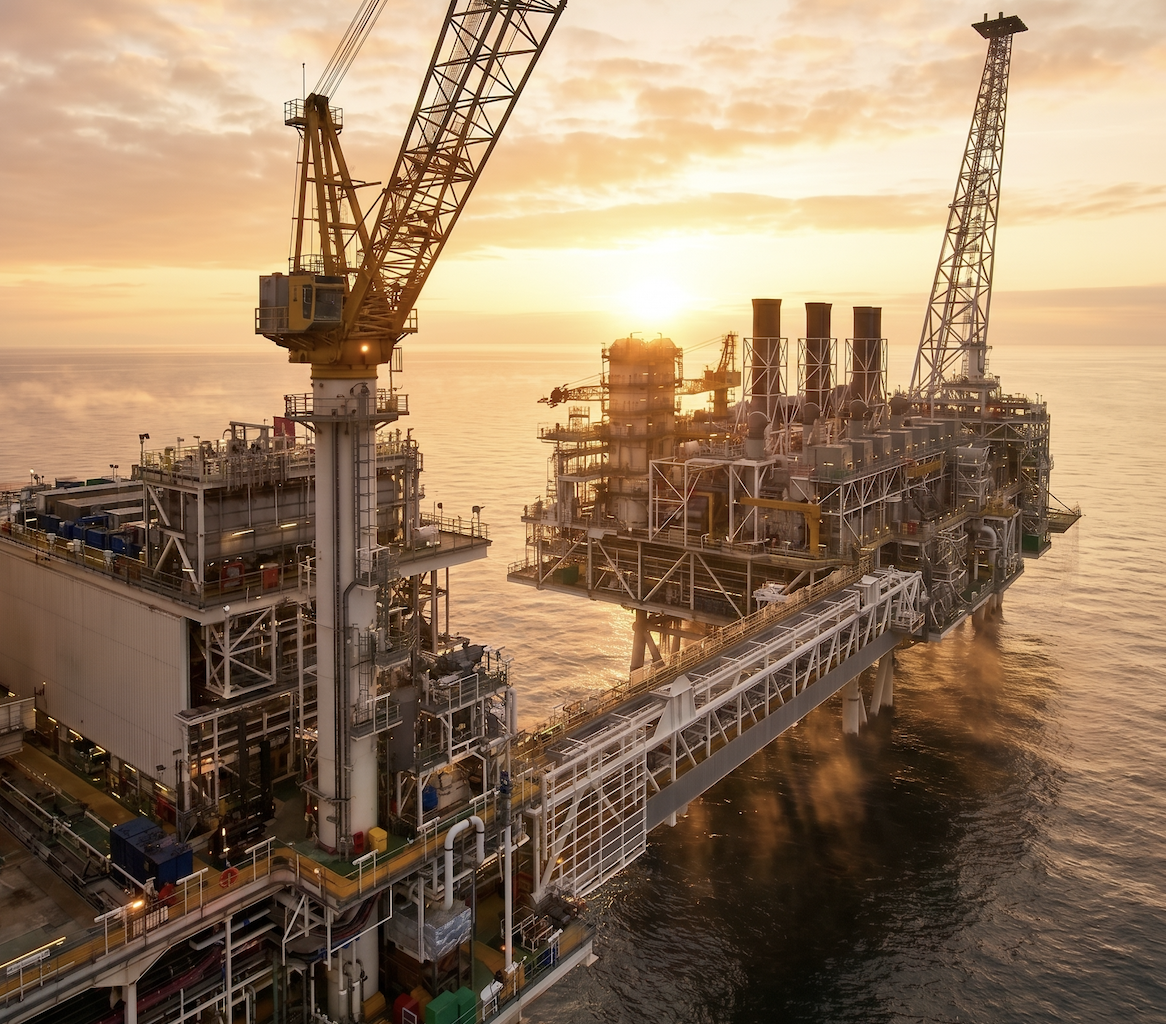
On September 20, under the leadership of the national leader of Azerbaijan, Heydar Aliyev, the “contract of the century” was signed (a contract for the exploration, development, and production sharing for the “Azeri-Chirag-Gunashli” (ACG) fields); it became the beginning of relationships in the world energy market which, a decade later, would be formulated by one succinct concept—energy security. The term of the contract was to expire in 2024. However, on September 14, 2017, the signing of a new contract for the development of the ACG block until 2050 took place in Baku. In essence, Azerbaijan became a country that managed to model its own formula for long-term regional energy security. 32 years ago, the implementation of an investment project began on the basis of stable political and economic conditions, a favorable investment climate, and a multi-vector oil, gas, and export policy.
“There are no longer monopolies or monopolism, stated in the early 90s the prominent British oilman—the first head of the consortium for the exploration and development of ‘Azeri,’ ‘Chirag,’ and the deepwater portion of ‘Gunashli’ (contract of the century) Terence Adams—but rather there are the interests of countries and their partners.”
The continuation of the contract of the century was the signing of a further 20 PSA contracts in the Azerbaijani sector of the Caspian. Thanks to subsequent contracts, more than 10 fields with reserves that were non-commercial at that period of time (each from 70 to 450 million barrels in oil equivalent) were discovered in the Azerbaijani sector of the Caspian during the years 1995–2000 by foreign consortia. These are — Karabakh (CIPCO consortium), Dan Ulduzu, Ashrafi—operator NAOC, Oguz (operator ExxonMobil), Kurdashi (operator Agip), “Lankaran-Talysh” (operator TotalFinaelf), Absheron (operator ChevronTexaco, today the French Total operates at the field), Ateshgah, Yanan-Tava, Mugan-Deniz — operator a consortium of Japanese oil and gas companies JAOC, Nakhchivan — ExxonMobil, Zafar-Mashal — ExxonMobil, Inam — BP, Alov-Araz-Sharg — BP, Yalama — a consortium of Russian companies. In the early 2000s, the development of these areas was already planned by the State Program for the development of the fuel and energy complex of the country for 2005–2015. However, it has still not been implemented.
Therefore, the Azerbaijani sector of the Caspian is considered to be still highly promising and, taking into account today’s latest exploration and appraisal drilling technologies, still little studied. The resource base of hydrocarbon reserves, with the help of foreign consortia and intensive exploration work, has grown from 2.2 (about 15 billion barrels) billion tons to 5.
Today, with around 90% of North Sea reserves considered depleted, Caspian reserves are becoming increasingly sought after. Companies such as BP, Shell, ExxonMobil, and Total Energies SE have taken steps to sell or restructure part of their investments in the North Sea region. It has also been a long time since mega-field discoveries exceeding 100 million barrels of recoverable reserves were made. For oil companies, commercially attractive reserves range from 25 to 75 million barrels of oil equivalent, especially when new technologies increase the efficiency of both exploratory drilling and the depth of hydrocarbon recovery to 80–90%. The Caspian can therefore be considered a region with a high probability of new discoveries.
For this purpose, as early as September 18, 2002, with the participation of the President of Azerbaijan, Heydar Aliyev, and the Presidents of Türkiye and Georgia, the foundation was laid and construction began on the Baku-Tbilisi-Ceyhan oil pipeline. Aimed at exporting oil from the ACG contract area as well as other fields to global markets, on July 13, 2006, the Baku-Tbilisi-Ceyhan pipeline “named after Heydar Aliyev” (BTC) was commissioned. It became the first pipeline in the territory of the former USSR to diversify oil export flows, opening up the resources of the Caspian region to the market. By that time, two pipelines for exporting the so-called “early oil” were already in operation: Baku–Novorossiysk (northern route) and Baku–Supsa (western route).
As if anticipating the energy transition to renewable resources, within the framework of the G8 summit in Saint Petersburg under the leadership of Russian President Vladimir Putin, the document “Global Energy Security” was adopted on July 16, 2006. The issue of energy security was placed at the forefront, pushing a number of political and national issues in EU and G8 countries into the background. Following a series of energy price crises, the boundaries between highly developed and developing countries grew closer. China was involved in G8 work for the first time, and the EU energy directive—the “Green Paper”—was established, defining the energy strategy of EU countries through 2030.
And this approach has proven effective over time. In 2006, renewable energy accounted for 18% of the energy supply (of which 14% was hydropower). Today, the transition to clean energy is gaining momentum: according to a new global report from the Ember Climate Center, in 2024, renewable sources — geothermal, solar, wind, hydro, and nuclear — provided 40.9% of the world’s electricity. In 2025, solar and wind power accounted for 96.8% of the total renewable energy output, underscoring the central role of these technologies in the global energy transition.
In contrast, exports via the Baku-Tbilisi-Ceyhan pipeline are declining. Since the pipeline was commissioned in June 2006 and up to the end of March 2026, around 626 million tons (approximately 4.7 billion barrels) of oil have been transported, loaded onto 6,210 tankers in Ceyhan and shipped to global markets. In the first quarter of 2026, about 54 million barrels were exported through the Baku-Tbilisi-Ceyhan (BTC) pipeline, representing a 9.26% year-on-year decline.
Production at ACG is also declining. In the first quarter of the current year, 29 million barrels of oil were produced from ACG, which is 1 million barrels less than in the same period of 2025. At the same time, 1 billion cubic meters of associated gas were delivered from ACG to SOCAR’s Azerigaz system, which is 0.1 billion cubic meters more than in January–March 2025.
Overall, the development of ACG, as well as the operation of the Baku-Tbilisi-Ceyhan pipeline, is becoming more expensive. In the first quarter of this year, ACG development required $134 million in operating costs (an increase of $19 million compared to the same quarter last year) and $363 million in capital expenditures (an increase of $112 million). The number of producing wells rose to 149 from 145. The highest average daily production was recorded at the Central Azeri platform — 89.8 thousand barrels per day.
In the first quarter, 47 million barrels of oil and condensate from ACG, as well as from Kazakhstan and Turkmenistan, and condensate from the Shah Deniz field, passed through the Sangachal terminal into the Baku–Tbilisi–Ceyhan (BTC) pipeline. In January–March 2025, the same figure was 52.3 million barrels.
The global strategy of one of the major investors — bp — is aimed at increasing oil and gas production, and in this regard, Azerbaijan is considered an important focus, fully aligned with the company’s strategic plans, according to Giovanni Cristofoli, BP’s Regional President for Azerbaijan, Georgia, and Türkiye.
According to him, the company is actively conducting seismic surveys in the Caspian Sea to identify new areas for gas production: “These seismic surveys will allow us to understand which parts of the Caspian hold new potential gas reserves.” “From an exploration standpoint, we already have existing projects. The most important of these is Shafag–Asiman. As you know, last year we operated there jointly with SOCAR, and we are looking forward with great anticipation to the exploratory work we plan to carry out in this project,” he noted.
As new fields in the Caspian are developed, the BTC pipeline will allow oil and condensate to be exported at lower costs, reducing project breakevens. The presence of export infrastructure already serves as an indispensable advantage for ongoing projects and as an incentive for new discoveries in the Caspian.