


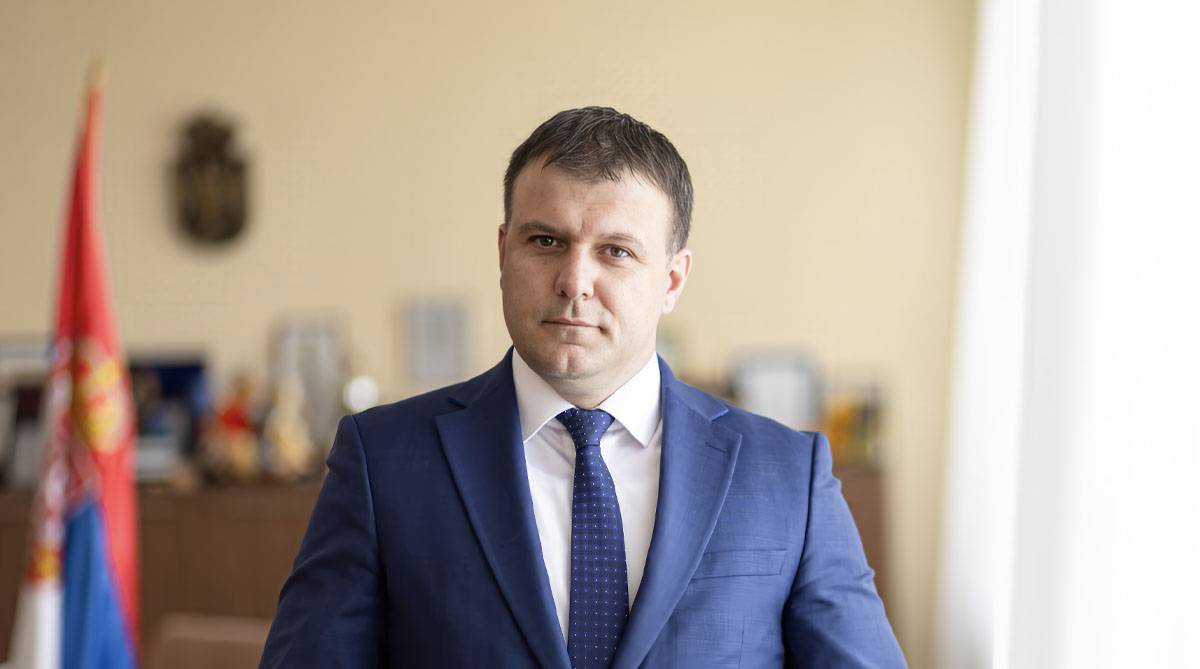
Caspian Energy (CE): Minister Memić, how is Serbia working to enhance its tourism sector in a post-pandemic world, and what key strategies are being implemented to attract international visitors, especially with the growing role of digitalization in tourism?
Husein Memić, Minister of Tourism and Youth of Serbia: Overall, Serbia has been among the more successful European tourist destinations in terms of the post-pandemic recovery of the tourism industry. The number of foreign tourist arrivals to Serbia in 2025 increased by 27% from the pre-pandemic turnover, while the international tourism industry finished the previous year at 64% of the 2019 turnover level. According to the data provided by the World Tourism Organisation (UN Tourism), in the period of January-December 2025 Serbia ranked among the most successful European destinations in terms of tourism recovery and growth compared to the pre-pandemic period (2019). International tourist arrivals to Serbia in 2025 were 27% higher than in 2019, which globally puts Serbia among the top 10 European destinations in terms of relative growth (specifically, we ranked seventh). This result is indicative of a strong and stable recovery of tourist demand, and also of Serbia’s greater visibility in the international tourism market. In parallel, Serbia also ranks highly in terms of international tourism revenue growth. Between January and November 2025, international tourism revenue saw a 98% increase relative to 2019, which puts Serbia among the top 20 destinations globally measured by this indicator (Serbia ranks ninth among the top 20 most successful destinations globally). This growth reflects not only an increased number of arrivals, but also higher spending per tourist, as well as higher economic value of tourism.
In terms of the strategic management of tourism development, we rely on a strategy of connectivity, which involves intersectoral, interdepartmental and interministerial cooperation, as well as regional and international connectivity in tourism. This has resulted in the creation of a complementary tourism offering, and often even joint tourism products of the Western Balkans economies, which are thus able to develop a unique tourism offering for this part of Europe. In addition to the strategy of connectivity, we are also focused on a strategy of tourism demand segmentation. This means we will match the development of primary and complementary tourism products to tourists’ demand. Most of the international tourist arrivals and nights spent in Serbia, in addition to tourists from the neighbouring countries, were by visitors from Türkiye, China, the Russian Federation, as well as Germany, Greece and other European countries. They are interested in discovering our natural and cultural heritage, as well as our gastronomy, and wish to visit major Serbian cities during celebrations and business events. Furthermore, we have also identified digital transformation in tourism as a strategic pillar. We have been implementing advanced technologies to promote and ensure the sustainable use of tourism potential through interactive digital platforms, virtual tours and accommodation booking systems, as well as other amenities at the destination level (museum tickets, bicycle rentals etc.). This targets the expectations and needs of those market segments that opt for this mode of communication when choosing a destination to visit.
Please login or subscribe to read the full article.
Login / Subscribe