


The armed confrontation of Israel and the USA on one side, who attacked Iran on February 29 on the other, continues, and this intensifies fears of the conflict spreading to the entire Middle Eastern region against the backdrop of attacks on officials and civil infrastructure, as well as the population of Iran, which, in its turn without thinking long, responds with fire against the infrastructure of the aggressor according to the principle of “wherever a missile can reach.” Who, as of today, has “won” and who has “lost” in the “conflict of the century”?
After a month of mutual bombardments, in an interview, US President Donald Trump openly declared his desire to get hold of Iranian oil and is considering the possibility of a ground invasion of Kharg Island.
The publication Portfolio, citing reports from the American press, writes that the president will use special forces to remove Iranian uranium stockpiles from the country.
If Iran does not conclude a deal with the United States and does not open the Strait of Hormuz, it as a country will cease its military presence in the region, and its power plants and oil wells will be completely destroyed, CNN reported on Monday, March 30, citing Trump’s words.
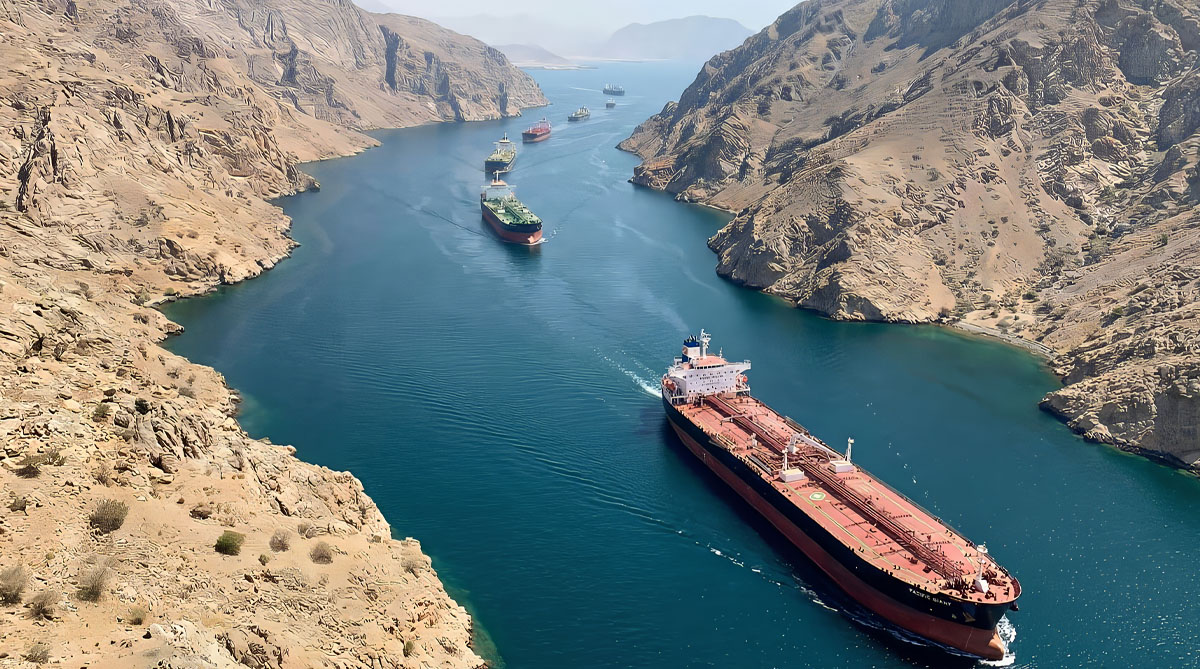
Meanwhile, despite the ongoing conflict, oil supplies from the Middle East are gradually resuming. However, oil prices have risen sharply to $115 per barrel due to the prolonged war and deadlocked peace negotiations. Despite threats against Iran from US President Donald Trump and the extension of the deadline for opening the Strait of Hormuz until April 6, prices on the world energy market have not stabilized. Marine monitoring data indicate that during the first month of the war, the volume of shipping through the Strait of Hormuz decreased by 98%. According to data, before the start of the conflict, an average of 130 to 140 vessels passed through the strait daily. However, as tensions intensified, this figure gradually declined and at the peak of the crisis dropped to fewer than 10 vessels per day. While many countries are experiencing difficulties with selling their oil, the sales volumes of Iranian oil have exceeded 2.2 million barrels per day; this is an unprecedented figure since the start of the current war.
The American institute Kopiki-Liter (nournews.ir/) reported a significant increase in Iranian oil sales and the unhindered passage of Iranian tankers through the Strait of Hormuz. The Institute reports on its website that Iran earns about 139 million dollars a day from the passage of oil tankers through the Strait of Hormuz, and in less than a month, this amount has reached nearly 3.9 billion dollars.
African countries have also turned out to be beneficiaries of the crisis in the Middle East. The Director General of the Port of Tanger Med (Morocco), Idriss Aarabi, stated on Monday that Africa’s largest container port expects an increase in the number of vessels received against the backdrop of escalating tensions in the Middle East, which is forcing shipping companies to change their voyage routes around the African continent.
Major container shipping companies, such as Maersk, Hapag-Lloyd, and CMA CGM, announced this month the redirection of their vessels to the route via the Cape of Good Hope. Aarabi informed Reuters via email that the change in route will increase the transit time for vessels bypassing the Cape of Good Hope to reach the port of Tanger-Med by 10 to 14 days.
ON THE OTHER SIDE OF THE STRAIT
The leadership of the BlackRock investment fund (which manages assets worth approximately 10% of global GDP), headed by CEO Larry Fink, has warned that a conflict with Iran could trigger a global recession, and oil prices could rise sharply. The price per barrel could both rise and fall due to the situation in the Strait of Hormuz, which represents the worst-case scenario for the oil industry as a whole. The company suggests that prolonged volatility and threats to energy supplies could lead to serious long-term economic instability. BlackRock leadership warned that markets may be underestimating the risks associated with the war.
According to data from ClearBridge, a Franklin Templeton company that manages global equities, while emerging markets grew by 5.5% in February, since the start of the conflict, they have fallen by 8% as of mid-March.
While no consequence of military conflict is more serious than the loss of human life, conflicts such as the U.S.-Israeli conflict with Iran also carry significant economic costs, particularly for countries with emerging economies. The strait remains critically important: according to the U.S. Energy Information Administration, approximately 20% of global liquid hydrocarbon consumption passes through it. Reports published last week stated that natural gas prices in Europe rose by as much as 35% as a result of strikes by Iran and Israel on some of the Middle East’s most critical gas infrastructure facilities.
The shifts caused by the conflicts have resulted not so much in a simple outflow of investors from emerging markets (which account for 60% of global GDP), but rather in a more selective sentiment based on assessments of oil dependency, vulnerability to inflation, currency stability, and the spread of geopolitical tension in each individual country.
“First of all, you shouldn’t make blanket statements about emerging markets because they are a very heterogeneous group,” says David Kelly, Chief Global Strategist at J.P. Morgan Asset Management.
Oil exporters, in theory, stand to benefit from higher oil prices. Importers, however, face the opposite challenge: more expensive fuel, widening trade deficits, weakening currencies, and central banks that may be forced to delay expected interest rate cuts. For the week ending March 18, emerging market bond funds recorded a net outflow of $2.83 billion, according to LSEG Lipper data, following inflows of more than $20 billion during the first two months of 2026.
A more neutral stance is particularly evident in Asian countries, which are major oil importers. South Korea, Taiwan, and India face the same challenge: rising energy prices are fueling inflation, whereas investors had been expecting a shift toward more accommodative monetary policy and stronger domestic demand. J.P. Morgan states that countries most vulnerable to a “more prolonged and extensive oil shock” are more likely to spark investor concern. For example, on March 21, the Indian rupee crossed the 94 mark against the dollar for the first time, hitting an all-time low, as pressure on India’s current account intensified with rising oil prices.
Morningstar Wealth states that the clearest distinction regarding the consequences of the war in Iran is obvious: “Are you an oil importer or an oil exporter?” According to the firm, the danger to bonds is particularly evident. “If inflation spikes, we expect local interest rates to rise along with it.”
In turn, a sharp spike in inflation increases borrowing costs, dampens economic activity, and can lead to currency destabilization.
One might assume that exporters are the winners, but they are forced to reroute their oil flows. For instance, Saudi Arabia has mobilized the East-West Pipeline (Petroline) to move crude from fields in the eastern part of the country to the Yanbu terminal on the Red Sea coast. This maneuver has provided a temporary buffer, preventing oil prices from skyrocketing to $200 per barrel.
Today, Saudi Arabia transports 5 million barrels of oil through this pipeline, of which 2 million are directed toward meeting domestic demand, and the remaining 3 million are exported to the global market.
Prior to the start of military operations, 15 million barrels of crude oil and 5 million tons of petroleum products were exported per day to the global market through the Strait of Hormuz. Currently, exports have ceased, and no region in the world possesses the potential for the extraction and production of such a volume of oil and petroleum products, their export to the global market, the meeting of demand, and the lowering of prices.
EU and G7
The ECB kept rates steady, warning that tensions in the Middle East and risks in the oil market could accelerate inflation. The baseline forecast is 2.6% in 2026, but in the event of energy shocks, it could rise to 3.5–4.4% depending on the duration of supply disruptions. European Central Bank President Christine Lagarde issued one of her most direct warnings regarding the potential inflationary consequences of the ongoing conflict involving Iran.
The GDP growth forecast for 2026 was lowered to 0.9% – which is barely above the threshold of stagnation – as the war weighs on real incomes, business sentiment, and consumer demand.
The German Economic Institute lowered its economic growth forecast for this year from 1.3% to 0.6%.
Since the situation in the Strait of Hormuz remains unresolved, and the oil market is subject to sharp revaluations during any escalation involving Iran, the ECB approaches the April 30 meeting with an unusually wide range of possible outcomes.
On Monday, March 30, 2026, the G7 countries declared their readiness to take all necessary measures to maintain the stability and security of the global energy market amid the war in Iran. A corresponding statement from the ministers of energy and finance was published in the evening following consultations held against a backdrop of increasing pressure on oil, gas, and commodity markets; the discussions were intended to pave the way for a subsequent assessment of the situation by European energy ministers.
According to Euronews, on March 11, the IEA had already coordinated the release of 400 million barrels of oil; however, this proved insufficient to fully mitigate the price pressure.
European Commissioner for Energy Dan Jørgensen called for accelerating the modernization of grid infrastructure, the development of interconnections, and the reduction of dependence on fossil fuel imports. In a number of EU countries, national response measures began to take effect in parallel: in particular, Poland announced the introduction of fuel price caps starting Tuesday, following Hungary and Croatia, which took similar steps in early March.
In the near term, the G7 and EU countries will likely continue the coordination of anti-crisis measures, assessing the need for new market interventions and additional steps to strengthen energy security.
The current overall uncertainty also justifies caution in the sphere of investment. OTP Bank analysts, who continue to recommend a neutral position toward the US stock market, now advise reducing the weight of European stock markets. The analysis also covers Central and Eastern European equities: for a long time, they were considered the cheapest, but in recent months, this gap has narrowed.
The Euronews report, citing the FAO, notes that in 2025, Persian Gulf refineries provided approximately 60% of the aviation fuel and 20% of the diesel fuel consumed in Europe. This increases the sensitivity of the European market to rising fuel costs.
According to data cited by Euronews, in 2025, annual inflation for food and non-alcoholic beverages in the European Union stood at 3.3%, ranging from 0.3% in Cyprus to 7% in Estonia. This means that a new round of the energy crisis could hit harder in those countries where food inflation already remains elevated or where the structure of the economy makes prices particularly sensitive to the cost of fuel and fertilizers.
Thus, despite the obvious short-term gains for some and losses for others, no “winners” of the war in the Middle East are yet in sight; concerns for emerging markets, coupled with developed economies balancing “on the brink” of stagnation and “frightened” investors, do not add optimism to the markets, the globality of which is today undergoing another test of endurance at the cost of immense casualties and suffering among the civilian population.