


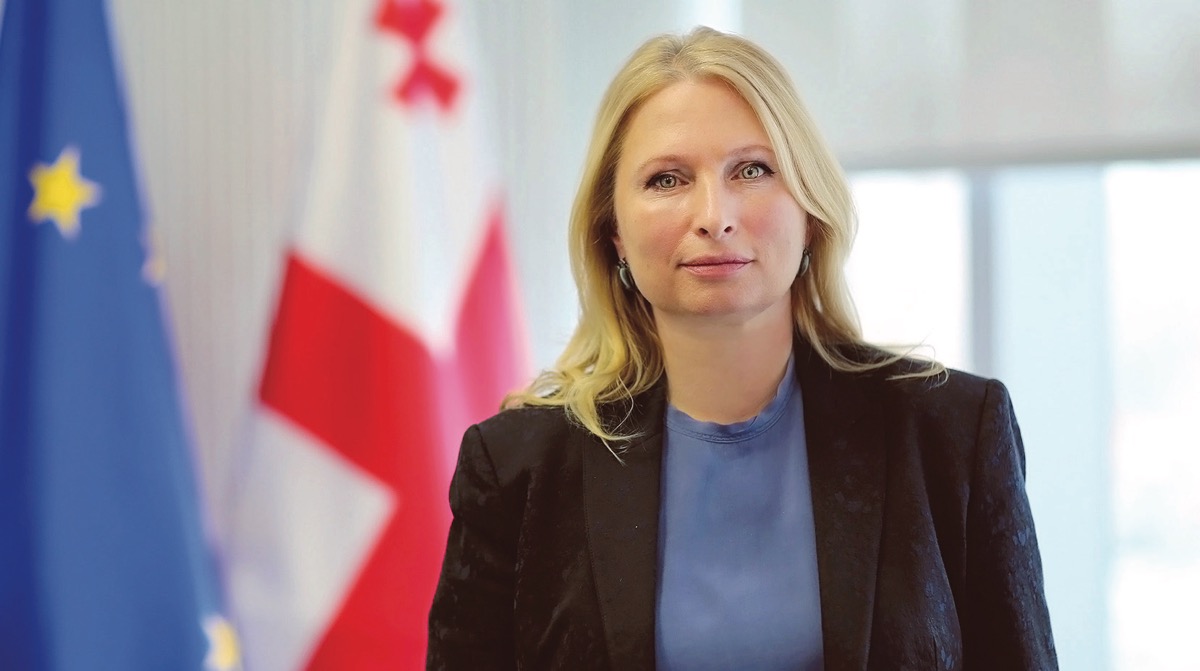
Caspian Energy (CE): The World Bank is predicting a 5% economic growth of Georgia in 2019? Which measures are planned to be taken to maintain an economic growth?
Natia Turnava, Minister of Economy and Sustainable Development of Georgia: We expect that wave of strong positive tendencies in Georgian economic performance will continue during 2019. According to the preliminary estimate, economic growth rate in March 2019 amounted to 6 percent and average growth of January-March equaled to 4.7 percent. Strong economic fundamentals and macroeconomic stability creates the solid background for further growth. According to IMF’s latest estimates, Georgia will have highest growth rate among neighboring countries in 2019-2024, averaging 5.1%.
Herewith International Financial Institutions highlight positive expectations towards our country’s economic development. Georgia improved positions in sovereign credit rating performance. In April, 2019 “S&P” upgraded sovereign credit rating outlook prom stable to positive. Earlier, in February 2019, Fitch upgraded Georgia’s credit rating to “BB” from “BB-“. Macroeconomic stability, resilience towards external shocks, favorable business environment and institutional strength are among the main reasons for increasing sovereign rating that creates the solid background for increasing investors confidence.
Overall, economic growth in the country is private sector driven. Investments in real sector, export diversification, further improvement of business environment and increase of tourist flows will be the key drivers that positively affect Georgia’s economic performance.
Moreover, economic growth in the country will be supported by structural reforms and appropriate economic policy. Fiscal policy will be more oriented on growth, meaning increase of capital expenditures and speed up implementation of infrastructural projects. Capital market development and pension reform will positively affect economy in the medium term. The more long term reform is education reform, which is main priority of the government, which will increase human capital in the economy and improve our competitiveness.
Together with these reforms, Government of Georgia has prioritized SME development as we expect this to be the main source of private sector growth, jobs creation and innovation. As well, GoG continues implementation of the DCFTA reform agenda, which is essential for the utilization of potential provided by the EU-Georgia Association Agreement.
Herewith, actions oriented at institutional strength and increase of government efficiency will further contribute to the productivity enhancement and acceleration of economic growth. To this end, Government is committed to further support foreign capital inflows into Georgian economy, as FDI is an important source of economic growth and knowledge and technologies transfer.
Successful economic reforms implemented in the country has already brought tangible results that are well reflected in international rankings. In regard with ease of doing business, Georgia is one of the leading countries globally taking 6th position worldwide and 1st position in ECA region having the 3rd lowest tax burden in the world.
Please login or subscribe to read the full article.
Login / Subscribe