


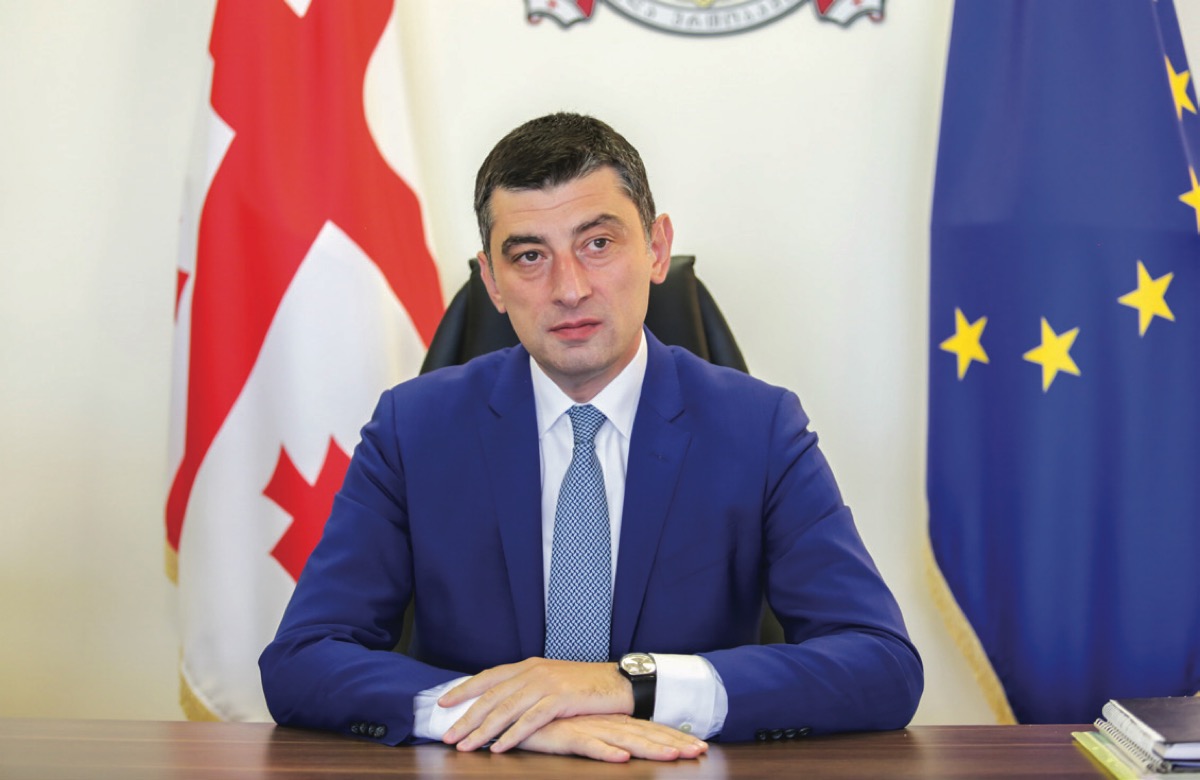
Caspian Energy (CE): Mr. Gakharia, which steps has the Government of Georgia taken to improve the business climate in the country? Could you please tell about the today’s composition of investments into the Georgian economy?
Giorgi Gakharia, Minister of Economy and Sustainable Development of Georgia: First of all, it should be underlined that we perceive private sector as a main driver of economic growth and development. In light of this, our economic policy is based on free market principles and our government permanently works on improvement of business and investment climate.
Reforms in this direction are ongoing. During the previous years, we have heavily reformed our economy in order to create attractive place for doing business. We have lowered overall tax burden with only 6 taxes that currently exist, thus making Georgia a country with one of the lowest tax burden worldwide. More recently, we have gone even further and have introduced new model of the corporate profit tax, where undistributed profit is exempted from the tax.
We have dramatically reduced number of licenses and permits, where only those concerning human health or security and safety are left. We have also significantly streamlined bureaucratic procedures and made it easy for the private sector to communicate with the Government. Further unprecedented steps are envisaged in this direction.
We are currently working on a concept of the Business House. This is a single physical as well as digital space, where more than 600 services currently delivered by more than 60 state institutions are offered to business using “single window principle”. Implementation of this project will bring State-to-Business relations to a qualitatively new level.
We have significantly improved our labor legislation, currently considered as one of the most liberal worldwide. We permanently work on improvement of qualification of the labor force. For this purpose, further reforms are envisaged, in particular in the area of vocational education, where dual German model will be introduced. According to this model, private sector is actively involved in teaching process, thus ensuring that skills acquired meet the expectations of the employers in a best possible way.
Georgia is a small market, therefore in order to increase potential for economic activities, we have created comprehensive network of Free Trade Agreements, varying from China to EU, CIS, Turkey and EFTA states. To sum up, currently Georgia enjoys free access to 1/3 of the world market.
We have restructured existing state agency and created “Enterprise Georgia” – a gateway for doing business in the country. This Agency serves as a one-stop-shop for local entrepreneurs, exporters and foreign investors and its services vary from assistance in market entry to investment aftercare.
In order to support business development in Georgia as well as FDI inflows, we have eradicated corruption and are currently considered as leaders in a wider region in terms of fighting against corruption.
All these efforts have made Georgia one of the best places for investment in the world. This is widely acknowledged by respective international ratings. According to World Bank Doing Business 2017 report, Georgia is 16th best place for doing business worldwide.
However, we do not stop there, as improvement of business and investment climate requires constant efforts. Now we are on an upper stage of reforms that should bring us at a qualitatively better level. Reforms, such as pension reform, capital market reform, creation of PPP framework are directed at structural transformation of Georgian economy, where businesses and investors have all the conditions to successfully implement their initiatives and ideas.
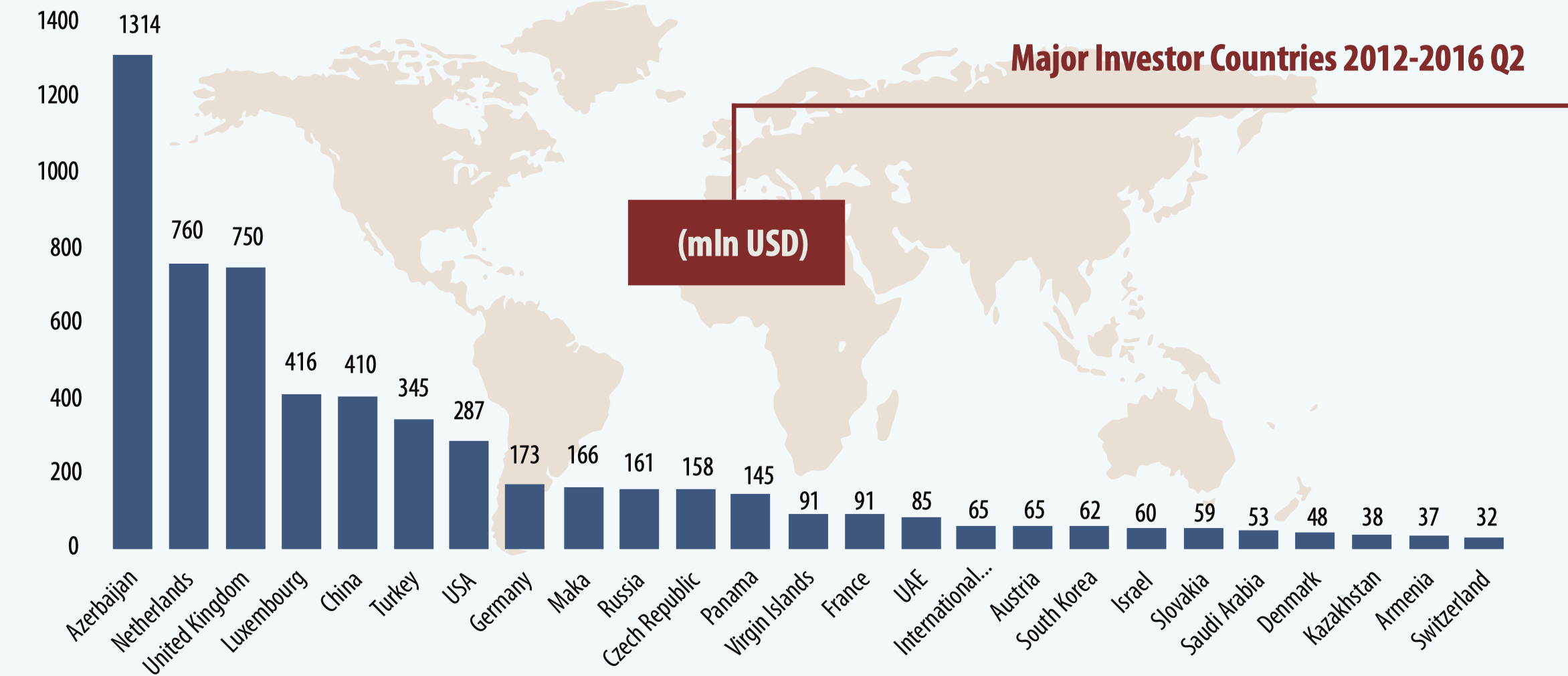
As for the investments, over the last two decades, we have witnessed an intensive growth in foreign direct investment (FDI) flows. In 2016, FDI amounted to USD 1.56 billion. Since, 2013 the largest share of FDI comes on transport and communication sector. In 2016, 42.9% of total FDI were in this sector (USD 671.9 millio), followed by construction (8.3% of total FDI, USD 129.5 million), financial intermediation (8.2% of total FDI, USD 129.0 million) and manufacturing (7.9% of total FDI, USD 124.5 million). As for top investor countries, based on latest data those are Azerbaijan, Turkey and UK, totally 56.2% of FDI.
Please login or subscribe to read the full article.
Login / Subscribe