


Key global trends, namely, the growing competence of top 5 industrially-developed countries (China, USA, Russia, India and EU, which together account for 70% of atmospheric emissions) in reducing of CO2 emission, unanimity of global leaders that global climate change will be a major problem of the global economy in coming years, have a broader influence on formation of the global energy policy.
The Kyoto protocol passed in the same-name Japanese city in distant 1997 was the first global agreement on greenhouse gas emissions, which has become infinitely out of date by now. According to the document, both developed and developing countries controlled inflow of industrial wastes into the atmosphere. However, the emission quota trade has not justified itself as the major “polluters” USA and Canada refused to ratify the document. A new global agreement on climate change, which was worked on at the United Nations Geneva Global Climate Change conference on February 8-13, must be approved in Paris in December of this year and gain legal force by 2020.
“The oil age, just like the stone age, is reaching the end”, one of the European leaders said in his interview with Caspian Energy. And nowadays, it is safe to say that it is coming to end not because the world has run out of oil. Simply the progressive part of the mankind consciously refuses its further usage, knowing that it will result in its undoing. Technology, knowledge and clean environment are three components of the new energy era which has already covered all new segments of the global energy market.
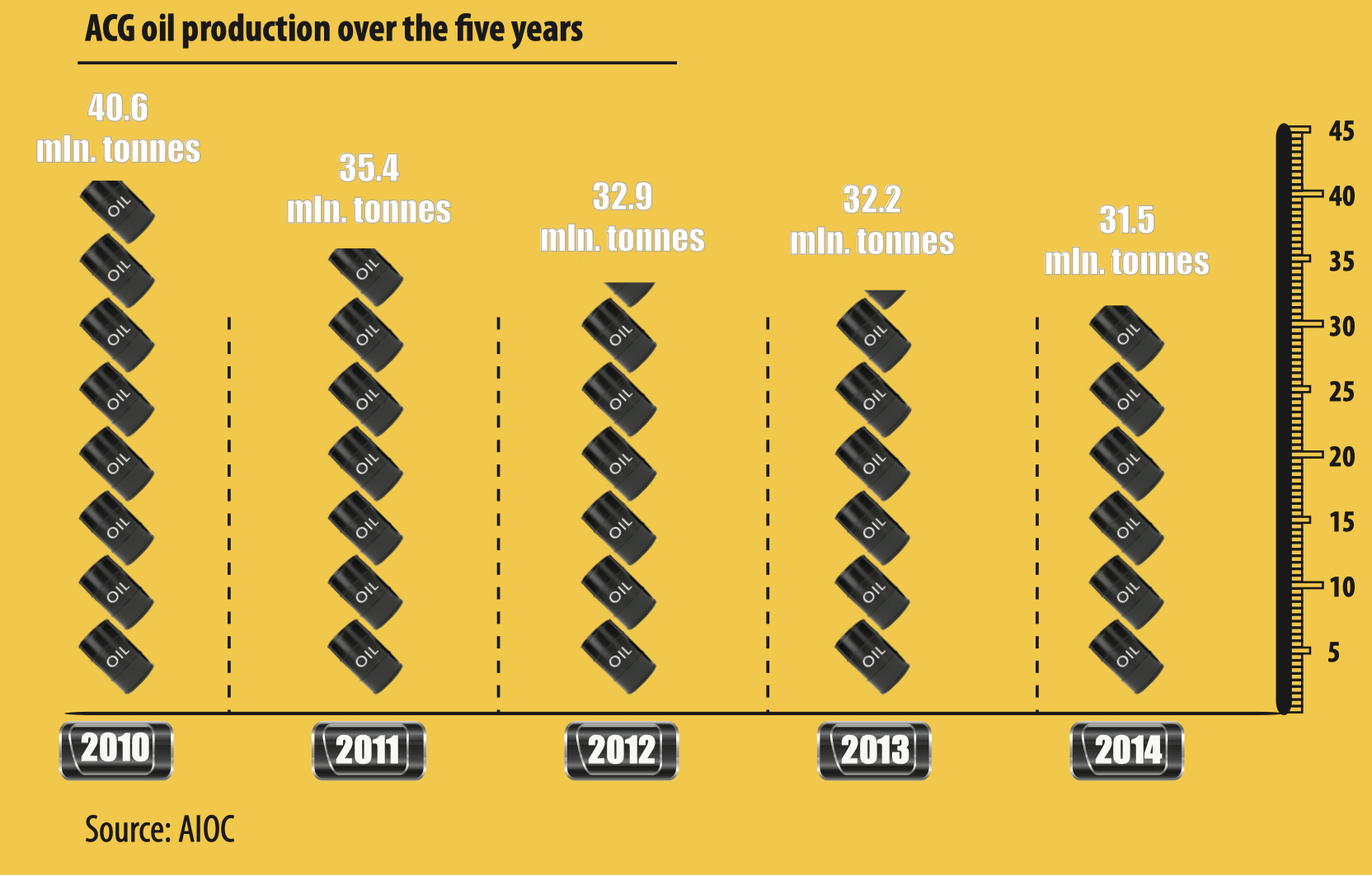
The Caspian region and Azerbaijan, where in the Absheron peninsula global oil industry was established in distant 1871, and first offshore oil was produced in 1950, is not an exception. Gradual shift of the Baku oil industry to bio-fuel and unconventional sources of energy is as real as the work that certain European countries has commenced in order to secure a 100% shift of the EU economy to environmentally clean sources of energy by 2050. It has been promoted by the running “clean air – clear city” state policy, broad geographic and climate opportunities for production of raw materials for cheap bio-fuel in the same areas where oil used to be produced before, as well as decline of BP’s oil production at ACG over the past 5 years, which to a certain extent stimulates rapid development of the non-oil sector of Azerbaijan.
Therefore, to avoid facing touch international regulatory requirements, penalties for polluting emissions and growing operating costs, modern oil refineries have to provide strict control over emission of carbon compounds in their processing activity, energy efficiency, CO2 capture and storage as well as substitution of conventional crude for bio-fuel in order to reduce dependence of enterprises on fossil energy carriers. This is the way the international requirements are going to be in decades to come. So, no modern oil-bio-refining facility will manage to operate without new technologies, modern modeling and software.