


Caspian Energy (CE): Mr. Aslanov, the Information Technologies and Communications Department was established in 2006. Which successes have you gained so far and how do you assess the work performed?
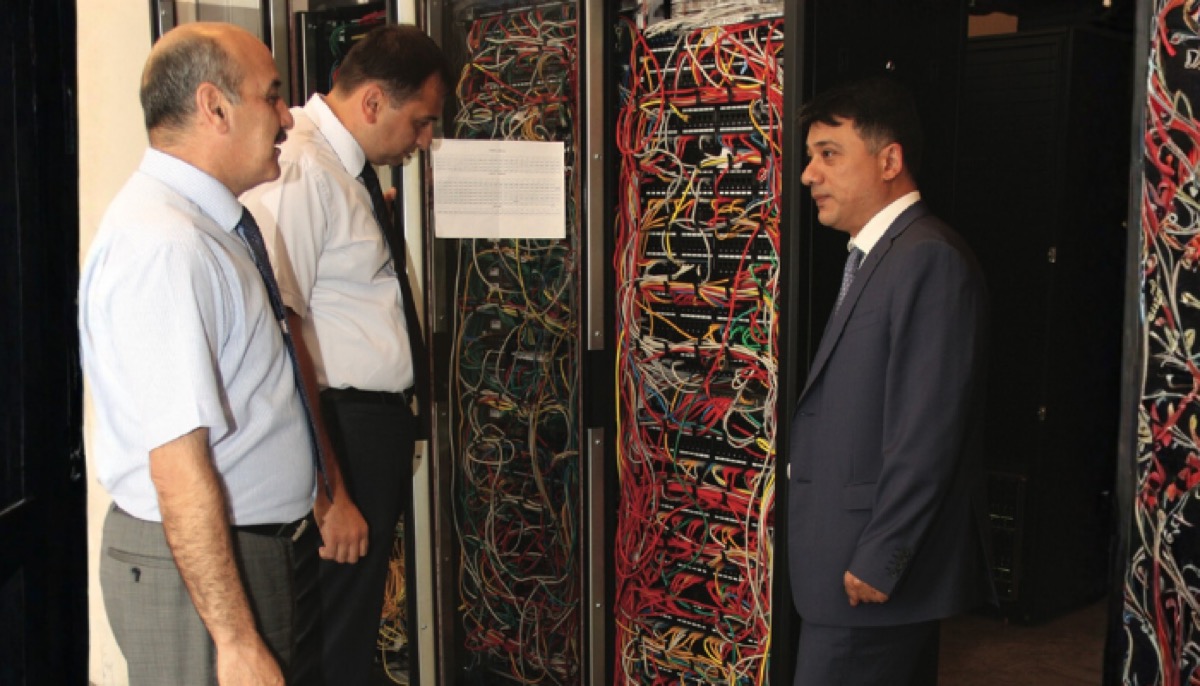
Ilham Aslanov, Head of the SOCAR Information Technologies and Communications Department: During the years of operation the Department has implemented a large scope of works, introduced brand-new information and communication technologies, though at the beginning of our operation we lagged far behind the global progress in terms of information technologies. The system introduced 5-6 years ago still remains modern even today. We have been one of the first in Azerbaijan to introduce the system (IP/MPLS) immediately after when it became available. It was a risky endeavour. But that was a true decision, because nowadays all operators are using IP/MPLS. Besides, we have replaced the telecom network equipment. 7 years ago we operated telephone exchanges of the 50s of the last century. The equipment of the telephone exchange for 300 people occupied a whole building, while nowadays just one small device is able to serve 1,000 subscribers.
I can say that we have reached certain progress, but technologies keep on developing and we managed to introduce them in a due time. The very process of introducing brand-new technologies was too difficult because the operation of communication lines had to be working non-stop. I would like to note in peculiar that no interruptions occurred during that time.
Besides, we had multi-kilometer cables stretching towards different piers, both onshore and offshore, and it seemed impossible to replace them immediately. We were compelled to integrate old technologies into new ones. Today our network operates digital, analog and IP telephones. We have introduced the technology to maintain operation of all our equipment on the balance sheet.
Following the instruction of SOCAR, since 2006 we have been also introducing the ERP system (Enterprise Resource Planning) at firms and organisations to ensure a transition to the international accounting system in accordance with the Law of the Republic of Azerbaijan ‘On Accounting’.
The modules of the ERP system and their components FI (finance), CO (cost accounting), BPC (budgeting and consolidation), MM (material control), SD (sales and delivery), HR (human resources management), Opentext CS (e-document management), FSCM (TRM components), GRC (AC components), BW (business database) etc. have been introduced so far to regulate resources of corporate data, material-technical and human resources.
Today this system enables to manage the said sections of business processes of SOCAR from one center. We created a general technique. This system is rather sophisticated, and it was not easy to introduce it. There were almost no specialists on this system in the country that time. In this regard we were simultaneously engaged in personnel training. Now, when this system is operating, we do not just rest on laurels. We intend to automate other spheres of production too. The use of the ERP systems in SOCAR creates ample opportunities for definition and planning of resources on work activity of firms.
With the help of software tools we have automated the subscriber base of Azerigaz PU, which was not in a proper condition prior to PU’s joining SOCAR. We lent extensive support to Azerigaz PU in terms of introducing advanced information technologies and contributed much to creating a system for smart card gas meters.
We also integrated different payment terminals and branch banks across the republic into our system. We did all this for consumers’ convenience to enable them to learn their debts and pay off, and also perform other operations according to the SELF SERVICE principle.
At the same time, we created a traffic regulation system of SOCAR. This system enables to watch traffic flow (distance, speed, location, etc.). The Transport Department is the current user of the system. This system is aimed for watching the flow of approx 10,000 cars.
CE: What work is now performed to create a corporate database of geological, geophysical and field data?
Ilham Aslanov: Creation of a database of geological, geophysical and field data about hydrocarbon fields of Azerbaijan is in the process on the basis of ODLAR project. ODLAR’s database has been designed for interpretation and modeling systems.
Special software for seismic and petrophysical interpretation, reservoir evaluation and modelling, resource evaluation and oil and gas production monitoring is used in the process of building models on development of fields. The work group on development and deployment activities attended the full course of training on date collecting, documenting, management and scanning. At the international conference held last year in Malaysia we told about the work SOCAR performed in this area. Then decision was taken to hold the next conference in Baku. Preparation for hosting a conference at the highest level is now in a dynamic process.
CE: How do you provide security of systems created in SOCAR?
Ilham Aslanov: I can distinguish technical, methodical and administrative security protection. In terms of technical protection, we have a special department to tackle external cyberattacks. We also have the Information Security Department responsible for methodical safety. In general, work is organised in such a way that it is divided between the departments for the purpose of improving security. I would also like to note that we have received the security certificate ISO/IEC 27001 from the Turkish Standards Institution. They expressed full satisfaction with the structure we created. In general, I can tell that the safety issue is very serious and priority for us. From time to time, we conclude agreements with various companies to carry out tests and check up safety of our system. They prepare reports on system’s safety and the degree of its vulnerability.
CE: What work is performed in highly-skilled personnel training?
Ilham Aslanov: Our employees regularly take part in different trainings, and we allocate enough assets on this purpose. For example, we have trained highly-skilled specialists on the ERP system from global manufacturer SAP. From time to time, our specialists go abroad to take part in skill upgrading trainings. Thanks to it, the quality of rendered IT services has been increasing, which is important for efficient activity of the entire company. Also, we actively work with young specialists. We have a summer program for students. Every year about 40-50 people work as trainees and more than a half of them is paid for the activity. The most talented young specialists remain to work for us on a full-time basis.