


Caspian Energy (CE): Mr. Amanjolova, is it possible to say today that the countries have approached a consensus on the challenging status of the Caspian Sea? How would you estimate the degree of readiness of the Convention on the legal status of the Caspian Sea? What are the expectations of Kazakhstan from the forthcoming Summit of the leaders of the Caspian littoral states?
Zulfiya Amanjolova, Ambassador at Large, Ministry of Foreign Affairs of the Republic of Kazakhstan: The Caspian negotiation process is five-sided and based on the consensus principle, which suggests working out a unanimous position of the littoral states on all legal challenges of the Caspian Sea. This is a complex problem, including the widest range of matters on delimitation of the water area and bottom of the Caspian Sea, regulations with regard to marine navigation in the zones with different legal regime, water biological resources industry, protection of the maritime environment, subsurface use, choosing routes for construction of undersea pipelines, security of the Caspian in all its aspects and many others.
At present, the negotiating parties adhere to unanimous approaches and found mutually acceptable solutions on several some items of the Convention on the legal status of the Caspian Sea. Nevertheless, taking into account diversified national interests of the states, there are still challenges on which the positions of the parties differ, so they should continue a search for consensus. This is the reason why it seems difficult now to settle probable terms of finalization of this document.
We believe that the five littoral states have considerably progressed in the rapprochement of positions on one of the main issues of the legal status of the Caspian Sea, which is the delimitation of its water area. The delimitation principle of Kazakhstan for the Caspian Sea, which suggests creating three zones with different legal regimes (territorial waters, fishing zone and common water space), is supported by the other parties of the negotiation processes and can be taken as a basis for achieving a compromise on the delimitation of the water area of the Caspian Sea.
Earlier the parties adhered to quite opposite approaches to the matter: from delimitation of the sea by the lake principle up recognizing it a common sea without identifying sovereign zones.
The alternative approach of Kazakhstan that President Nursultan Nazarbayev sounded at the Second Caspian Summit hosted in 2007 in Tehran incredibly contributed to the rapprochement of the positions of the parties. The offer was to make the Caspian Sea a unified national sovereign zone with the width of 22-25 sea miles.
The similar range of the width of a national zone (24-25 sea miles) was approved by the Presidents in 2010 in Baku at the 3rd Caspian Summit as a landmark for coordination of the extent of water space within its limits on which the sovereignty of the littoral state will extend.
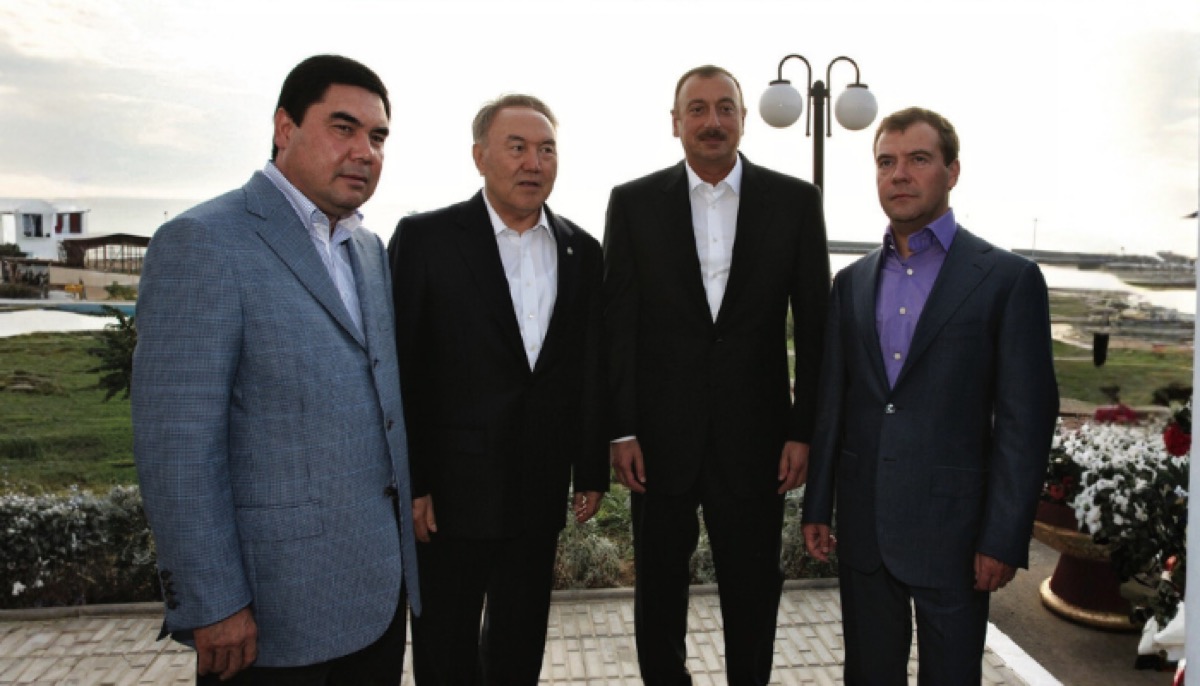
We are hopeful that late in September of the current year the parties will be able to achieve a consensus with regard to the principles of implementation the parties’ activity at sea, which can underlie a Convention on the legal status, at the 4th Caspian Summit in Astrakhan. Once agreed, unanimous approaches would certainly have a positive effect on finalization of work on a draft Convention. They would enable to resolve a few most fundamental matters on the high-level and consequently approach a signing of this fundamental international treaty for the Caspian Sea.
CE: What documents shall be signed during the forthcoming Summit of the leaders of the Caspian littoral states in Astrakhan?
Zulfiya Amanjolova: At present, the five states have almost completed work on most of the documents to be signed at the summit. However, their signing will depend on whether all littoral states will be able or not to complete all required interior procedures prior to the Astrakhan summit of the leaders of the Caspian littoral states. In accordance with the resolutions of the 3rd Caspian Summit, the parties agreed to facilitate joint efforts and work out a draft agreement on water bioresources management as well as an agreement on creation of an intergovernmental commission for this purpose. Also, the leaders of the five Caspian littoral states charged to work out a mechanism of introducing a moratorium on sturgeon fish catching in the Caspian Sea. Experts have performed these instructions. The summit ‘portfolio’ also includes agreements that shall regulate interaction of the parties if emergency situations occur at sea, as well as creation and development of a complex regional data acquisition and exchange system on the condition of the Caspian Sea.
Please login or subscribe to read the full article.
Login / Subscribe