


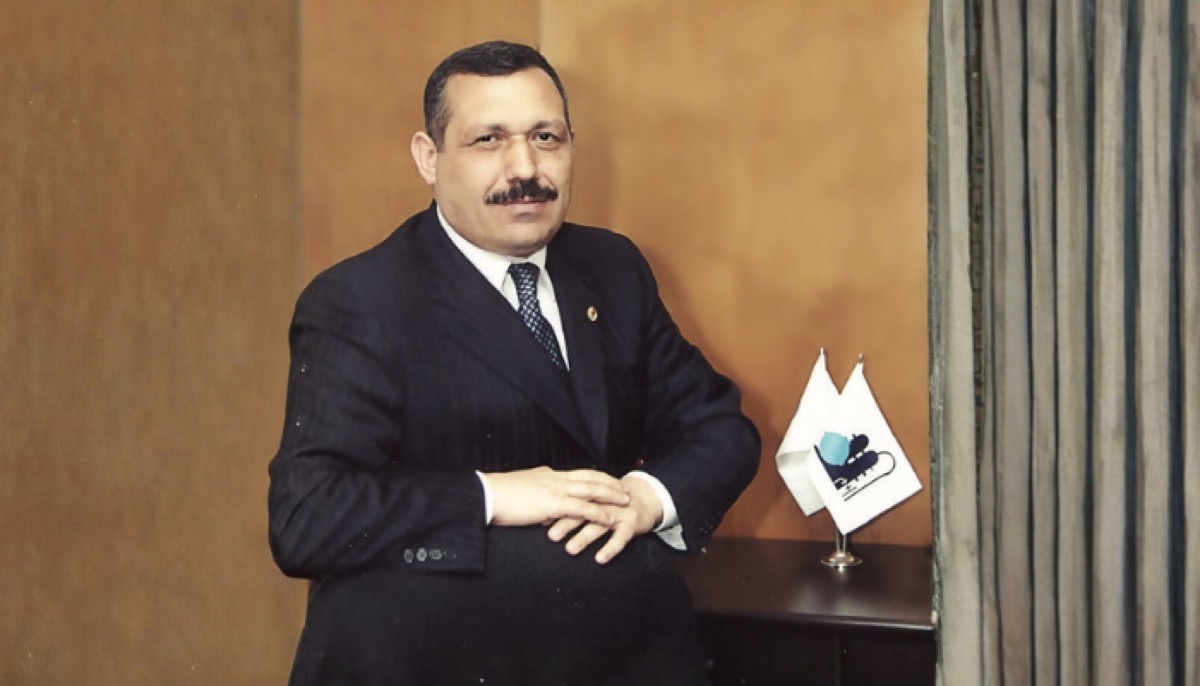
Caspian Energy (CE): Mr. Ismayilov, Heydar Aliyev Baku Oil Refinery is the flagship of the oil processing industry of Azerbaijan. How would you assess the development of the plant through prism of the past years?
Elman Ismayilov, Director, Heydar Aliyev Baku Oil Refinery: Heydar Aliyev Baku Oil Refinery was created in accordance with the former USSR Oil Industry Ministry’s Decree issued on July 29, 1953. The main era of refinery’s development along with the introduction of new technologies and production facilities is inseparably associated with the name of Nationwide Leader of Azerbaijan Heydar Aliyev who personally initiated this work in 1970s. It is noteworthy that all units currently operating at the refinery were built after 1976. Owing to the far-seeing policy of Heydar Aliyev, the 6MTA ELOU-AVT-6 plant was commissioned (in 1976) in the refinery within a short period of time; the process took only 2 years. In December 1980, he initiated construction of the catalytic reforming unit for production of high-octane petroleum on basis of the license of the American UOP Company that is considered to be a global leader in this sphere. The refining capacity of the catalytic reforming unit built in accordance with the project of the French company LITVIN totals 1mln tons.
Initially this unit was planned to be built at Moscow oil refinery, but later owing to personal interference of Heydar Aliyev this unique device was commissioned in Azerbaijan. Working in Moscow in 1980s, Heydar Aliyev kept contributing directly to further development of the sphere. Thus, a delayed coking unit was launched at BOR in 1986. Later, the catalytic cracking unit G-43-107M was commissioned in 1993 after Heydar Aliyev’s return to power.
The Contract of the Century signed on September 20, 1994 owing to a titanic labor of Nationwide Leader Heydar Aliyev gave a new impulse to the development of both oil production and oil refining in Azerbaijan.
This year we are celebrating the 20th anniversary of the Contract of the Century. Considering the important role that the Nationwide Leader played in history and development of Baku Oil Refinery, it has been named after Heydar Aliyev since 2004.
At present, Heydar Aliyev BOR is fully meeting Azerbaijan’s demand for oil products and even exporting them by means of four units. The processing capacity of the refinery totals 6 mln tons of oil per year. Plans are developed for increasing the refining capacity. Motor fuel is the main product of the refinery along with all types of petrol, diesel fuel, jet fuel as well as liquid gas, coke, black oil and other oil products.
CE: We know that full-scale repair of process units of the refinery is underway now. What work is carried out and which goals is the refinery pursuing?
Elman Ismayilov: Maintenance work is being carried out almost at all processing units of the refinery. The objective is to meet growing demands of domestic and external markets with qualitative oil products. Moreover, the work on introduction of advanced technologies in production, modernization and application of automatic control systems over processes is being carried out at the refinery in order to provide rational oil refining. The main goal for the use of latest technologies in production is to reduce operating costs, energy consumption, increase the depth of processing and produce high-quality products meeting the world standards.
The aim of the repair work carried out at the Refinery is to increase the oil processing depth, reduce energy consumption, enhance productivity of oil processing units and ensure safe operation.
The scope of reconstruction and repair work was planned in advance and the work schedule was drawn up for each unit. As per the schedule, in January of the current year we finalized the repair of the hydro-treating unit of the catalytic refining facility. The repair was carried out in connection with the problems revealed on this unit. Output lines of the compressor #111 were also cleaned during the repair work.
In February we accomplished repair of the diesel hydro-treating unit of the fluid catalytic cracking facility. The defects of the heat-exchange block were eliminated during the repair work. We substituted unsuitable to operation pipes in S-102 furnace with new ones and performed hydraulic tests in the furnace.
At the same time late in March we performed repair of the catalytic refining facility and the first line of the delayed coking unit. In early April 2014 we finalized repair of the catalytic refining unit and delayed coking unit.
Further, the operation of the main crude oil distillation unit ED-AVQ-6 and the catalytic cracking unit was suspended for repair. During the repair work the internal device of the column of the atmospheric and vacuum unit of the ED-AVQ-6 facility, transport lines and cyclonic separators were replaced inside the regenerator of the catalytic cracking facility.
Repair of both facilities, crude oil distillation unit and catalytic cracking unit, was successfully completed in May.
As you know, the most important task for now is the shift to the European quality standards. We produce petrol and diesel fuel meeting Euro-2 standard. Besides, our oil products also conform to Euro-3 standard on many parameters. The main operations are currently carried out in this direction and will find their solution soon as they are associated with the use of new technologies. We have focused our work mainly on reduction of benzol content in petrol. Its content in euro-standards makes 1%. This figure reaches 5% there. The second issue concerns reduction of sulphur content. In this regard, we hold consultations with EOP Company about Neroks units. The work on preparation of the feasibility study of the project is underway now.
Another big project is aimed at raising capacity of the catalytic cracking unit up to 3 mln tons per year. As it is known, the demand for petrol is growing because of the growth of the automobile fleet by 50,000-100,000 vehicles per year. Our task is to meet the growing demand for fuel and bring the quality of oil products to conformity with Euro-3 and Euro-4 standards until the new oil refinery is launched in Garadagh which shall produce petrol meeting Euro-5 standards.
CE: What have been the main performance results of the oil refinery since the beginning of 2014?
Elman Ismaylov: All operating processes of the catalytic cracking, delayed coking units and other sections of the refinery have been already computerized. Overall renovation has been carried out at workshops and production sections. All necessary conditions have been created for employees including provision of special summer, winter clothes, footwear and jackets. Milk is supplied for employees engaged in jobs with harmful working conditions. All safety regulations, quality of products and ecological requirements meet international standards at the refinery.
The work that the refinery specialists perform enables to ensure high level control over production process that also leads to achievement of positive results. The control over waste of energy, reagents and water meant for chemical purification has been increased. The percentage rate growth of output of light products after primary processing has been ensured. I.e. it is much higher than the plan. All production processes ensuring development of the refinery have been thoroughly analyzed. Appropriate organizational-technical measures have been worked out and introduced for solution of arising problems.
According to the outcomes of 4 months of 2014, the management and the staff of the refinery have successfully fulfilled all the tasks and assignments of SOCAR. As the result, high performance indicators were fixed owing to maximal use of human and technical resources in implementation of the production program.
The refinery processed 1712.9 thousand tons of crude through January-April 2014. Of this total, 1194 thousand tons and 518.9 thousand tons fell to the share of oil and external semi-finished products respectively.
Owing to optimization of work associated with the operation of the refinery, rational usage of capacities of processing units, especially catalytic cracking unit that refers to reprocessing and delayed coking processes, created were conditions for production of expensive oil products out of bright stock of heavy and light fuel oil resources obtained during refining.
Visiting the refinery in 2004, President of Azerbaijan Ilham Aliyev expressed his high evaluation to the work of oil refinery workers and said: “You know perfectly well that the depth of oil processing is the main indicator for workers engaged in this sphere. I am pleased to note that this indicator has exceeded 60% since 2003”.
Fulfilling President’s recommendations, the staff of the refinery has increased the processing depth up to the highest rate since the beginning of 2014. Thus, following the order of the head of the state for maintenance of the high rate processing depth as it plays an important role in oil refining industry, we raised the processing depth up to 89% through January-April 2014. This indicator was achieved owing to the optimization of operation of production units, especially due to the growth of efficiency of oil recycling units (catalytic cracking and delayed coking).
In general, the Oil Refinery fulfilled the production plan by 101.4% during January-April 2014.
The fact that the refinery, named after Nationwide Leader Heydar Aliyev, has been actively developing is clear. All of it promotes further fruitful work of the personnel this year and fulfillment of all tasks assigned by the management of SOCAR.