


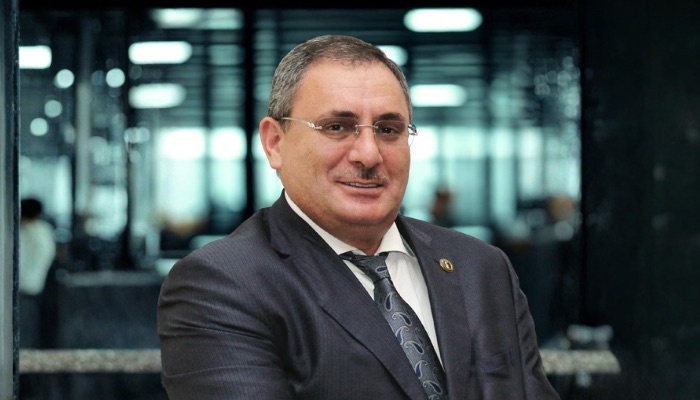
Caspian Energy (CE): Mr. Gasimov, what activities are performed to improve the global investment grade of SOCAR?
Suleyman Gasimov, Vice-President on Economic Issues, State Oil Company of the Republic of Azerbaijan (SOCAR): First of all, I would like to express my gratitude to the staff of Caspian Energy journal and the executives of the Caspian European Club (CEIBC) for inviting SOCAR and me as SOCAR Vice-President to take part in CEIBC events. The Club creates opportunities to inform general public and business circles participating in the Club as its members about the SOCAR’s activities, operations, successes and implemented projects. I think our today’s meeting does not differ from the previous ones and pursues the same objectives. With pleasure I accepted your invitation and I am ready to answer all questions that you and the society are interested in. I am ready to inform the general public about the performed works.
As far as your question about the investment grade is concerned, I would like to underscore that the global investment grade obtained by SOCAR has already brought results. As a result of the long-term cooperation with the global rating agencies Standard&Poor’s, Fitch Ratings and Moody’s, starting from 2008-2009 SOCAR has been obtaining global grades. We are strongly committed to improving our ratings. First of all, when we have been conferred the rating by Fitch Ratings the condition was that it should not exceed the country rating, and it was equal to the rating of Azerbaijan. With the country’s investment grade growing stably, we have applied to the agency requesting to review our rating. After the relevant analytic surveys performed, Fitch Ratings has raised the investment grade for SOCAR. It is now at –BBB, Outlook ‘Stable’. This rating is considered as a rating of investment attractiveness.
It is a common knowledge that obtaining of investment attractiveness ratings is a very complex process. However, if an investment rating is obtained, it is much easier then to receive next ratings.
We continued work in this direction. It is commonly known that as minimum two credit ratings are required for implementation of investment projects. We applied to one more rating company, Moody’s, and started cooperation in this direction. Some time later obtaining a rating from this company crowned our joint cooperation. Moody’s announced that it had conferred to SOCAR a corporate rating and probability of default rating at Ba1, Outlook ‘Stable’.
Considering the cooperation between the Ministry of Finance of Azerbaijan and Standard&Poor’s rating agency, we established cooperation with this company too. At present the rating from Standard & Poor’s for SOCAR is at ВВ+, Outlook ‘Stable’.
So, today SOCAR has the ratings of all the three world-renowned rating agencies recognized by international investors. We continue cooperation with them to improve our rating. We requested the rating companies to provide us information about their methodology: which criteria and indicators they consider important in the process of estimating a company’s performance. Our cooperation encouraged us to make a decision to perform works to maintain the indictors that obtained a high rating and improve the indicators with low rating. This work is now actively in process.
We hope our intensive cooperation with the rating companies will enable us to raise the rating of the company. When the rating agencies estimated our activity, they mentioned deficiency of funds in implementation of large investment projects. In turn, we submitted them a scheme of funding our shares in these projects. These are large projects under the common name of Southern Gas Corridor, including implementation of Shah Deniz 2, Southern Caucasus Pipeline, TANAP, and TAP.
We also took part in the tender for acquisition of gas transition network operator Desfa. Fitch Ratings expressed worries concerning the company’s liquidity if SOCAR finds funds for this transaction. We immediately informed the general public that SOCAR’s participation in the tender was feasible since the funds would be provided at the expense of government investments into the equity stock of SOCAR and there was a relevant decision of the government. It removed their worries.
I would like to emphasize that on February 25, 2014 the President of the Republic of Azerbaijan, Ilham Aliyev signed the Executive Order on Some Measures for Shah Deniz Stage II and Other Projects on Creation of the Southern Gas Corridor. To fulfill the Order, a new company was established with 49% owned by SOCAR and 51% owned by the government to ensure efficient operation of Shah Deniz Stage II, Southern Caucasus Pipeline Expansion Project, Trans-Anatolian and Trans-Adriatic Pipelines. These gas projects will be funded at the expense of the funds of the State Oil Fund of Azerbaijan and a new company, Southern Gas Corridor. Fulfillment of this document is a great step ahead in future improvement of SOCAR’s rating.
Oil and gas reserves also impact a rating (editorial note: their increment and discovery of new fields). As for exploration, we are working on Umid field, where SOCAR holds 80%. We hope that after the full estimation of reserves of this field, they will be added to our reserves. Hydrocarbon reserves on the fields of the State Oil Company of the Republic of Azerbaijan are estimated together with Miller&Land (USA) as required by the audit. I believe we will get these results before a release of audited financial statements.
CE: How successful were SOCAR’s Eurobond issues? Are there any plans to continue attraction of funds from the stock market? What could you say about the financial stability of the Company in the international market?
Suleyman Gasimov: In general, SOCAR’s securities issue in the international market is the fact that proves the financial stability of the company in the international market.
As is known, in 2012 and 2013 we issued our Eurobonds. In 2014 the government issued its securities. I think we as a state-owned company represent both the company and the government in the international financial market. In the opinion of independent financial analysts of the international market, auditing companies and rating agencies, the securities listed on the London Stock Exchange can be considered very successful securities. And the ratings conferred to the company were much helpful in this regard. Thanks to them, we were able to attract long-term funds at low interest rates.
Five-year Eurobonds worth $500 million issued in 2012 were placed at the coupon rate of 5.45% (1% fall to US dollar risks for 5 years from US Federal Reserve System and 4.45% are company’s risks in the market). One year later we placed Eurobonds to the sum of $1bn. at the coupon rate of 4.75% (1.99-2% are US dollar risks for 10 years from FRS and 2.75% are company’s risks in the market). SOCAR’s risks during the second public offering of Eurobonds fell down almost two times, which is the high indicator of growth of our company’s estimation.
CE: Do you intend to continue issuing securities in the future?
Suleyman Gasimov: When issuing Eurobonds, SOCAR irrespective of itself undertakes certain commitments. We should constantly inform investors, hold meetings with investors (road show) at the end of each year. At the end of 2013 we hosted meetings in London, New York, Boston, and Los Angeles. The purpose of the meetings was to inform large investors about the activity of SOCAR and set up activities regarding a next placement of Eurobonds.
Eurobonds are debt investments and these funds should be returned. But we are interested in a next issue of Eurobonds. The first securities were placed for a period of 5 years, and the second ones for 10 years. We planned to place the third issue for a longer term. In this regard, we wanted to find out interests and intentions of investors. Many of them consider that the interest rate of the FRS for the US dollar for longer terms set at 2-3% does not reflect reality. If this rate is higher, respectively investors will obtain less profits. Therefore they carefully treat long-term crediting. Nevertheless, some investors want to have long-term securities in their portfolio papers so as to safeguard profit of their clients.
Besides, issuing Eurobonds is the operation when it is necessary to begin and finalize this process within a short period of time because an audited financial report has a certain validity period, then they lose their attractiveness.
Currently the government issued its securities creating more favorable conditions for us in the future. In this regard, we did not activate an issue of securities in January-February. At the moment we will continue studying the market and demands of the company, but this question is still on the agenda. Together with the consultants we intend to place Eurobonds in the European market in the future, possibly for a longer term.
CE: What is the impact of regional risks on investment attractiveness of SOCAR?
Suleyman Gasimov: We assess regional risks first of all on the markets where we work. First of all, we are working in the market of Georgia. Many factors could influence our activities in the period of Georgian democratization. But we endeavoured to expand our activity in this country. It concerns both sales of oil products, and also gas supply to households. Risks in each state feature both positive and negative moments. For example, when the government changed in Georgia, politicians in their statements for general public called for reduction of prices for oil products. Naturally, it in a certain degree affected the income of SOCAR in this country. But, despite this, as is known, we make long-term investments in this country, which are regulated by the international law, and regardless of changes in the government each state is keen to protect foreign investments.
Our business in Ukraine is gradually expanding. The latest events in Ukraine have proved stability of our activities and raised the rating of our filling stations that operate under the brand of SOCAR. In Ukraine we buy new areas and filling stations, because when political and country risks grow and deterioration of the economic growth happens in the country, it is necessary to make investments so as to develop business in the future. With pride I would like to say that company’s investments in Georgia and Ukraine are profitable and generate dividends.
In Turkey we have the largest investments. The events in Turkey have definitely affected the shares of Petkim owned by SOCAR. But due to the Azerbaijan-Turkish relations and the policy of SOCAR, it did not have a strong negative impact on our companies in Turkey.
Besides, the construction of Star oil refinery (over $5bn of investments) is in the final stage. Difficulties were connected with the source of funding (attracted funds made about $3.5bn). But at present the hard work on this project remained behind. The purpose was to complete financial issues on March 31. But some Eximbanks (of Korea, Japan, the USA, Italy, Spain, etc., attracted investments of $2.9bn.) are ready to complete their financial commitments by the middle of April. In this regard, the terms on fulfillment of financial commitments were a little prolonged. So, we informed all international financial institutions involved in the project and received their consent not to change financial conditions on the project. We think we will close this question soon.
The European Reconstruction and Development Banks, the IMF, WB (up to $600 million of attracted investments) also took part in the negotiation process. But at the last moment they did not agree with Eximbanks and left the negotiations, though SOCAR supported them to the very end. Those were the issues of disagreements continued for many years between financial structures on a number of insignificant for us issues. Since we received more investments from Eximbanks, we made a decision to continue working with them. The place of the European Reconstruction and Development Bank, the IMF and the WB was filled by the alliance of Saving Bank and Denizbank (up to $600 million of attracted investments for a period of 15-18 years). We as the project owners did not feel oppressions.
As you know, Turkish Turcas Petrol holds a 18.5% stake in this project. However, Turcas Petrol expressed an intention to sell 13.5% of shareholding and keep 5% in the project, and then sell the entire share package. This decision was made because they could not take part in such a large project as Star oil refinery with a small package of shares. SOCAR intends to buy this stake togther with Turcas Petrol. We informed all financial institutions about it and do not see any financial problems. I would like to note that Turcas can sell its shares in this project only to us, in this way the oil refinery will belong fully to Azerbaijan. As is known, our state possesses 40% shares of this oil refinery. It is a good project and will show its efficiency in future.
Along with it, the Petlim (subsidiary of Petkim) commenced construction and reconstruction of the biggest and deepest container port in Turkey. In this regard, signed was a contract with the Maersk Company which will get this port for a long-term management.
Meanwhile, a contract on wind energy project was signed with the Alstom Company at the annual session of the board of Petkim. The contract was signed by SOCAR power and Alstom companies. According to the contract, the plants will be installed on Aliagha peninsula where Petkim is located.
CE: Which parameters does SOCAR’s recently approved financial strategy envisage?
Suleyman Gasimov: We have not had such document as financial strategy before. The necessity for introduction of corporate management elements such as risk management, internal audit conduction, etc., arose as we introduced international standards. Now we are working on improvement of the internal control system.
The presence of such strategy is one of the attributes of the international company. Different strategies of international companies were grouped together as the result of researches. It was decided to adopt a strategy taking all aspects, starting from exploration right up to an end user, into account.
SOCAR’s strategy has set major goals till 2025.
As we attracted certain loans to the market, certain restrictions were set on each of them, including on profits, assets, pay-back period and other requirements. On every single case of attraction of funds we applied to international consultants who assessed this process. However, no common assessment of the impact on the balance of the company was carried out. Therefore, we worked out a financial strategy of the company due to the recommendation of the Ministry of Finance. PwC was invited as a consultant to develop a strategy. They investigated impacts of all credits on the balance of the company, so we set certain restrictions for the company. A commission was created in SOCAR for achieving the set goals. The commission inspects future economic viability, sources of financing and other aspects when making investments and financing large-scale repair operations, and gives adequate recommendations. According to our strategy, internal rate of return must be above 12% in all projects. We may take credits constituting maximum 58% of cost price of all assets. All of these objectives have been approved by the management of SOCAR.
We have also been optimizing business activities for the past years. In this regard, we announced a tender won by the company Ernst&Young. First of all we optimized business activities of the “Complex Drilling Works Trust, Caspian Sea Oil Fleet department and Azneft PU. This work is currently carried out for oil pipelines’ operation supervision and also oil refineries. We reconsidered a strategy after completion of optimization operations in Azneft PU. Then, they prepared an oil production strategy for us till 2025. This order is going through the registration process now. We expect SOCAR President to approve it soon. In this context, goals on oil production, refining and other parameters were determined for domestic and external markets. Internal prices were analyzed as well. Studying the structure of pricing for oil products and natural gas in the domestic market, it turned out that Azerbaijan has the lowest price in the region. However, we had the highest excise tax.
We applied to the Tariff council to reconsider the pricing structure that influenced our further financial indicators. The price increased, but the excise tax did not decline. Both the budget is receiving profits and SOCAR is getting additional profits worth 500 mln AZN per year. It is a high indicator of profits growth of SOCAR possessing assets to the sum of 22 bln AZN.
CE: What are the results of the financial activity? What could you tell about the total credit portfolio of SOCAR?
Suleyman Gasimov: According to the non-audited 2013 financial reporting of the company, if assets of the company totaled 21.8 bln AZN as of December 31, 2012, they totaled 23.1 bln AZN as of December 31, 2013. The growth of assets totaled 1.3 bln AZN.
If the net profits totaled 955 mln in 2012, this indicator reached 1 bln 167 mln in 2013. The growth totaled over 200 mln AZN. Meanwhile, the operating income totaled 3.1 bln AZN both in 2012 and 2013.
Total credit portfolio of the head office reached $2.9 bln. Of this total, $1.5 bln fell to the share of Eurobonds, $500 mln (about $750 mln) fell to the share of CBA’s credit, and the rest fell to the share of small loans worth $100-150 mln.
Considering the whole group of SOCAR, the credit portfolio of the company totals about 5 bln AZN. Of this total, 3.6 bln and 1.4 bln account for long-term and short-term debts respectively. These credits include loans on projects in Turkey (Petkim account for 1 bln AZN alone), Georgia and credit line of SOCAR Trading.
CE: How will SOCAR build its financial relations with a new company created for controlling gas projects of Azerbaijan?
Suleyman Gasimov: The order of the President of Azerbaijan provides that 49% of the new company will belong to SOCAR. The creation of the Southern Gas Corridor company is aimed at efficient management of such projects as Shah Deniz Stage II, expansion of the Southern Caucasus Pipeline Expansion Project, construction of the Trans Anatolian and Trans Adriatic gas pipelines. About $15 bln is needed for financing Azerbaijan’s share in these projects. The state decided to finance these projects at the expense of means of the State Oil Fund of Azerbaijan. This company was created for issuing securities and selling them to SOFAZ. The abovementioned projects will be financed at the expense of this credit. The new company will return funds with interest to the State Oil Fund by means of gained profits. And only then, the profits of company will be shared on basis of 49/51 principle. It has been reflected in the order of the Head of State.
If SOCAR lent this money directly from SOFAZ, it would be reflected in our financial balance. This does not correspond to our financial strategy. This issue had been discussed for a long time. A state commission had been created whereupon a decision on creation of the company was made. The company has already started its active operation.
CE: Considering its assets in Greece, what are the opportunities for SOCAR to participate in the European market? What could you tell about the possibilities of increasing European and international assets?
Suleyman Gasimov: I would like to note that creation of the new company was associated with financial restrictions. As far as the Desfa Company is concerned, the funds will be provided from state investments into the equity capital of SOCAR.
Investments into gas pipelines of Greece have been assessed by our company and taken into account by the government of our country. These assets will play their positive role in entry of Azerbaijani gas into the Greek market. Thus, SOCAR will gain an additional access to the European market which is strictly controlled by the European Union. A company has been created for controlling these processes. It is currently involved in certain organizational procedures. We think that procedures will be completed after approval by corresponding institutions of EU (till August-September 2014).
Regarding the increase of international assets, we may get back to this issue after recovery of certain part of investments made in Turkey.
According to our oil-gas strategy, we will invest in discovery of new fields inside of the country. We are considering assets with minimum risks at international market, i.e. small packages of assets in already discovered fields that possess licenses for production in countries which we are interested in. Among them noteworthy are Kazakhstan, Iraq, Vietnam and Morocco which are offered by our consultants.
CE: Is it beneficial for Azerbaijan to sell gas on spot market or through “take or pay” long-term contracts?
Suleyman Gasimov: This issue must be considered through the prism of presence of customers and reserves. Shah Deniz gas customers have already been determined. They are European companies and corresponding agreements have been signed with them. As to country’s fuel-energy balance, approved by the government, which includes gas that is produced at SOCAR fields, associated gas at Azeri-Chyrag-Guneshli (ACG) and Shah Deniz gas, gas is primarily supplied for meeting domestic needs. 60% of gas supplied to the domestic market falls to the share of Azerenergy OJSC. 40% goes to Azerigaz PU. We sell the rest volumes to Georgia and Russia. We have signed a very beneficial contract with Gazprom, where the price is determined in accordance with market requirements. Future gas volumes, to be extracted from Umid and Absheron fields, will also be sold along the Southern Gas Corridor. We are working with RF and Europe on basis of the “take or pay” principle. Long-term risks have been assessed in accordance with international formulas.
CE: Considering the statements of large oil-gas companies, what is your vision about final participation of SOCAR in TANAP project?
Suleyman Gasimov: A new company is going to become a shareholder of TANAP. SOCAR has so far owned this share. Turkish companies possess 20%. We have 80%. BP is going to buy 12% from us. The corresponding agreement has already been initialled and will be signed soon. We thought that we would retain 51% of TANAP (12% was intended to be sold to BP, 12% Statoil, 5% Total). Total also wants to sell its 10% stake in Shah Deniz project, but it has not been recorded yet. Statoil has already sold 10% out of 25% in Shah Deniz project. Statoil explained it with changes made in its strategy. They want to be broadly engaged in their water area and keep 10-15% share packages beyond it. SOCAR bought 6-7% out of a 10% stake of Statoil. The agreement has been signed and no payment has been made for this deal yet. To all appearances, the deal will be completed by a newly created company “Southern Gas Corridor”. The rest part (3.3%) will be purchased by BP.
Azerbaijan is interested in construction of TANAP, and the companies’ leaving the project will not affect its implementation. The new company will finance this construction. SOCAR possesses 49% of interest in the new company. This is our reality. We will pass our stake in TANAP to a new company and will participate in the project as a shareholder of this new company. A new company and state commission will determine further distribution of shares in TANAP.
CE: What could you tell about projects aimed at optimization of company’s operation?
Suleyman Gasimov: We are developing different lines of domestic development. The major line is to have the internal control system developed. PwC has become a winner of the tender for this work.
Along with it, we have launched electronic circulation of documents since autumn of 2013. We started this work in the head office. Now we are deploying it in other subdivisions of the company as well. It is an advanced step in management of the company. It indicates to what degree we are becoming closer to new technologies. We have earlier introduced the treasury module that enabled to ease the work with financial institutions and apply the mechanism of control over operations. We are currently modernizing these processes as it will improve the operation of the treasury. I assume we will introduce this project in mid of this year.
Automation of operational modules is the most important aspect. Here, the matter concerns planning of production and repair, quality control and projects management. We have been engaged in introduction of these modules for two years and have already created a legal framework. Project decisions have already been made. Now we are working on the software of this module and plan to have it completed by mid of the year.
We will continue developing control modules in all subdivisions of the company, as well as issues of integration between modules that are being deployed. All of it promotes introduction of new control systems based on advanced technologies.
We will set operational strategic controlling over the company after introduction of these modules. About 30 strategic charts are allocated to every manager in the company. These charts undergo testing, and we are ready to introduce them. These charts will provide the top-management of the company daily report about changes of indicators and other precise data for making important and timely decisions.
I think that introduction of electronic circulation of documents and strategic charts, applied in foreign companies, will have a positive effect. We are proud of doing this work and moving toward international standards along the innovative way of development.