


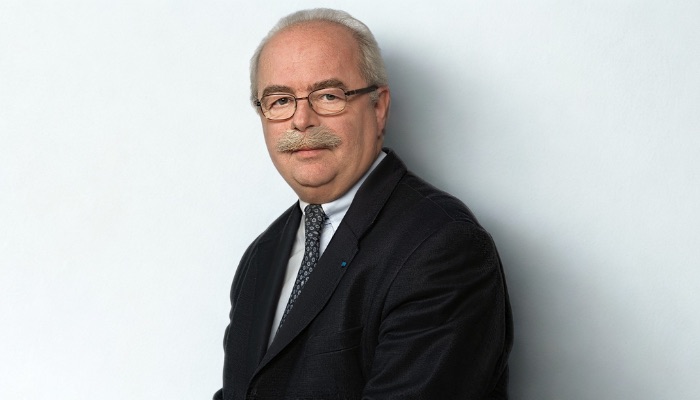
Caspian Energy (CE): After 15 years that included 15 acquisitions and mergers, would you agree with some of your counterparts that the era of the so-called Seven Sisters is coming to an end? Or do you believe that the future holds more major achievements?
Christophe de Margerie, Chairman and Chief Executive Officer, Total: It goes without saying that Total still has much more to contribute to the industry. Everything hinges on innovation and technology today. Our expertise is recognized industry-wide. Our core strengths are demanding safety standards and state-of-the-art technology in the areas of the deep offshore, seismic imaging and complex gas.
We have one of the most powerful supercomputers worldwide, Pangea. We operate Floating Production, Storage and Offloading units, or FPSOs, that are among the biggest in the world. We are designing and building ice-class LNG carriers to export liquefied natural gas from the Arctic year-round. So yes, Total has a lot to offer national oil companies (NOCs).
And our commitment to communities leads the industry. We integrate sustainable development issues into our projects and help to drive the development of our host countries by relying on local human resources.
The CLOV project in Angola is just one of many examples. Lying in water depths of 1,100 to 1,400 meters, CLOV consists of 34 subsea wells tied back to the FPSO, which will produce first oil in 2014. A large proportion of the equipment for the project is being manufactured locally; local contractors are performing about 9 million hours of work onsite — unprecedented in Angola.
CE: Does Total intend to expand its cooperation with state-owned public companies? Is that cooperation a strategic focus? Aren’t you worried that the oil and gas business will be politicized?
Christophe de Margerie: The Libra project illustrates Total’s strategy of growing our business through partnerships. Located in Brazil, the super-giant offshore field is the largest pre-salt oil discovery to date in the prolific Santos Basin. The joint venture combines the world-class knowledge and experience that Petrobras (40%) has acquired in pre-salt carbonates with the deepwater and mega-project management proficiency of Total (20%) and Shell (20%). State-owned CNOOC and CNPC of China (10% each) are also involved. It’s an offshore dream team.
Total partners with NOCs worldwide. They control 75% of global resources and nearly 60% of worldwide production. In response to their rise, we had to reinvent our partnership models. Our exploration and production strategy is based in many cases on forging win-win partnerships with NOCs. If we want to be awarded licenses and access to resources, we need to do more than just share risks and challenges. Our experience shows that we need to offer our partners genuine value added.
We also focus on our integrated business model, one of our core strengths. The Jubail refinery demonstrates that. The Saudi Aramco Total Refining and Petrochemical Company (SATORP) joint venture processes heavy oil produced nearby. The ultra-efficient facility supplies growth markets in Asia and the Middle East. Cutting-edge petrochemical units have been integrated in the technical design of the refinery complex.
It is clear that NOCs and IOCs must pool their resources if they want to be able to continue, in the decades to come, to produce oil and gas that is increasingly complex to extract.
CE: In an exclusive interview with Caspian Energy Journal, OPEC Secretary General Abdalla Salem El-Badri acknowledged the growing role of gas in meeting global energy demand. Do you share his point of view? Will gas projects predominate in Total’s upstream portfolio?
Christophe de Margerie: Natural gas presents significant advantages, including lower development costs and long-term availability — 130 years’ consumption at the current rate of production. Its use in power generation as a substitute for coal reduces the energy mix’s carbon footprint. It can be used in combination with renewable energies, thus alleviating supply interruptions.
Our ambition is to develop an energy portfolio that includes not only oil and gas, but also renewable energies. However, oil will still meet 28% of the world’s energy demand in 2035. It will be closely followed by natural gas, which will account for 25% of the energy mix. Coal’s share will shrink to 21%, but it will stay the third-ranked source of energy globally.
Nuclear’s share will remain stable at 6%, although the Fukushima accident has prompted some OECD countries to reduce their nuclear generation capacity. The overall proportion of renewable energies — excluding traditional biomass but including hydro — is forecast to triple by 2035, reaching 9% of the energy mix.
CE: After growing fast for two years, LNG trading is now slowing down. What’s your vision of the future of this segment and the creation of a spot market? In what regions is Total planning to expand its LNG portfolio?
Christophe de Margerie: LNG offers a number of advantages in terms of transportation and flexibility, which are decisive factors in its ramp-up, particularly in terms of meeting demand in Asian and European markets. Growth is driven mainly by Asia and, to a lesser extent, Europe, currently gripped by an economic crisis. Demand for LNG is expected to rise as a result of declining North Sea production and policies to limit carbon dioxide emissions.
Based on our knowledge of certain projects, we anticipate that the market will be reasonably balanced until 2020, but by 2030 will be experiencing a substantial shortfall, to the tune of 134 million tons. We are forecasting growth of over 5% a year in LNG between 2010 and 2020, with the share of natural gas in the world’s energy demand rising from 10% in 2010 to 15.9% in 2030.
Late last year, we announced the final investment decision for the onshore Yamal LNG project in Russia. This will strengthen our global portfolio to sustain production in the decades after 2017 and will further increase our presence in a region of Russia with a high gas potential.
We’re also involved in LNG projects in Indonesia, Qatar, the United Arab Emirates, Oman, Nigeria, Norway, Yemen, Angola and Australia. And we have secured purchases of LNG from the Sabine Pass gas terminal in the United States and long-term access to regasification capacity in key LNG markets.
Our approach is to combine trading, marketing and logistics to offer our natural gas and LNG production directly to our customers. Our portfolio allows us to supply our main customers worldwide with gas, while retaining a degree of flexibility to grasp market opportunities.
CE: What opportunities does Total see in the easing of sanctions against Iran? Does Total plan to join projects on Iran’s Caspian shelf?
Christophe de Margerie: It’s far too early to talk about Iran, the opening of the oil market and Total, because the Geneva agreement does not lift the oil embargo. But anything that contributes to greater stability and peace in the region is a good thing, in and of itself.
Stability is a significant factor in our investment decisions. We aim to establish long-term partnerships and we apply a long-term vision. Right now, no deals are possible in Iran. Basically, oil is excluded from the Geneva agreement. And going back to Iran will not be easy at all.
With all our high-tech expertise, we could maybe help to bring shut down wells back on stream. However, you never know what can happen after a well is taken off stream. Some fields get bigger once you stop pumping; others shrink drastically. It all depends on the geological formation. We have to be very careful about the country’s exact potential.
CE: Is Total planning to expand its operations in Turkmenistan?
Christophe de Margerie: Total Exploration & Production has had an office in Ashgabat since 2010, but its initial contacts with Turkmenistan date back to the early 1990s. Total Marketing & Services is also present, distributing Total and Elf lubricants.
Turkmenistan is home to the world’s fourth-largest gas reserves and second-largest gas field, Galkynysh. The Amu Darya basin is very prolific. We want to establish long-term cooperation with Turkmenistan and believe that our cutting-edge technology and know-how — especially in high-pressure/high-temperature wells, sour gas and sulfur production, and pre-salt seismic imaging — could help to enhance production efficiency in Turkmenistan.
Patience is key to long-term cooperation in the region, and that’s something we do well.
I would like to add that our interest in Turkmenistan is aligned with our long-term strategy of growing in the Caspian and Central Asia. We have been present in both Kazakhstan and Azerbaijan for 20 years now. We have had a 16.7% stake in the Kashagan project in Kazakhstan since the project started in the 1990s.
In addition, we operate the onshore Nurmunai exploration project in the Aktobe region of Kazakhstan, where we are now completing seismic acquisition. In Azerbaijan, we have a 10% working interest in the Shah Deniz offshore gas project. We have also been the operator of the offshore Absheron production sharing agreement since 2009. We are now preparing the development plan for the major gas discovery made there in 2011.
And we are expanding our presence in the region: in June 2013, we entered the Bokhtar PSA, exploration acreage that covers 35,000 square kilometers in Tajikistan. The operator is a specially created joint venture between Total (33.335%), CNPC (33.335%) and Tethys (33.3%). The 2D seismic campaign is about to start and preparations are under way to drill the first well.
So Turkmenistan and particular the Amu Darya basin make sense in terms of developing our presence in the region’s pre-salt carbonate reservoirs.
CE: According to your 2012 annual report, Total’s gas production in Africa declined. What risks do international oil companies have to manage in the region? How serious are they for Total?
Christophe de Margerie: We produced 705 million cubic feet of gas per day in Africa in 2012, down a slight 1.3% from 2011. This was a one-off situation that mainly reflects the impact of the drilling incident on the Ibewa gas field in Nigeria.
Total’s objective is to grow our African gas production, mainly through Nigeria LNG, which began production in 2000 and currently comprises six trains, and Angola LNG, which started up in 2013 and whose output is now ramping up.
To serve domestic gas markets, Total is investing in Nigeria (the OUR and NOPL pipelines) and Gabon to produce gas for power generation and in Algeria with Timimoun and Ahnet (in the engineering phase).
There is no specific “Africa risk,” but rather country risks to be assessed and managed for each individual country. We mitigate risks with strong HSE policies, by closely involving stakeholders in our activities and through ensuring that our operations deliver economic, social and environmental benefits.
CE: What role will renewables play in future in the E.U. and at Total? How do Total’s plans correlate with the objectives of the European Commission?
Christophe de Margerie: Renewable energies will not replace fossil fuels by 2030, but they will supplement them. Solar is a fast-growing market, making gains even during the overcapacity crisis that drove solar panel prices down 50% in 2011 — volumes were up 60% that same year.
The sector went through a brutal slump, but we’re weathering it well — better than our competitors — because we have the best technology: SunPower cells have a conversion efficiency of 24%, versus an average of 16 to 17% for our competitors.
We believe in the growth potential of solar energy, and in this challenging environment are making SunPower the linchpin of our solar activities. We are also implementing an ambitious cost reduction program that will make us more competitive while allowing us to keep our technological lead.
CE: One well-known oil expert said that the world currently has three types of energy carrier — renewables, non-renewables and production technologies. Which is the most promising for Total? Will Total boost its spending on production technologies and innovation?
Christophe de Margerie: Energy demand is set to increase by 31% between 2010 and 2035, driven by energy-hungry emerging economies — not OECD countries. Our job is to meet this growing energy demand. All energies will be essential to the energy mix of the future, and fossil fuels will remain dominant, still representing nearly 75% of the energy mix in 2035.
Renewable energies will carve out their rightful place in the energy mix. However, it will take several decades for them to reach their full potential in terms of cost-competitiveness and technological and economic maturity. We are pursuing our commitment to solar energy in a tough market that is nonetheless undergoing a more positive transition, as solar becomes competitive with other types of energy.
Global energy demand is rising steadily and fast. The many major challenges this creates - ensuring secure supply, coping with the limited availability of oil and gas resources, protecting people and the environment, and promoting energy efficiency - intersect with our activities. Total is counting on innovation to meet these challenges.
Our R&D spending rose 31.5% between 2008 and 2012. We continuously optimize exploration and production activities such as deep offshore developments, unconventional resource production, new seismic data processing applications and enhanced oil recovery from reservoirs.
And we also develop and commercially scale up solar and biomass technologies, to offer efficient, competitive solutions that can supplement fossil fuels. In addition, all our businesses implement an active industrial property policy to protect our innovations.
In 2012, Total filed more than 250 patents.
Thank you for the interview