


On December 20, 2013 Fugro reached agreement with the State Oil Company of the Azerbaijan Republic (SOCAR) to form a new Joint Venture for the performance of bathymetric, geophysical & geotechnical surveys, provision of AUV’s and ROV’s, diving services and general positioning support, both onshore and offshore, throughout the Republic of Azerbaijan.
This new agreement to form SOCAR-FUGRO LLC in Azerbaijan builds upon the original agreement, signed in 1995, to establish Azeri-Fugro Ltd., when Fugro first commenced operating in the Caspian Region. Over the last two decades Fugro has firmly established itself as the leading player in the offshore survey and geotechnical markets in Azerbaijan. In addition, Fugro provides subsea support to oil & gas companies and major EPC contractors with a modern fleet of AUV’s (autonomous underwater vehicles) and ROVs (remotely operated vehicles). Fugro currently operates offices & workshops in Baku with more than 50 permanent staff.
The State Oil Company of the Azerbaijan Republic (SOCAR) is involved in exploring oil and gas fields, producing, processing, and transporting oil, gas, and gas condensate, marketing petroleum and petrochemical products in domestic and international markets, and supplying natural gas to industry and the public in Azerbaijan. Three production divisions, two oil refineries and one gas processing plant, a deep water platform fabrication yard, two trusts, one institution, and more than 20 subdivisions are operating as corporate entities under SOCAR. SOCAR has presence in many countries around the globe where it owns and operates multibillion assets.
Formal establishment of the new company requires standard regulatory approval which should be completed shortly.
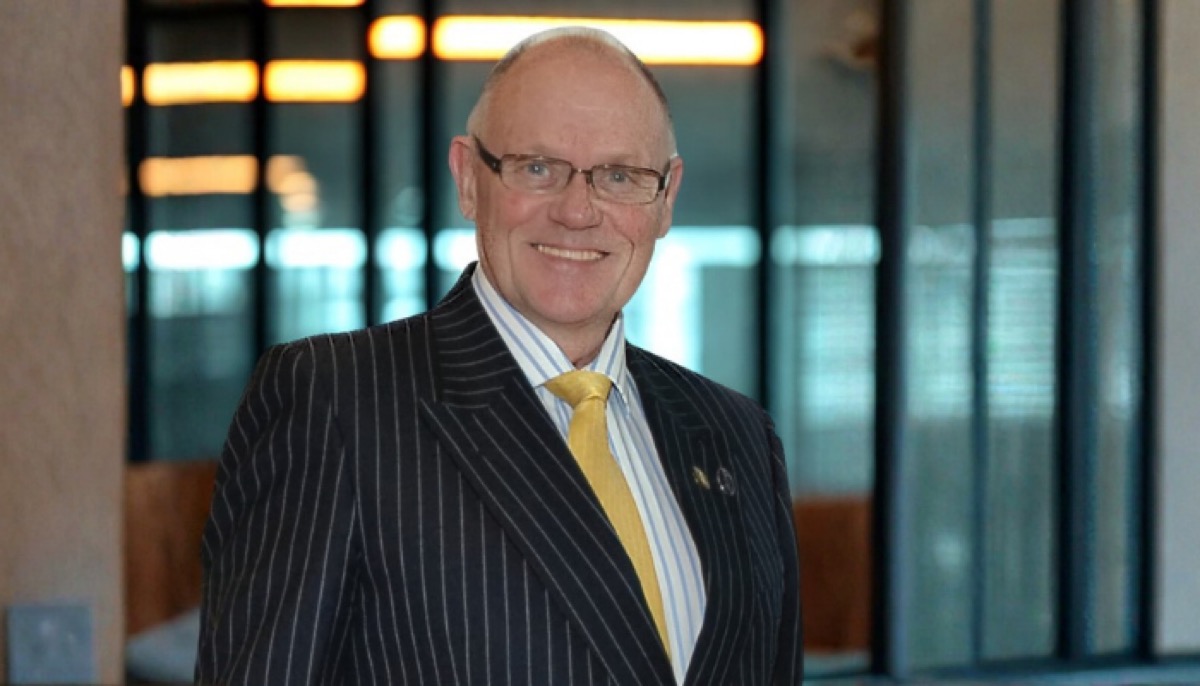
Chris Mott, General Manger of Fugro Survey LTD (Caspian), spoke about future plans of the company in the interview with Caspian Energy journal.
Caspian Energy (CE): Fugro has signed a Joint Venture Foundation Agreement with SOCAR. Could you please provide detailed information about this deal?
Chris Mott, General Manager, Fugro Survey Ltd (Caspian): We have been having talks with SOCAR for several months now about the concept of creating a joint venture between us. Last December, directors of Fugro and directors of SOCAR signed a foundation agreement which paves the way for the creation of the joint venture. In the future the intention is for Fugro to conduct all of its business in Azerbaijan through the joint venture vehicle. As at the time of this interview the joint venture has not been formed because powers of attorney and other legal documents are still to be created, signed and notarized. We are in frequent contact with SOCAR and everyone is working very hard to make progress in the creation of the joint venture. The joint venture will be called SOCAR-Fugro LLP.
CE: What will be the main tasks and liabilities that the JV is going to be engaged in?
Chris Mott: The intention is that the new JV will continue to do the same things and carry out the same tasks as Fugro has been doing over the past many years. We carry out contracts that we win in open tender for works such as providing precise positioning above and below the sea, providing offshore construction support and carrying out geophysical and geotechnical engineering surveys of the seabed. We will continue, through the joint venture, to represent the full range of Fugro services in Azerbaijan.
CE: What will the future JV be engaged in?
Chris Mott: The joint venture is not yet created. We have signed a foundation agreement with SOCAR to create the joint venture. We are hoping that it will be created soon. We anticipate that we will continue to provide the whole range of Fugro services in Azerbaijan through the joint venture for the years to come. We look forward working with SOCAR and we believe there will be mutual benefit to both companies. We hope to be able to bring to the JV the best practice that Fugro applies around the world. We are looking at areas such as technology transfer and training and to be able to continue in our plans for nationalization aimed at increasing the number of specialized jobs available to Azeri personnel.
CE: Will this JV work in accordance with international standards?
Chris Mott: Yes, Fugro is fully certified to international ISO standards and any operations that we involve ourselves in will be carried out to these standards.
CE: Could you please sum up the results of the company’s activity carried out over the past year?
Chris Mott: Operationally here in Azerbaijan we have been very busy and we are more or less on track to perform as we forecast that we would do in 2013 in terms of our financial performance.
CE: Could you highlight any success of your activity?
Chris Mott: We have had operational and technical success offshore and onshore during the past year. For example, we have carried out high resolution geophysical surveys in some of the deepest waters of the Caspian Sea; we have obtained geotechnical samples from those same water depths; we have obtained geotechnical samples onshore and we have carried out very accurate topographical surveys using laser beams deployed from airplanes.
CE: Which new technologies and equipment did you manage to bring to the Caspian sector through 2013 and which are still left for introduction here throughout this year?
Chris Mott: Talking not in the context of new technologies but in terms of activity levels offshore in the Azeri sector of the Caspian Sea, I anticipate a slowdown in our activities for the next two years because the Chirag Oil Project installation project is coming to a close. It is my understanding that for the Shah Deniz II Project, the actual installation of well-heads, jackets and pipelines is not due to start until 2016. Total is in the process of forming its development plan for the Absheron field and will not be in a position to start actual offshore construction for several years yet. I don’t see any new significant offshore construction activity for 2014 and for much of 2015. Of course there is a lot of existing infrastructure out there: pipelines, jackets, wellheads etc. and they all have to be maintained. We hope to play our part in these inspection maintenance and repair activities for things that have already been installed. Comparing what we did in 2013 with what we think is going to be required in 2014, we don’t see as much activity.
I don’t have as much detailed information for rest of the Caspian area. Taking the countries by turn, there seems to be some degree of rapprochement between the West and Iran which may loosen sanctions, so there may be some activities there. I am aware of oil companies operating in Turkmenistan but historically we have not been particularly busy there because overall levels of activity have been lower in Turkmenistan than in Azerbaijan. Other Fugro companies operate in the Russian sector. In Kazakhstan development times are often prolonged.
CE: World companies always attach top priority to environmental issues. How is this policy implemented in Fugro?
Chris Mott: You spoke earlier about working to international standards. Fugro here in Azerbaijan is accredited to the international standard for environmental protection. It is ISO 14001: 2004. We act in accordance with all the international regulations according to promoting the health being safe and protecting the environment. We monitor our energy use in terms of fuel used in trucks, electricity used and any other electricity generation. We have a program of continual improvement to reduce our carbon footprint. I think what I am saying is that Fugro does not need legislation for it to take notice of its responsibilities in these areas and we will do our best to minimize our impact on the environment.
CE: Of all that considerable amount of technology that Fugro possesses and applies in Azerbaijan, are there products that may arouse the interest of the representatives of the private sector?
Chris Mott: Well, we work mainly for the private sector at the moment. All of our work, I would say nearly 80% of our work has been done for the private sector. Any enterprise, reading this article, which works at developing infrastructure onshore or offshore, would be interested in technologies that Fugro uses.
Onshore we have technologies that enable big heavy structures like very tall buildings to be erected safely by providing geotechnical sampling and analysis, providing load testing facilities for piles of very big structures. If Baku’s metro system were to be expanded with new tunnels and new lines, we could provide site investigation services so that tunneling conditions can be predicted. We can provide the same sort of services for someone who is building a new road, a new railroad and a new pipeline. Wherever the project interacts with the earth we can provide services that will enable our clients to know how that project will interact with the earth and what designs are necessary for it to be stable and effective and the design to resist the effects of earthquakes or to be stable under any difficult ground conditions that may be encountered. We have specific and unique technologies to safely detect and evaluate ground contamination.
CE: Do you expect anything new within Shah Deniz II considering the soil, high depth, pressure and other conditions which you will have to work in?
Chris Mott: I am looking forward for the challenges that lay ahead. Fugro has technologies that can meet these challenges. Fugro is a specialist company and we are confident supplying, through SOCAR Fugro, the technologies necessary to do a professional job offshore for Shah Deniz II and wherever our clients require our services.
Elsewhere in the world Fugro routinely operates in water depths in excess of 3,000 meters which is three times deeper than the greatest water depth existing in the Caspian Sea. I think that it is important to understand that Fugro does not drill into the oil or gas reservoir. The high temperatures and pressures of the reservoirs are not our sphere of work.
As we speak, right now we are working in 500 meters water depths to drilling boreholes for foundation and geo-hazard purposes. The project I am talking about uses a conventional drilling rig and drill string with tools developed by Fugro to obtain samples in that water depth.