


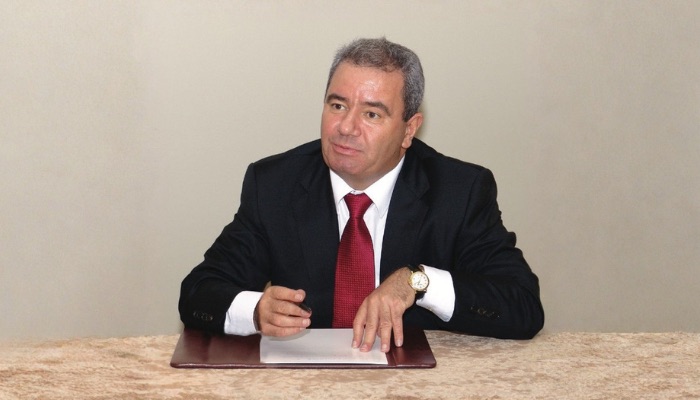
Caspian Energy (CE): Mr. Abbasov, what success has Azerbaijan managed to achieve in the telecommunication sector over this year? How successful was this year for you?
Ali Abbasov, Minister of Communications and Information Technologies of the Republic of Azerbaijan: The expiring year has opened new opportunities for the perspective development of the information-communication technologies (ICT) and has been rich in landmark events. As is known, 2013 has been announced the “Year of ICT” by the President of the Republic of Azerbaijan Ilham Aliyev, thus, once again highlighting ICT’s priority role in formation of long and sustainable social-economic development of the country.
Azerbaijan launched its first telecommunication satellite Azerspace-1 into orbit on February 8 of this year and it became one more achievement over the period of its independence.
Azerspace-1 satellite enables lending telecommunication, internet and radio-television broadcasting services to the countries of Europe, Middle East, Central Asia and Africa. All state channels and several private channels are currently broadcasting by means of this satellite.
The shift to a digital broadcasting in the country has practically been completed as the territory where over 96% of the population resides has been provided with digital TV broadcasting. Broad activities have been carried out so that the citizens could use the most advanced technologies. As a result, 70% of the population became internet users. Half of them also use broadband internet services. 110 mobile subscribers fall to the share of 100 people.
Preparatory work has been completed this year to introduce the project of the optical network which enables providing high speed internet services on principle “optic to the home”. Implementation of this project will start in 2014. The realization of this project (covering rural dwelling settlements) will increase the speed of internet connection up to 10-100 Mbps in the country.
This year will be memorized as the year of creation of the information technologies university and the beginning of its operation. 60 young people who scored high points have already entered this educational institution. Young graduates of this university will meet the demand of the information community for professional and high-skilled specialists.
Serious success has also been gained in the area of the E-government this year. Use of electronic signature and online payments has considerably increased. The quality and coverage of e-services provided by the government bodies to the citizens on basis of the “single window” principle has also been increased. A “State program of development of e-government and expansion of use e-services in government bodies for 2013-2015” has been prepared in order to proceed with consecutive and purposeful steps in this direction. The program is expected to be adopted by the end of the year.
Serious measures have been undertaken in the country to ensure information security. Electronic security center along with the state agency for special communication and information security have started operating since this year in order to protect information resources and the systems of government bodies from all possible attacks as well as enhance all-national preparation and enlightenment in the field of cyber-security.
As we see, substantial work has been carried out in ICT sphere through 2013. So, the Year of ICT may be considered successful in Azerbaijan. I am confident that all success we have achieved this year and other new projects is going to increase the role of ICT in the overall development of the country.
CE: ICT is the second important perspective sector for Azerbaijan. How much has the financial turnover of this sector increased?
Ali Abbasov: President of Azerbaijan Ilham Aliyev declared ICT development in Azerbaijan a priority and development of the sector receives full support at the state level. Development of this sector in the country is carried out through a conceived strategy. Briefly they can be grouped as the creation of liberal and controlled climate in the ICT sector, development of telecommunications infrastructure, including e-government and e-services, ensuring people’s access to quality communication services.
Over the past 10 years, the ICT sector has grown by about 60 times and reached $ 2 billion per year. The average annual growth rate was approximately 20-25 %. Over the past 10 years $ 2.5 billion has been invested in this sector, and in turn provided a twofold growth every 3 years. These successes have been achieved thanks to the state care, prepared strategy and programs, professional level of the staff.
In late 2012, the President approved the Concept of Development "Azerbaijan 2020: vision for the future”. The documents sets great tasks before the ICT sector in terms of the future development of the country, the task was to increase the revenue from the ICT sector by 4.5 times by 2020 and bring it to the level of $ 9 billion per year.
Real work has been initiated and important measures have been carried out to diversify the ICT sector to increase its volume. Major new directions of development include the establishment of the aerospace industry, expansion of electronic services, application of nanotechnology, innovative manufacture of high technology products. All these areas give positive effects.
CE: What stage has the implementation of the Trans-Eurasian Information Super Highway- TASIM currently reached?
Ali Abbasov: TASIM Secretariat and operators are currently coordinating a Memorandum of understanding. The operators have already discussed the main issues on the project, including the principles of cooperation between operators, profit-sharing principles, architecture and topology of the highway, highway management principles, business concept of the project and financial parameters. In general, the operators have reached understanding and formed a common position on all major issues. To this day, the operators have arranged three formal meetings and continue intensive discussion on existing issues in the working manner.
CE: What do you think about the idea of South Korean President to create the Express Silk Road network?
Ali Abbasov: The idea of the President of South Korea on creation of transport and telecommunications corridor Express Silk Road is fully consistent with the strategy of Eurasian connection and the final goals of the TASIM project. If we consider that, in the end, the “Asian information highway" and the TASIM project will be closely integrated, Azerbaijan supports this initiative. I want to emphasize that during the meeting of the experts of Economic and Social Commission of the Asian and Pacific ocean countries (ESCAP), held on September 24-25 this year in the Philippine capital city of Manila, when exchanging views on the presentation of the project TASIM the participants highlighted the implementation of the project for the Asia-Pacific region.
CE: Which services is Azerbaijan ready to provide after the launch of the first telecommunications satellite? At what stage are the issues of launching the next satellites?
Ali Abbasov: With the launch of its first telecommunications satellite Azerspace- 1 into orbit in February 2013, Azerbaijan became a member of the international space club. This historical event paved the way for strengthening the position of Azerbaijan, which has become the leader in its economic development in the region in the field of information and communication technologies, particularly in the satellite industry.
The successful implementation of the first telecommunications satellite launch is not only of historical and political significance for the country. Moreover , the AzerSpace - 1 satellite, made on the basis of the most advanced technological achievements, is controlled by national satellite operator JSC Azerkosmos, that enabled Azerbaijan to become a provider of satellite services in the Caucasus region, as well as in Africa, Europe, Central Asia and Middle East, within the coverage area of the satellite. At present JSC Azerkosmos provides resources for broad satellite telecommunications services of broadcasting and data transmission based on VSAT technology via satellite. As a result of continuous marketing activities of the Company, 54% of satellite resources of Azerspace- 1 have been sold at the local and international markets. Azerspace- 1 provides the country with high-quality signal broadcasting. We can say that all local broadcasting companies, based in the capital city, broadcast via the national satellite. Within a short period after the commissioning of the satellite AzerSpace-1 it was possible to attract around 60 television and radio channels belonging to different countries of the world to broadcast their programs through our satellite.
A country possessing its own telecommunications satellite enjoys the opportunity to strengthen its information security. This is important from the point of view of eliminating dependence on foreign satellite networks. JSC Azerkosmos is in process of dialogue with the state and the organizations representing the private sector in this direction to ensure the latter with stable and reliable telecommunications services and solutions.
The development of a national satellite industry, the foundation of which was laid by the successful implementation of satellite project Azerspace-1, will be provided with the intensive support in the future. In the coming years, Azerbaijan plans to launch into orbit two more satellites - the first low-orbit Earth probe satellite and the second telecommunications satellite Azerspace- 2. At present JSC AzerKosmos is actively working on these two directions. In the near future, the company plans to hold a tender to determine the manufacturer of the low-orbital satellite. In addition, in August of this year JSC AzerKosmos Agency and U.S. Trade and Development signed a grant agreement to finance a feasibility study for Azerspace-2 project. According to preliminary estimates, the implementation of these projects is expected respectively in 2015 and 2016.
CE: Internet is an integral part of every citizen today. What are the opportunities of developing wireless coverage of the country’s capital city and regions?
Ali Abbasov: Development of telecommunications and Internet infrastructure, expansion of fiber- optic cable network, multiple reduction of the cost of services accelerate the development of Internet in Azerbaijan. Currently one of the main goals is to provide the population with various means of broadband Internet and modern communication services in every part of the country. Naturally, if the country's e-government is created, electronic services are expanded, the process of public information is carried out and there is no broadband internet as a tool, the population will not be able to enjoy all these services.
From this perspective, our goal is to bring broadband Internet to every part of our country. Works are held on the expansion of the necessary infrastructure in order to increase the role of broadband Internet in the development of the economy, improve its efficiency. Currently, 70 % of the population are Internet users, 50% are broadband Internet users. Both figures are above average global indexes. In addition, at the end 2012, the average cost of broadband Internet in the country amounted to 2.5% of the average monthly income of the population, which is below 5 % threshold, envisaged by ITU for developing countries by 2015. The aim of listing these factors is demonstration of our achievements in the development of broadband Internet.
I have to note that the wireless broadband internet in the country has been mainly developing due to mobile communications. The first 3G services were introduced in mobile network in 2009. Currently, the mobile network is expanding through the introduction of advanced technologies as 3G and WIMAX. In 2011, the mobile network companies were granted a license to provide 3G services, which in turn had a positive impact on the introduction of new technologies in the mobile network in an increasingly competitive environment and the service became widely spread. In comparison with 2009, the number of wireless broadband Internet subscribers in the country has increased several times and reached 3.5 million. Beginning in 2012, the network started introducing 4G technology. Wireless broadband Internet operators are also functioning in the stationary network of the country.
The project of national broadband Internet in Azerbaijan was prepared to achieve revolutionary changes. The project, intended for 2014-2016 and subsequent periods, provides for modernization of the telecommunications network and the organization quality broadband internet services in all residential areas of the country on the ‘optics to every apartment’ principle through fiber-optic cable network. As part of the project, beginning from 2016 it is envisaged to provide high-speed broadband internet to population, particularly in Baku with a minimum speed of 100 Mbit /s, while in other major cities and regional centers - with a minimum speed of 30 Mbit / s, in the towns and rural areas - with a minimum rate of 10 Mbit / s. As a result, the prevalence of broadband Internet will have reached 85%.
CE: Does Azerbaijan plan to further develop LTE technologies and in which spheres?
Ali Abbasov: Ministry of Communications and Information Technologies is constantly exploring technological innovations and carries out appropriate work to implement them as intended. Introduction of 3G services in the country was launched in 2009. All three mobile operators operating in our country offer 3G services to population as a result of which the level of mobile broadband services has increased significantly. Considering the mentioned criteria and needs, in 2012 the country started to implement LTE services. When these services began to be introduced in Azerbaijan, our country was the ninth in Europe and 37th in the world, where these technologies were launched. Works on full coverage of the country with LTE services are currently underway. I have to note that the full introduction of this service is planned by the end of 2013 in Baku and during 2014 in other major cities.
CE: Does the ministry plan to develop cloud technologies?
Ali Abbasov: Azerbaijan has a state program to expand e-services and develop e-government in the state bodies for 2013-2015. As expected, when created the e-government and e-services, they will cover local executive bodies, local authorities and other bodies of public and private sector. Taking into account the costs of purchase, maintenance and storage of the necessary logistical and intangible resources to create information systems in all areas, with the aim of careful attitude to the expenditure of public funds and creation of favorable conditions for equal service providers, the ministry plans to create a data center based on cloud technologies. Commissioning of the data center, based on cloud technologies, will accelerate the shift to e-government. The feasibility study of the data center has already been submitted to the authorities.
CE: How far have you proceeded in issues of e-government, including aspects as e-signature, etc?
Ali Abbasov: Beginning from 2012, the state bodies of Azerbaijan Republic started using of the www.e-gov.az portal of e-government and apply new state e-services with a high activeness. It has to be noted that the list of e-services offered by the state structures is regularly expanded and this helps reduce the distance between the citizens and state bodies thus facilitating the resolution of existing problems of the population, for example, in receiving different information, references, tax declarations and other documents. The formation of a single portal www.e-gov.az, of e-government as an interactive information system has almost been completed.
At the initial stage 16 state bodies offered only 60 e-services to citizens via this portal, as of October 2013, over 40 central executive bodies of the country offer more than 270 e-services via this portal.
In general the portal registered 392,845 entries in 10 months of 2013. The number of those entering the portal made 229,398 and the number of used services amounted to 579,643.
Numerous services, informations, references and other documents started to be issued to the population via the www.e-gov.az portal of e-government. E-government 3.0-Open government concept has already been launched at the portal.
As is known, in order to speed up the circulation of e-documents between the state bodies, an infrastructure of the National Center of Certification Services was created under the Ministry of Communication and Information Technologies in September 2011 for issuance of digital signature certificates. The speedy, modern and safe identity system for access to e-government portal with the use of mobile devices (smart phones and mobile tablets) was presented in February 2013. The center of e-signature services certification of the Ministry of Taxes started to function in May 2013. Nearly 40,000 certificates of e-signatures for mobile devices have been issued throughout the country up to date. The use of modern digital signature and authentication means on the e-government portal indicates that we are at the stage of creating a common space of e-signature to ensure mutual information ties between the state bodies and provide the unified state services in an e-form.
CE: What program issues are being developed by the ministry to raise the share of ICT sector in Azerbaijan’s economy? What support will be provided to startups and what are the prospects of further introduction of high technologies in the country?
Ali Abbasov: Certain measures have been undertaken in order to accelerate the development of the ICT sector, increase the share of the ICT sector in the GDP of the country, expand production, industry and services, stimulate the activity of ICT companies. In accordance with the decisions of the President of Azerbaijan Ilham Aliyev, the State Fund for the development of information technologies and the High-Tech Park specializing in ICT have been created within the ministry. The State Fund for the development of information technology started functioning this year. The main objective of the fund is to promote activities of companies operating in the field of ICT and ensure their needs for material resources. It is planned to fund innovative startup projects, import-substituting production - intensive activities, scientific and technical development work. The fund is open to both individuals and various big companies. Thus, ways to finance projects include the issuance of grants on a competitive basis, preferential loans by the authorized credit institutions and investment financing.
Another major factor in the growth of the ICT sector share in the economy is creation of industrial parks. "High-tech Park" is the first park built in our country. It provides for the implementation of works in the fields of information and communication technology, telecommunications and space efficiency, development of new and high technologies and industries, and implementation of research and development work. Companies operating within the Technopark are provided with benefits for all types of taxes and duties. Being an innovative space, the High Tech Part will be provided with all necessary infrastructural elements. As a result of this work it is planned to attract a number of companies in the industrial park and increase existing production volumes multifold. In the future there will be a variety of industrial parks in different areas in other promising regions, and therefore, the necessary analytical research is conducted.
Thank you for the interview