


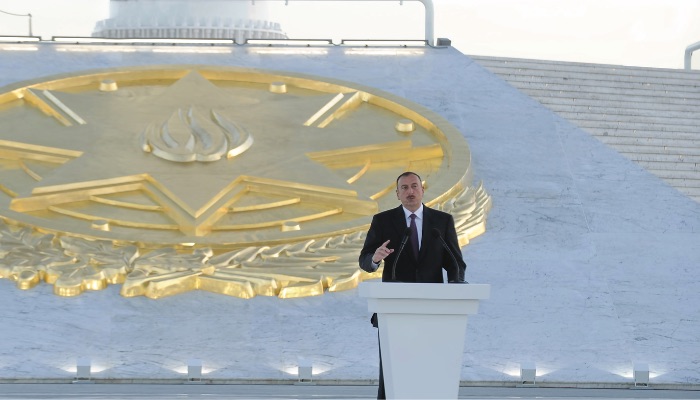
Azerbaijan has entered the age of economic renaissance
It has already been 10 years since citizens of all world countries associate dynamic development of modern Azerbaijan with the name of one person – President of Azerbaijan Ilham Aliyev. It would be unfair to cover up big successes since they are irrefutably apparent in Azerbaijan.
The appearance of the capital and regional cities of Azerbaijan is continuously changing. Tens of billions of AZN have been invested into the real non-oil sector of the Azerbaijani economy. Built were hundreds of regional and city highways, bridges, tunnels, multilevel junctions and modern regional airports. An incentive was given to unprecedented (through the whole history of Azerbaijan) development of agricultural regions of the republic. The situation in Azerbaijan resembles the United States of America in mid of the 20th century when President Eisenhower launched implementation of the Interstate Highway System project in 1956. The USA was a powerful state even without them. However, the wealth was concentrated in such big cities as New York, Washington, San-Francisco, Chicago whereas the rest of America seemed to be just entering into the 20th century. But everything changed very quickly. 98% of the project was completed by 1973. Owing to Interstate, the USA has become what it is now, the biggest global economy where residents of small cities enjoy more advantages than those of metropolitan cities. According to conclusions of numerous commissions, Interstate network gave a country multiplicative effect worth over $2.1 trillion at the expense of growth of production efficiency, reduction of retail prices and accident rate. In other words, Eisenhower’s highways covered investments worth $129 bln by more than 16 times.
Today, the multiplicative effect is evident in Azerbaijan as well. “Today, Azerbaijan is indeed experiencing development period. The basis of this development was laid in 1993-2003 years by Nationwide Leader of Azerbaijan Heydar Aliyev”, the President of Azerbaijan says.
Macroeconomics -
GDP grows by 7 times
“Today our main objective is the development of the non-oil sector and I assume that very solid achievements were obtained in this direction”, the head of the state said at the session of the Cabinet of Ministers on July 18.
According to I.Aliyev, “the economic growth in Azerbaijan may serve as a model worldwide this year as well”.
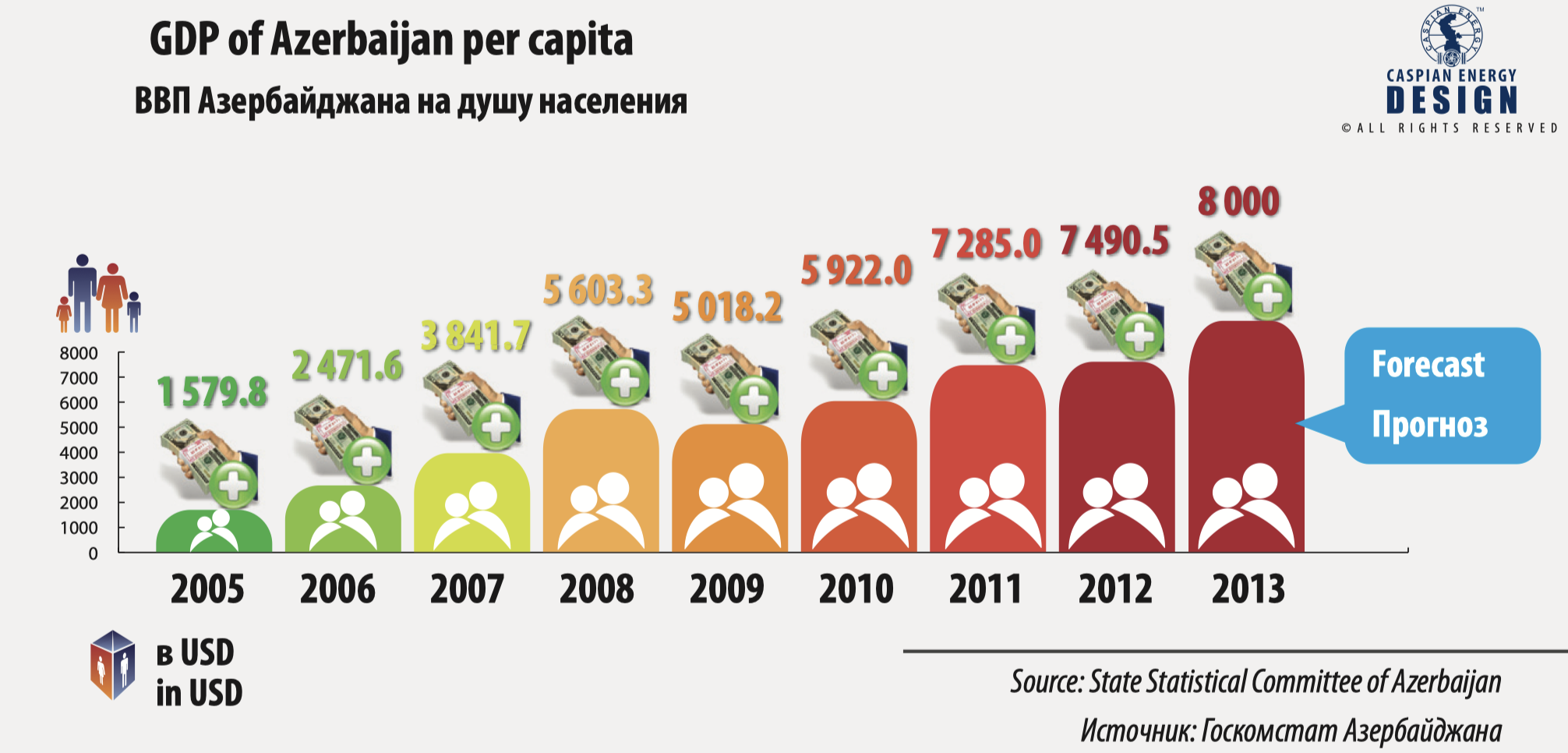
Thus, compared to the figures of 2003, Azerbaijan’s GDP will be able to in real and nominal terms grow by over 3.4 and 7 times respectively. In general, Azerbaijan stayed one jump ahead of CIS, EU, Economic Cooperation and Development states, China, Brazil, South-African Republic and India on this indicator from 2003 till 2013. 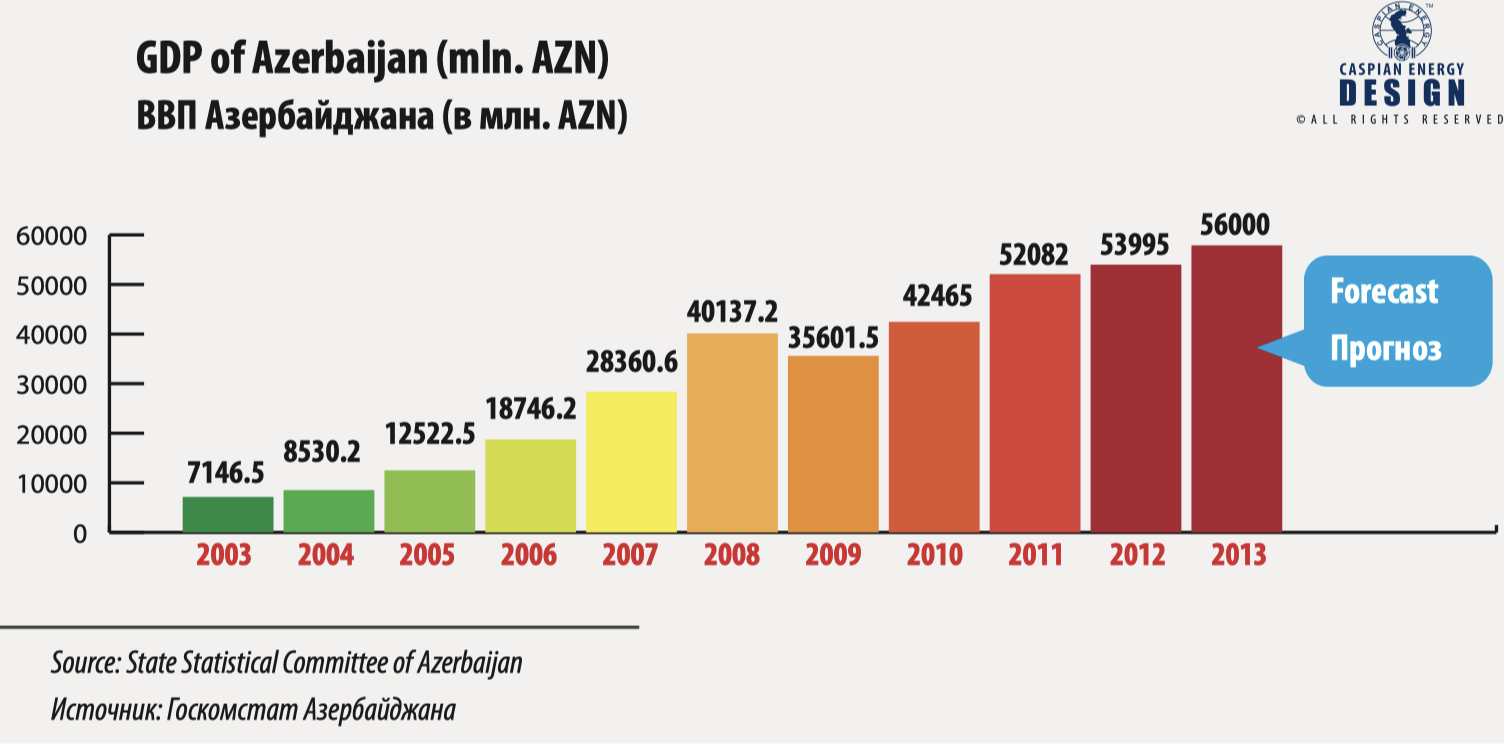
Monetary reserves
grew by 30 times
Owing to the oil-gas strategy and stable investment climate, created by Nationwide Leader of Azerbaijan Heydar Aliyev, Azerbaijan’s monetary reserves (one of the most important macroeconomic indicators) totaled about $1.6 bln in 2003 vs a zero rate of 1993. Azerbaijan’s strategic currency reserves grew, on average, by 3% per year from 2003 till 2013 (see graph on page 17). According to the results of the first quarter of 2013, strategic currency reserves totaled $48 bln (the funds of the Central Bank and State Oil Fund). The current strategic currency reserves enable to fully finance import expenditures for a three-year period. It is the best indicator on a global scale. Azerbaijan’s currency reserves are exceeding the volumes of foreign debts by 10 times. Central Bank’s reserves, alone, exceed $12 bln. Strategic currency reserves make about 70% of GDP. For instance, strategic monetary reserves of developed economic states total 24-30% of GDP. This indicator reaches 45% in Arabic countries that are rich in oil.
Considering Azerbaijan’s GDP with regard to its strategic currency reserves, the country is among 15 advanced countries of the world. Sound big financial-currency reserves of Azerbaijan are guaranteeing long-term and successful development of the country today.
Strategic currency reserves are forecasted to exceed $50 bln in 2013. Thus, the volume of strategic currency reserves of Azerbaijan grew more than 30 times over a 10-year presidency of Ilham Aliyev.
A 16-fold state budget growth
According to the calculations of the International Monetary Fund, the budget of the republic grew annually by 20-30% starting from 2003. Azerbaijan’s budget makes 76% of the entire South Caucasus region budget.
Profits gained by the State Oil Fund have for the past years been spent on basis of an accurately calculated strategy. Budget receipts coming from the non-oil sector are growing annually. As a result, observed is the growth of financial resources of the State Oil Fund for future generations (SOFAZ assets reached $34 bln 678.4 mln as of July 1, 2013) on the one hand, and multiple growth of budget revenues (by 16 times) on the other hand.
Over 1.2 mln of
new working places
The unemployment still remained a serious problem in Azerbaijan when President Ilham Aliyev assumed the office in 2003. According to the information of the official statistics, the unemployment rate totaled approx 20% in 90s of the past century and 10.6% in 2003.
As a candidate for presidency, Ilham Aliyev included the unemployment problem solution into his pre-election program in 2003 and regarded it as one of the main points. His pre-election campaigns included plans on creation of 600,000 working places by 2008 that seemed pretty fantastic for that period. As the result of diverting of oil revenues toward the diversification of industry and broad development of the non-oil sector, over 600,000 working places were created in fact. Thus, the unemployment rate was reduced considerably by the end of the first presidential term of Ilham Aliyev.
During the second presidential term of Ilham Aliyev, set was a task to ensure further reduction of unemployment rate in the country and increase the number of new working places up to 1 mln through development of the private sector. Azerbaijan managed to maintain a macroeconomic stability and reach an economic growth amid the global financial crisis of 2008 that resulted in growth of unemployment rate all over the world including the USA and EU countries.
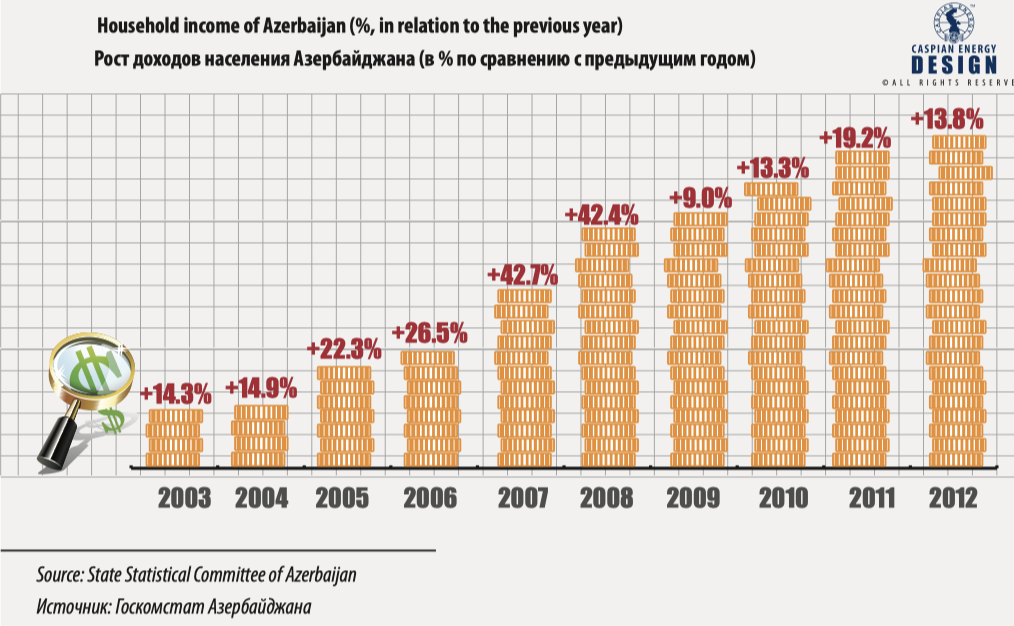
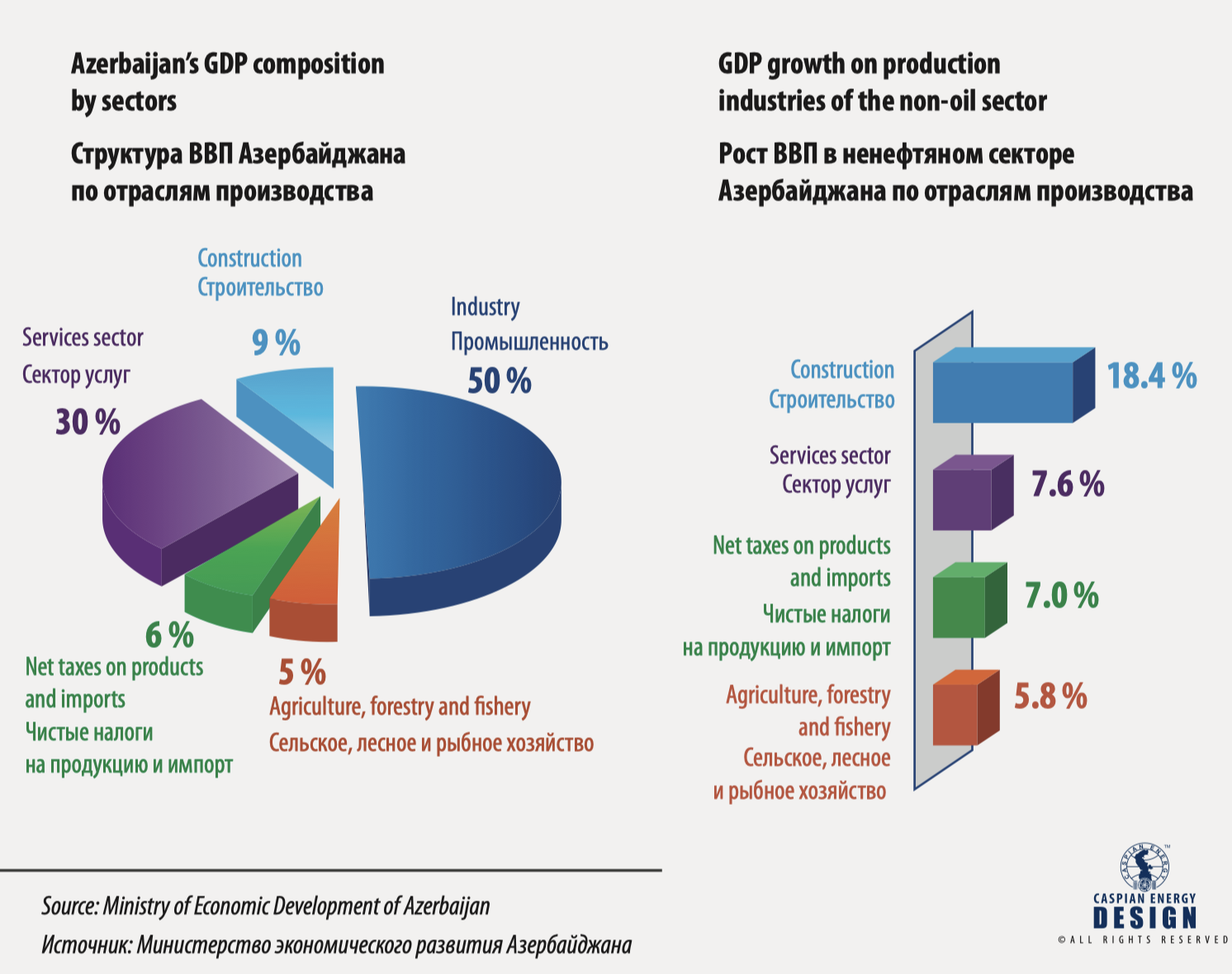
In general, the unemployment rate was a little over 5% in 2013. 1 mln 180 thousand new working places were opened during 10 years. 55,000 working places including 45,000 permanent work places were created within 6 months of this year”, President of Azerbaijan Ilham Aliyev said and added that this process is continuing.
Unemployment rate
reduced down to 6%
“The state program on reduction of poverty and economic development of the Republic of Azerbaijan for 2003-2005” was confirmed in February 2003. The implementation of this program began after Ilham Aliyev was elected President. As the result, the growth of dynamic economic development continued. The rate of inflation and currency were maintained at favorable level. Thus, the poverty level was reduced from 40% down to 29.3% within the first two years. The tendency of its decline was observed even during the following years. So, this figure totaled 20.8%, 15.8%, and 13.2% in 2006, 2007 and 2008 respectively.
During the second presidential term Ilham Aliyev determined new objectives for further reduction of poverty in the country right up to its full elimination. On September 15, 2008 the President signed an order on approval of the “State program of poverty reduction and sustainable development of the Republic of Azerbaijan during 2008-2015”. As a result of successful implementation of this program, the poverty rate reduced down to 10.9%, 9.1% in 2009 and 2010 respectively. Finally, following the results of 2012, the poverty level was reduced down to 6%.
These indicators are maintaining decline tendency in 2013 and the poverty rate is expected to be reduced down to 4% by the end of the year. This figure corresponds to the rate of the most highly developed countries of the world. Due to successes gained in poverty elimination mainly in rural areas, Azerbaijan was awarded by the Food and Agriculture Organization of United Nations during the conference held in Rome in June 2013.
Oil&Gas production grows
3 and 5.6 fold respectively
The past 10 years of Ilham Aliyev’s presidency were branded in memories as the period the basis for which was laid in mid of 90s of the past century by Nationwide Leader Heydar Aliyev and paved the way for overall development of Azerbaijan. Rapid oil production growth began as a result of this long-term strategy taking national interests of the country into consideration.
Oil production in Azerbaijan totaled 15.3 mln tons in 2003. 8 mln tons of this volumes were exported. However, pretty soon, oil production grew rapidly owing to successful cooperation with foreign partners.
Billions of dollars were yearly invested into oil production within the framework of the Contract of the Century signed with leading world energy companies for the development of grandiose Azerbaijani fields Azeri-Chirag-Gunashli located in the Caspian Sea. Big investments were also made within the framework of two other oil contracts. The sum of investments into the oil sector in 2003-2012 exceeded $50 bln.
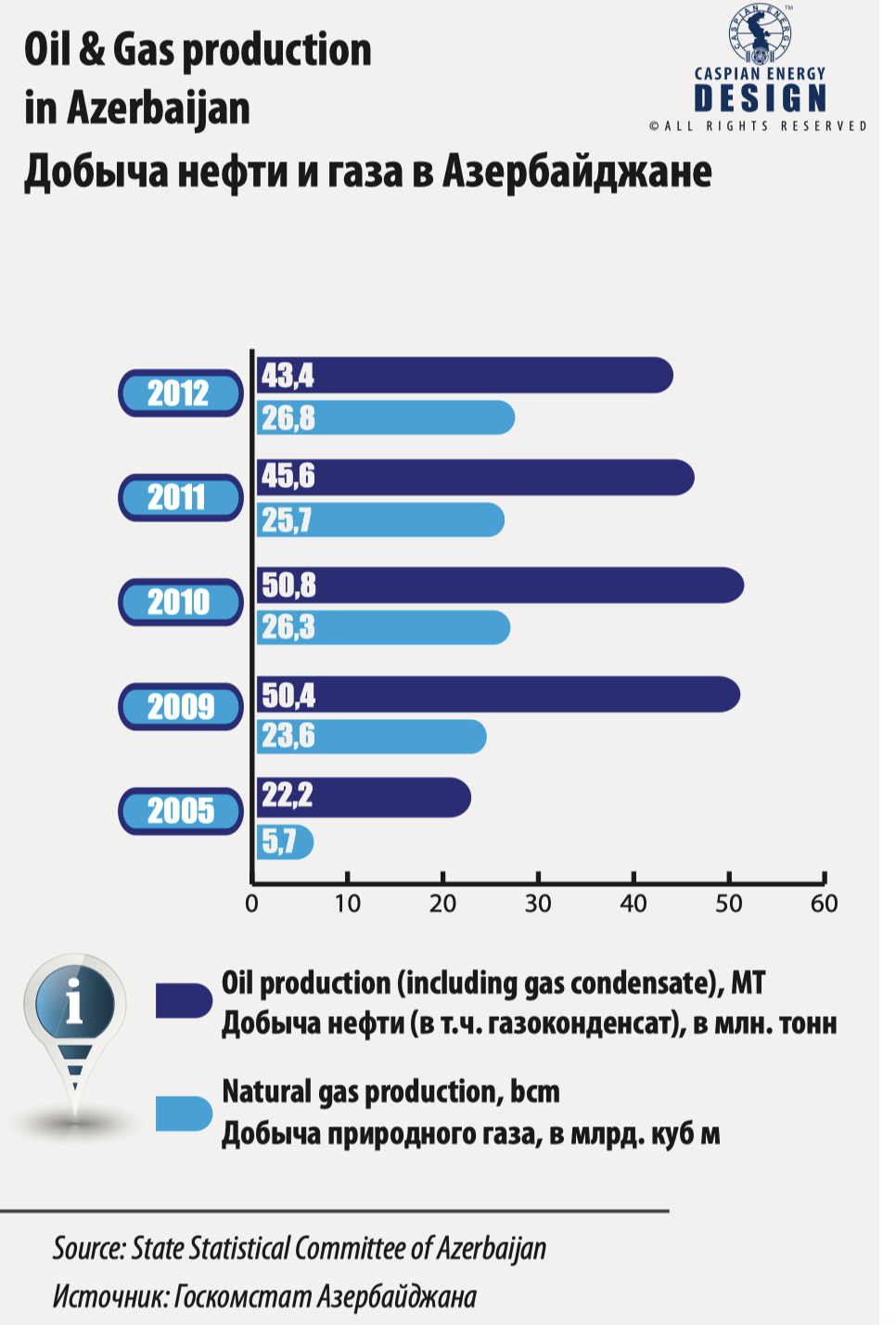
The country produced 30.6 mln tons of oil as early as in 2006. Oil production reached a record level in 2012 when it totaled 50.8 mln tons. In 2011 production slightly reduced and totaled 45.6 mln tons of oil. Production rate reached 43.4 mln tons in 2012. According to the forecasts, production rate shall remain approx on the same level in 2013.
Along with oil production, gas production rate has also grown up by several times over the past 10 years. According to the information of the statistics, domestic gas production totaled approx 6.7 bcm in 2003. It was sufficient to meet Azerbaijan’s gas demands. Gas production level remained approx on the same level in 2004. It was in 2006 when the first considerable gas production growth was fixed. This indicator exceeded 9 bcm.
Gas production on Shah Deniz field, which is considered one of the most high-grade gas condensate fields in the world, began in December 2006. The volume of natural gas production in Azerbaijan totaled almost 17bcm, 23.4 bcm, 26 bcm and 27.9 bcm in 2007, 2008, 2010 and 2012 respectively.
A total of 34 bcm of gas and 71 mln tons of condensate was produced since the commencement of Shah Deniz field development until July 1, 2013. According to the forecasts, Azerbaijan’s gas production volume of 2013 will remain at the level of 2012 and total about 28 bcm.
As a result of successful 10-year cooperation of Azerbaijan with leading energy companies of the world (SOCAR has signed 26 oil-gas production agreements with over 30 companies representing more than 20 countries of the world), oil and gas production grew by 3 and 5.6 times respectively.
Export pipelines
Represented by the State Oil Company (SOCAR), Azerbaijan has continued the implementation of Heydar Aliyev’s oil and gas strategy for already 10 years.
The first oil filled into the pipeline reached the port of Ceyhan in Turkey on 28 May 2006. The official inauguration was arranged on 13 July of the same year at the port of Ceyhan and in Istanbul in the presence of high-ranking officials representing 98 countries. Up to date, the BTC pipeline, which was to transport 50 mln tons of oil per year, has exported over 200 mln tons of Azeri oil to the world market.
Construction of the South Caucasus pipeline Baku-Tbilisi-Erzurum to export gas from the world’s biggest gas condensate field Shah Deniz was launched in 2004 and completed in late 2006. Under the agreement signed with Turkey, the latter is to receive 91.0bn cubic meters of gas by this pipeline within 15 years. The first gas from Shah Deniz was filled into the pipeline in 2007.
Azerbaijan ceased gas imports from Russia in 2007 and started to meet own internal demands from domestic sources. The Azerbaijan-Russia agreement on gas sale and purchase was signed between Gazprom and SOCAR on 14 October 2009. In line with this agreement, Azerbaijan started to transport gas to Russia in January 2010. Alongside Russia and Georgia, Azerbaijan also exports gas to Iran, Greece and Turkey. It supplies 6bn cubic meters of gas to Turkey, 1.6bn cubic meters to Georgia, 400mln cubic meters to Iran, 750 mln cubic meters to Greece. Thus, as a result of the policy carried out under the leadership of Ilham Aliyev, Azerbaijan managed to turn from an importer to a gas exporting country over the past decade and continues consolidating its positions in this sphere.
By developing its oil and gas strategy even further, in order to ensure gas supplies to the EU markets the President of Azerbaijan made the only right decision following the hard negotiations with the concerned countries. The decision was to ensure the interests of both Azerbaijan and its European partners for many decades ahead. Azerbaijan is becoming a leader - the major owner of the South Corridor project.
On 27 June 2012, President of Azerbaijan Ilham Aliyev and Prime Minister of Turkey Recep Tayyp Erdogan signed an agreement on the Trans-Anadolu gas pipeline (TANAP).
The agreement envisages the annual transportation of 16bn cubic meters of gas to Turkey as part of Stage 2 of Shah Deniz development. Of this, 10bn cubic meters are intended for Europe.
Another historical decision was made in June 2013. The Shah Deniz consortium chose the Transadriatic gas pipeline (TAP) of the two corridors as a more profitable one. This corridor will be extended from the Turkish and Greek borders to Italy. Before the Shah Deniz consortium announced its decision, the State Oil Company of Azerbaijan received the determined agreement of the government of Greece on purchase of the two third part of share in DESFA that operates the country’s gas pipeline system. Thus, Azerbaijan owns a project of a deeply integrated gas business. The TAP pipeline is to be connected to TANAP that will be laid between Azerbaijan and Turkey. This will ensure the direct supplies of Azerbaijani gas to European markets.
ICT-sector - e-government
Along with all other spheres of country’s social and economic life, ITC sector was also in the center of special attention in period of Ilham Aliyev’s presidency. By results of 2003, private communication enterprises constituted 65.8% of revenues, while in 2008 this indicator rose up to 80.3%. Through 2008 to 2012, the ICT share in Azerbaijan has grown five times. The ICT growth rate in Azerbaijan comprised 25-32% on average over the past few years. This is higher than the world indicators by 2-2.5 times.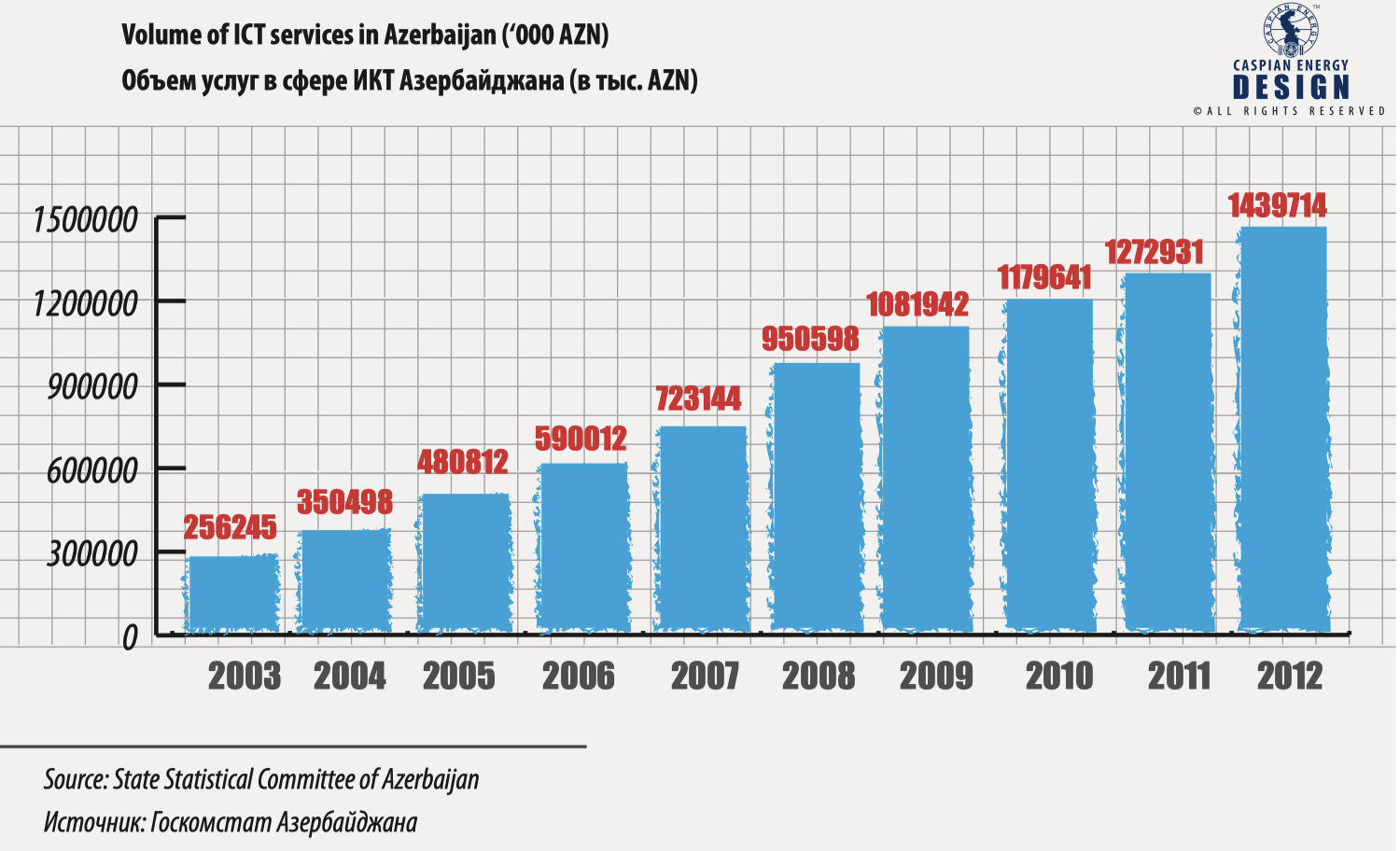
Over the past years, the ICT sector of the country has grown twofold, and over the past 8-10 years, the average annual growth rate made 20-25%. This rate is 2-3 times higher than the average world indicators. The GDP volume reached AZN 54bn last year alone. This made 2.2% over the previous year.
A strategic task in ICT sector of Azerbaijan is to raise the revenue to the level of oil and gas sector by 2020-2025. It is planned to raise the revenues to $9bn by 2020.
First satellite
The orbital survey started in line with the decisions and recommendations of President Ilham Aliyev in 2008. The same year, the head of state signed a regulation ‘On creation of space industry in Azerbaijan and launch of telecommunication satellite into orbit’.
As a result of the successful activity in this direction, the first telecommunication satellite of Azerbaijan- Azerspace-1 was launched into orbit on 8 February 2013. It was launched by rocket carrier Ariane-5 with the three-color flag of Azerbaijan on board from the Kourou spaceport situated in French Guiana in South America.
The launch of the first Azerbaijani telecommunication satellite into orbit, as a significant step towards developing cosmic industry and country’s integration with the international cosmic space, can be also considered a profitable commercial project.
In the nearest future, the Azerspace-1 satellite is to create a favorable platform for such important programs as television and radio broadcasting, raising the control over the broadcasted information, implementation of various e-government projects, including in the sphere of distance learning and e-medicine.
All of our achievements are aimed at serving the Azerbaijani people for many years, President Ilham Aliyev said.
Azerbaijan has a great future, the Azerbaijani leader believes. This can hardly be argued, it is only to wish greater successes and prosperity to present-day Azerbaijan under the leadership of President Ilham Aliyev.