


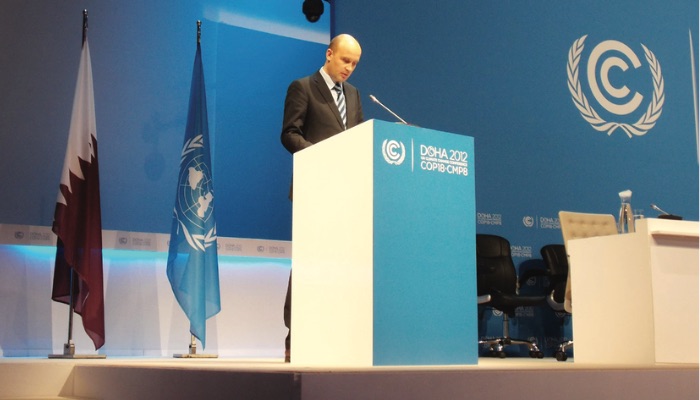
Caspian Energy (CE): Mr. Korolec, Warsaw has chosen the two directions to develop - LNG supplies and production of shale gas - to ensure energy diversification in Poland. This, as is known, implies environmental risks. Which measures are taken in Poland to reduce the effects of these directions on country’s ecology?
Marcin Korolec, Minister of the Environment, the Republic of Poland: First of all, we should remember that extraction of all fossil fuels has certain impact on the environment. Shale gas production also poses risks but that can be well managed. We are committed to preserving highest environmental standards as regards development of all fossil fuels in Poland, including gas, from both conventional and unconventional sources. An overall environmental impact of shale gas exploration is comparable to conventional gas - it is confirmed by the Polish Geological Survey research and numerous inspections conducted by the competent authorities. And you also have to remember climate policy implications. Natural gas, whether from conventional or unconventional sources, is less emissive than other fossil fuels and it is therefore more climate friendly.
Shale gas development in Poland and environmental aspects of its exploration and production are covered by already existing regulations, which are consistent with the EU rules. The so called geological and mining law, governs procedures of granting concession and contains provisions relating to environmental protection during exploration and production phases. Another act covers public participation in environmental protection and environmental impact assessment. We have dedicated institutions in place to supervise fulfillment of environmental protection law and to conduct inspections on drilling sites. So we are well prepared for shale gas development also from the environmental point of view. In my opinion it should not be perceived as a problem for environment. On the contrary, if you consider climate policy as part of environmental policy, shale gas is a clear boon.
Please login or subscribe to read the full article.
Login / Subscribe