


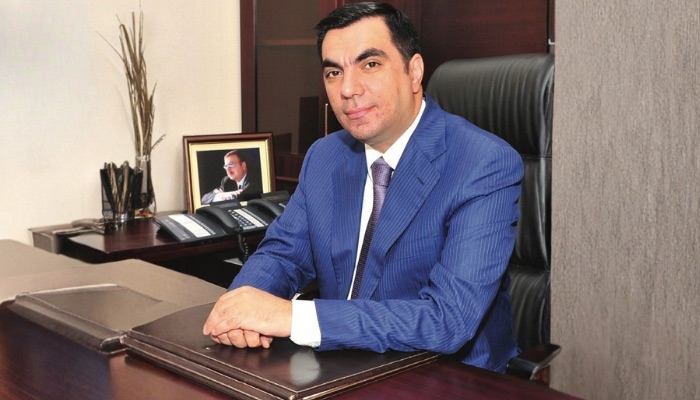
Caspian Energy (CE): Mr. Gasimov, what is the main mission of the Baku Higher Oil School?
Elmar Gasimov, Rector, Baku Higher Oil School (BHOS): SOCAR BHOS was established in accordance with Azerbaijan President Ilham Aliyev’s order dated November 29, 2011.
The prime objective pursued upon creation of BHOS aimed at an advanced teaching of new specialized highly-skilled human resources, speaking fluent English, for their further participation in international projects of SOCAR as well as for oil, gas and chemical industries that drive economic development of Azerbaijan.
The task of establishment of tight cooperation with international higher educational institutions was set upon the creation of the Baku Higher Oil School in order to study their training programs and develop our own teaching program applying their experience.
Having established tight partnership relations with Heriot-Vatt University (Edinburg, Great Britain), we signed an agreement with them for joint training of specialists during 2013-2017. The goal of the agreement was to have specialists (Bachelor degree), majoring in “Oil-gas engineering” and “Chemical engineering”, trained on basis of the teaching program provided by Heriot-Vatt University.
CE: What are the benefits of studying in BHOS?
Elmar Gasimov: A new agreement was signed owing to a fruitful cooperation with the British university Heriot-Vatt. Now, the BHOS students are to receive both the school diploma and the degree of Heriot-Vatt University after graduation.
In general, studying at BHOS offers many other benefits. Firstly, students take their classes in English. They study English and information technologies during the first year. Secondly, studying is free of charge here. Thirdly, graduates of BHOS will be employed at subdivisions of SOCAR.
Acceptance of students for the first academic year in BHOS exceeded all our expectations. Thus, the majority of 116 students studying at BHOS now, scored over 600 points out of possible 700 while passing entrance exams. BHOS is the only educational institution where an average indicator of points scored by students during entrance exams totals 631 points. 11 out of 102 university entrants who get a presidential stipend are the students of BHOS.
BHOS created a learning culture with a high-level training of students and a healthy competition between them. It certainly has a positive impact on mastering of the teaching program by students.
Thus, BHOS has set several important parameters playing a key role in teaching process: it is a strong teacher, a good student, high material-technical base and international teaching programs. Symbiosis of all these parameters distinguishes BHOS considerably from other Higher Educational Institutions.
In general, BHOS occupied the first position in the Higher Educational Institutions rating of SSAC (State Students Admission Commission) during the 2012/2013 academic year and remains a leader on many indicators among them. It is a very big indicator and we will apply all efforts in order to maintain this position.
I do believe the existence of healthy competition both in the community and between the Higher Educational Institutions necessary. This factor promotes all-round development. We have established perfect partnership relations with all Higher Educational Institutions of the country and should do our best to enter the rating of world institutions with high indicators.
CE: To which courses do you attach special importance in study program?
Elmar Gasimov: First of all, I would like to note that we have worked out our own educational program on basis of advanced teaching technologies. Besides, we included information-communication technologies applied in the oil-gas engineering into the study program.
Exams are held in partnership with Heriot-Vatt University at the end of each semester. We think that Heriot-Vatt must control our teaching process once it provides our students with diplomas. In other words, we develop human resources and our partner (Heriot-Vatt University) evaluates them.
All of it contributes to our common work since each teacher realizes that knowledge he conveys to students will be evaluated by an external institution. It also distinguishes us from other Higher Educational Institutions.
CE: What could you tell about innovations that BHOS is developing for near future?
Elmar Gasimov: In coming 2013/2014 academic year we will provide studying on a new major “Process automation engineering”. Meanwhile, construction of the new campus of BHOS in Bibi-Heybat (on the Caspian Sea shore) is underway. After the commissioning of the new campus, we plan to start teaching foreign students and launch Master`s degree program as well as strengthen science-research work.
CE: What contribution does SOCAR make to the work of BHOS?
Elmar Gasimov: Creation of BHOS was initiated by the State Oil Company of Azerbaijan which keeps assisting to the development of the school. BHOS’s operation within SOCAR forms the basis of our development. Owing to public influence and image of SOCAR, people feel confident about quality of teaching and the future of the Baku Higher Oil School. We built our work in accordance with requirements of SOCAR.
Apart from this, SOCAR is currently building large oil-gas and petrochemical complexes both in the country and beyond it. In this regard, the necessity for training of thousands of specialized human resources arises. Therefore, no problems will arise with the employment of our graduates in our enterprises. But if graduates wish to work for other oil companies, they will be able to make a choice themselves. We certainly hope our graduates would apply their knowledge and skills in our national State Oil Company. Creation of BHOS and success it gained within a short period of time acknowledges President of Azerbaijan Ilham Aliyev’s slogan “We turn black gold into human capital assets”.
Using this opportunity, I would like to wish success to the whole staff of Caspian Energy journal. The journal reflects successes of Azerbaijan’s oil strategy and its future dividends. The journal will become a source for studying our multisided history in centuries.