


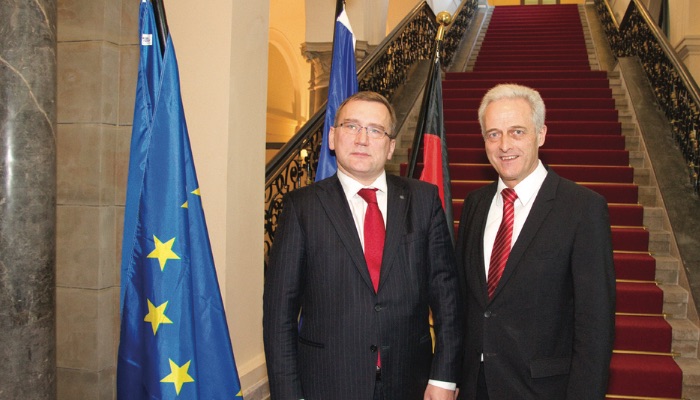
Caspian Energy (CE): Mr. Minister, how did the European crisis affect the economy of Estonia? What are the major growth indictors of Estonian economy?
Juhan Parts, Minister of Economic Affairs and Communications of Estonia: The bottom of the crisis in Estonia was in 2008-2009 and since then the situation has constantly improved. Estonia has experienced solid employment and economic growth (8.3% in 2011 and 3.2% in 2012). But we have not reached the level before the crisis yet – as it was partly fuelled by unsustainable credit growth, fast recovery would indicate another boom.
Unlike the larger and more developed economies in Western Europe, Estonia did not have any realistic alternatives to internal devaluation as a response to the crisis. For those who understand the context of Estonian economic policymaking, it is clear that external devaluation of the currency was not an option. Estonia has not pursued independent monetary policy for the last 20 years.
Fiscal expansion was not an option. The government’s aim is to spend no more than it is able to collect in taxes, even during recessions or periods of slow growth. This is one of the reasons the level of government debt in Estonia is the lowest in the European Union.
Unlike many other countries in Europe, Estonia went through fiscal tightening during the crisis. Fiscal consolidation accounted cumulatively for 16 percent of GDP. In the depths of the recession in 2009, when the economy was contracting more than almost any other country in the European Union, fiscal tightening accounted for 9 percent of GDP.
While the size of the fiscal consolidation was important, the composition of the consolidation was also significant. Estonia’s fiscal tightening included significant measures on the expenditure side, as opposed to relying almost entirely on revenue increases. Fully two thirds of fiscal consolidation measures were on the expenditure side, and these measures were wide ranging. Estonia reformed health care benefits and enacted an 8 percent reduction in the health insurance budget, in addition to limiting the increase in pensions. In addition to benefit and pension measures, Estonia also made real cuts to operating expenditures, defense spending, and farming subsidies.
Alongside the aforementioned expenditure measures, one third of the fiscal tightening was on the revenue side. Estonia increased the level of unemployment insurance contributions to 4.2 percent, in part to deal with the elevated number of unemployed people. The government also raised excise taxes on alcohol, fuel, and tobacco, and raised the value-added tax from 18 to 20 percent. Estonia also temporarily stopped the step-by-step lowering of the income tax rate that had been pursued over a number of years.
As a result of these measures, Estonia has remained a beacon of fiscal prudence, keeping the public sector debt level at around 7 percent of GDP, the lowest in Europe and one of the lowest levels in the world. The overall public sector budget deficit was 1.7 percent of GDP in 2009 and against all odds we had surplus of 0.1 in 2010 and 1 percent in 2011.
Our response to the crisis was not limited to fiscal consolidation. Estonia also carried out labor market reforms. The government boosted financial support by speeding up the use of EU structural funds for public investments in transport infrastructure as well as for Estonian companies throughout the crisis by supporting existing and new entrepreneurs in creating jobs.
The government set up programs that help job seekers to increase their qualifications, fund training programs for the unemployed, and offer internships. The labor market services have been made more accessible, quality has been improved, and labor markets have become more flexible.
The Estonian government actually increased spending on different company support measures, especially focusing on companies with an emphasis on exports. As it became more and more difficult for competitive companies to find any access to financing, the Estonian government stepped in and created a whole new set of financial measures to make it easier for companies to go forward with their investments.
The total sums for revitalization of the economy were actually at the OECD average levels, with a different focus—instead of increasing consumption, we focused on maintaining the competitiveness of our companies, for example by supporting investments in research and development.
Please login or subscribe to read the full article.
Login / Subscribe