


The Czech Republic ranks among the most advanced economies in the EU, with GDP growth projected at 2.4% in 2025 and 2.2% in 2026. This momentum is supported by declining inflation, strong demand from households, and rising real wages, while the industrial sector also makes a notable contribution. The key drivers of the economy are automotive manufacturing, machine building, electronics, and steel production, while agriculture produces grains, vegetable oils, and hops. However, the ongoing war in Ukraine, restrictive monetary policy, the energy crisis, and a wave of inflation, which has affected the prices of goods and services, constrain development. High levels of disparity in median equivalized household income across the EU leave their mark on the future of the EU as a unified economic bloc. According to Euronews, a comparison of household incomes across EU countries showed that the Czech Republic ranked 17th, with a figure of €15,133, approximately 378,000 CZK. It surpassed households in Latvia, Portugal, Croatia, Lithuania, Poland, and Greece. Last year, the highest absolute figures were recorded in Luxembourg, where the median equivalized net income exceeded €50,000 (around 1.3 million CZK). The EU-wide average in 2024 amounted to €21,582 (approximately 539,000 CZK).
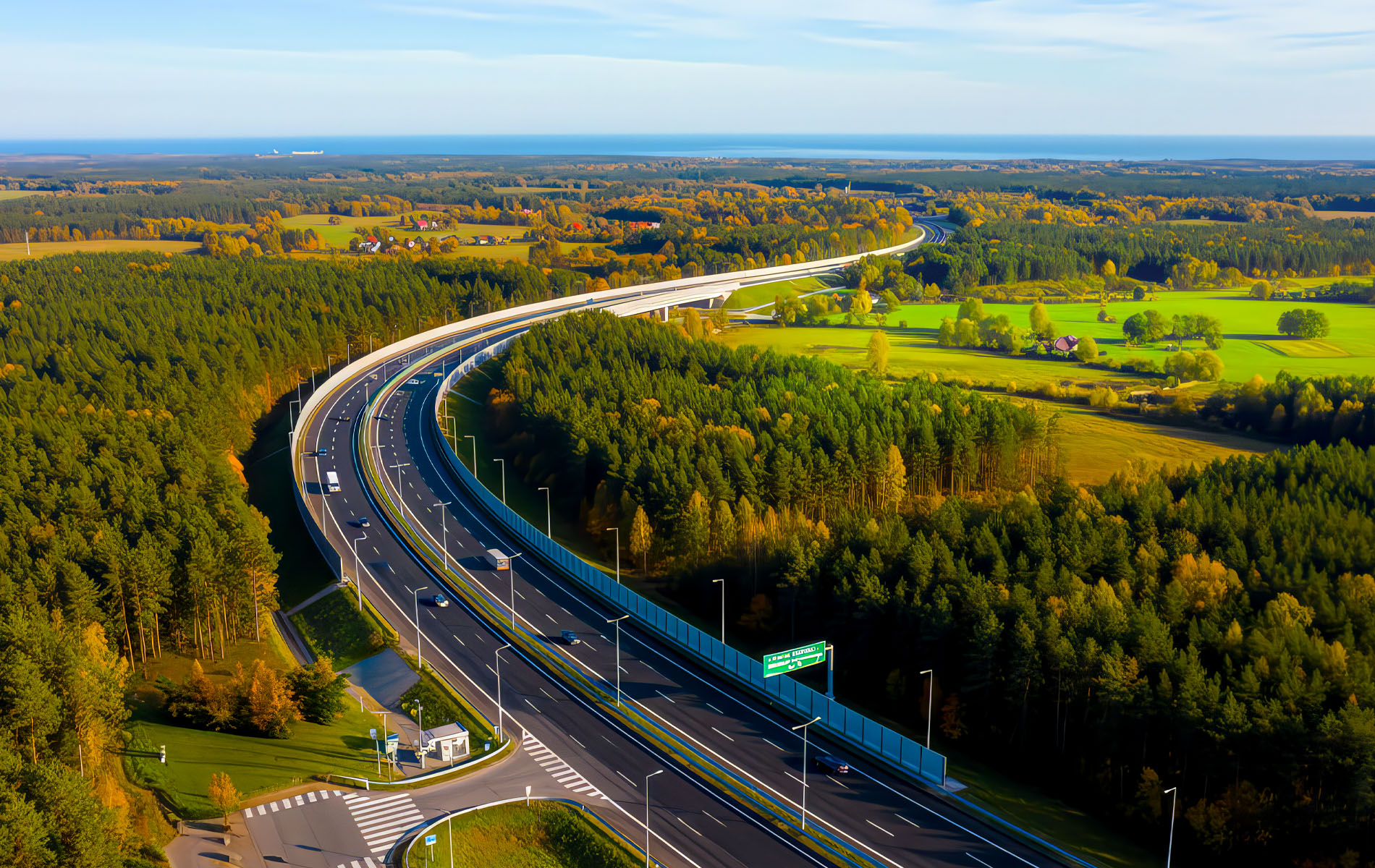
Trans-European transport routes are developing in the Czech Republic, boosting its appeal as an investment destination. In an official video address in October 2025, Polish Prime Minister Donald Tusk announced that the Czech Republic had gained access to the sea. This does not refer to the completion of the final section of Poland’s S3 highway from Świnoujście to Łunowo up to the Międzyzdroje junction, where the full profile of the four-lane expressway is displayed. It now fully crosses Poland from north to south. Drivers from Lubawka, on the border with the Czech city of Hradec Králové, will be able to access the highway, which leads directly to the Baltic Sea. “The S3 route has connected the entire western part of Poland and the Czech Republic with the Polish Baltic coast and its ports.” According to the Polish government’s website, the S3 expressway is part of the Baltic–Adriatic Trans-European transport corridor and forms a section of the European route E65, which connects Malmö in Sweden with the Greek city of Chania on Crete, covering a total distance of approximately 3,950 kilometers.Source: https://www.idnes.cz/ekonomika/doprava/polsko-s3-dalnice-tusk.A251024_094641_eko-doprava_ven
This is of key importance for the development of the Szczecin–Świnoujście port complex and the operation of existing infrastructure, including the ferry terminal connecting Poland with Scandinavia. The missing 40-kilometer section of the Czech D11 highway, from Jaroměř to the state border, is scheduled for completion in 2028.
Access to the sea for Central European countries can be provided not only by Poland, but also by Azerbaijan and the countries of Central Asia through the export of green energy. The Trans-Adriatic Pipeline (TAP) outlet to Central Europe will help households balance their incomes, reduce energy costs, and contribute to the overall competitiveness of the European economy. “Over the five-year period, TAP has confirmed Azerbaijan’s strategic role in strengthening Europe’s energy security and diversifying gas supplies, bolstered our country’s reputation as a reliable energy partner, and opened broad opportunities for integration into new markets,” the Ministry of Energy of the Republic of Azerbaijan stated.
Thanks to TAP, Azerbaijan has become the fourth-largest supplier of pipeline gas to the European Union, accounting for a 7% share. To date, 51.2 billion cubic meters of gas have been delivered to European countries via TAP, of which 42.9 billion cubic meters went to Italy, 4.9 billion to Greece, and 3.4 billion to Bulgaria. “Over the first nine months of the current year, a total of 8.5 billion cubic meters of gas have been delivered via TAP, including 7 billion cubic meters to Italy, 0.8 billion to Greece, and 0.7 billion to Bulgaria,” the Ministry stated.
As noted by the Ministry, the countries already receiving natural gas via TAP and showing interest in increasing their supply volumes include Italy, Bulgaria, and Serbia.
Overall, many European states continue to emphasize their sustained interest in cooperation in this area. Work is currently underway to organize TAP gas deliveries to Albania, starting in 2026.
The increase of TAP supplies by an additional 1.2 billion cubic meters by 2026 was approved in January 2024. Since 2022, a High-Level Energy Dialogue has been underway under the co-chairmanship of the Ministry of Energy of Azerbaijan and the European Commissioner for Energy.
“Expanding the Southern Gas Corridor and increasing supply volumes are priority topics of this dialogue. The prospects for further increasing gas deliveries to Europe directly depend on the policies of the European Union,” the Ministry stated.
TAP is an integral part of the 3,500-kilometer Southern Gas Corridor, which delivers gas extracted from the Shah Deniz-2 field in the Azerbaijani sector of the Caspian Sea first to Türkiye, and from there to Europe.
The shareholders of TAP are: BP (20%), SOCAR (20%), Snam S.p.A. (20%), Fluxys (19%), Enagás (16%), and Axpo (5%).
In Azerbaijan, programs in the field of green energy are being steadily implemented as market conditions allow. Additionally, the Trans-Caspian Corridor will enable the integration of renewable capacities with the countries of Central Asia. President Ilham Aliyev summarized this policy as follows: “Today, the development of renewable energy occupies a leading position among new sectors. Azerbaijan is also at the forefront in this area. Currently, Azerbaijan is implementing large-scale renewable energy projects. In just the Karabakh and Eastern Zangezur regions, more than 30 hydropower plants have been built over the past five years, with a combined generating capacity of over 300 megawatts. Construction of solar and wind power plants is also underway. Recently, the foundations were laid for two 100-megawatt plants in the Jabrayil district, alongside a third solar power plant with a capacity of 240 megawatts. By 2030, the total generating capacity of solar, wind, and hydropower plants is expected to reach 6,000 megawatts. This represents a major industrial sector and an additional avenue for the development of industry.”
Azerbaijan is implementing several international projects for the transmission of green energy in the region. The wind energy potential of the Caspian Sea is being developed in cooperation with the Caspian Breeze consortium (ACWA Power, Masdar, and SOCAR Green) and Chinese companies. Of the planned 6 GW, 4 GW will be exported via the Caspian–Black Sea–Europe Green Energy Corridor starting in 2032. The project has already been submitted for inclusion in the 10-year development plan of the European Network of Transmission System Operators for Electricity (ENTSO-E).
Moreover, the agreement on the Trans-Caspian Energy Corridor, signed between Azerbaijan, Kazakhstan, and Uzbekistan, will, for the first time in history, integrate the power systems of these countries. According to the International Renewable Energy Agency (IRENA), Central Asian countries made significant progress in transitioning to green energy between 2015 and 2024. In 2023, the total capacity of renewable energy facilities in Central Asia exceeded 17.3 GW, representing a substantial increase of 26.6% compared to 2018.
The project is being managed by the joint venture “Green Corridor Alliance,” headquartered in Baku, while the feasibility studies are being conducted with financial support from the Asian Development Bank and the Asian Infrastructure Investment Bank. Consequently, the development of transport infrastructure, pipelines, and renewable energy exports will contribute to the economic growth of both the Czech Republic and other countries within the European economic area.