


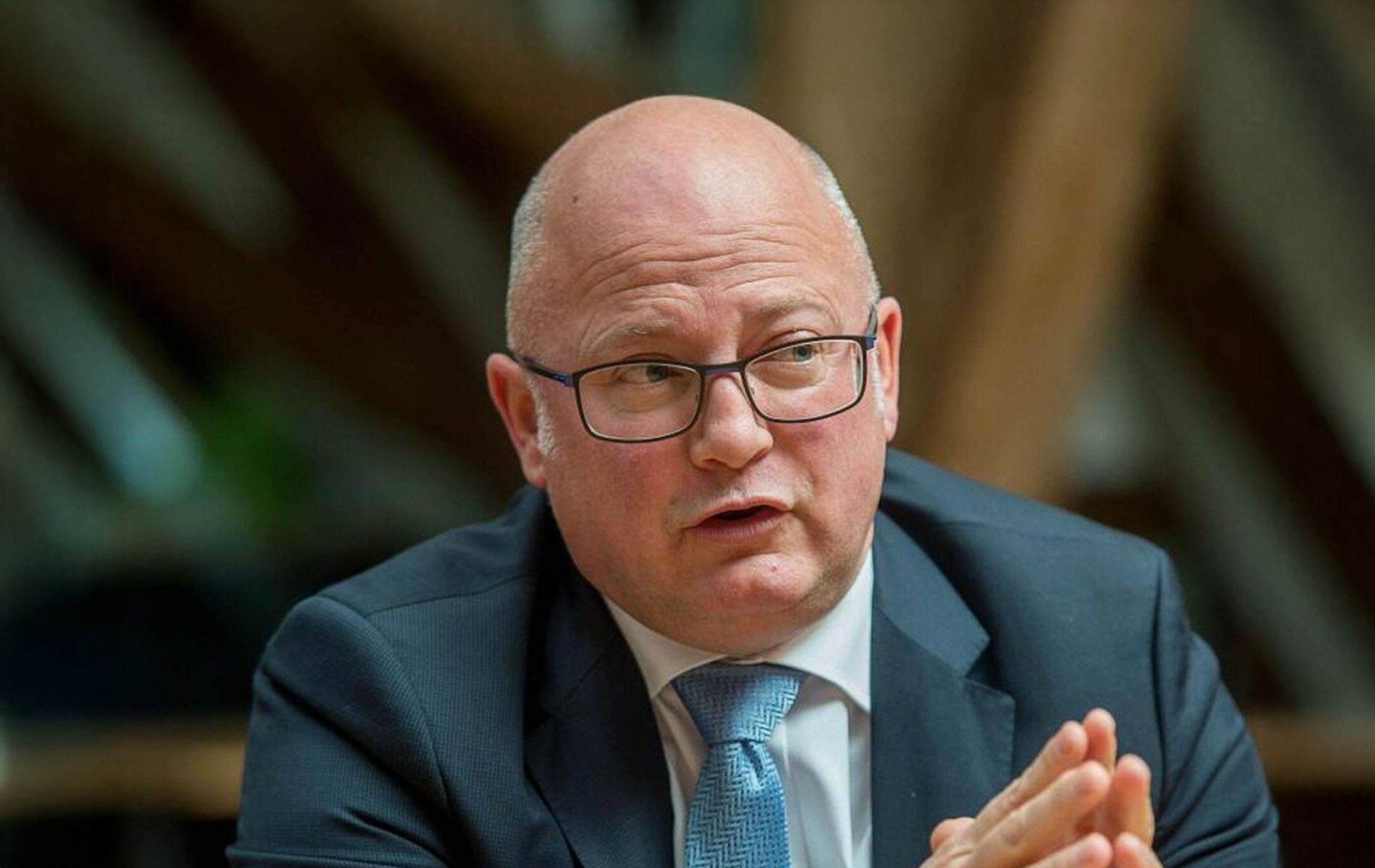
Caspian Energy (CE): What are the top priorities of Belgium’s federal government in advancing the ecological transition over the next five years, particularly in sectors with the highest emissions?
Jean-Luc Crucke, Minister of Mobility, Climate and Ecological Transition of Belgium: Allow me to indicate first that, as Belgium is a federal state, the regional governments have important competences when it comes to the ecological transition.
At the federal level, we will play a leading role in circular economy, in biodiversity protection and restoration, in norms and products (chemicals), and in climate change mitigation and adaptation.
The main carbon emitting sectors are energy generation, industry, buildings, and mobility/transport.
Firstly, the decarbonization of the energy system has been ongoing for two decades now, with the deployment of renewable energy and other zero carbon energy sources. Our goal is to continue promoting the production of renewable energy, especially offshore wind, given the strategic position and configuration of the North Sea.
Secondly, our industrial base has also been progressively decarbonizing in the past two decades, within the framework of the EU Emission Trading Scheme (carbon market operating across the European Union). We need to expand the scheme and accompanying efforts to support the decarbonization of smaller businesses, which will be done through various instruments such as fiscal advantages to invest in clean technologies (industrial processes, mobility or building). Hard to abate industries will require alternative low carbon fuels, such as bio-based and RFNBOs. We work on both in a transversal way, considering their possible use in all sectors, trying to find the balanced approach between energy efficiency (to reduce the demand), direct electrification and these alternative fuels considering the importance to ensure sustainability, the limitation of the resource, and technological constraints. Given the density of population in Belgium, and consequently the limited resources, we also need to seriously consider importing these fuels, especially renewable hydrogen and its derivative.
Thirdly, the building stock needs to deeply renovate, to significantly increase its performance and therefore reduce its energy consumption, and switch to renewable energies, with renewable electricity at the forefront. Most of the competences are at regional level, but the federal government supports the regional strategies to decarbonize the stock through fiscal incentives, and by mainstreaming progressively the use of low carbon materials, to tackle the carbon life cycle of buildings. Belgium also applies a high recycling rate of construction material.
Globally, electrification is a key pillar for all sectors, and the progressive phasing out of fossil fuels is another one, building on existing alternatives.
Please login or subscribe to read the full article.
Login / Subscribe