



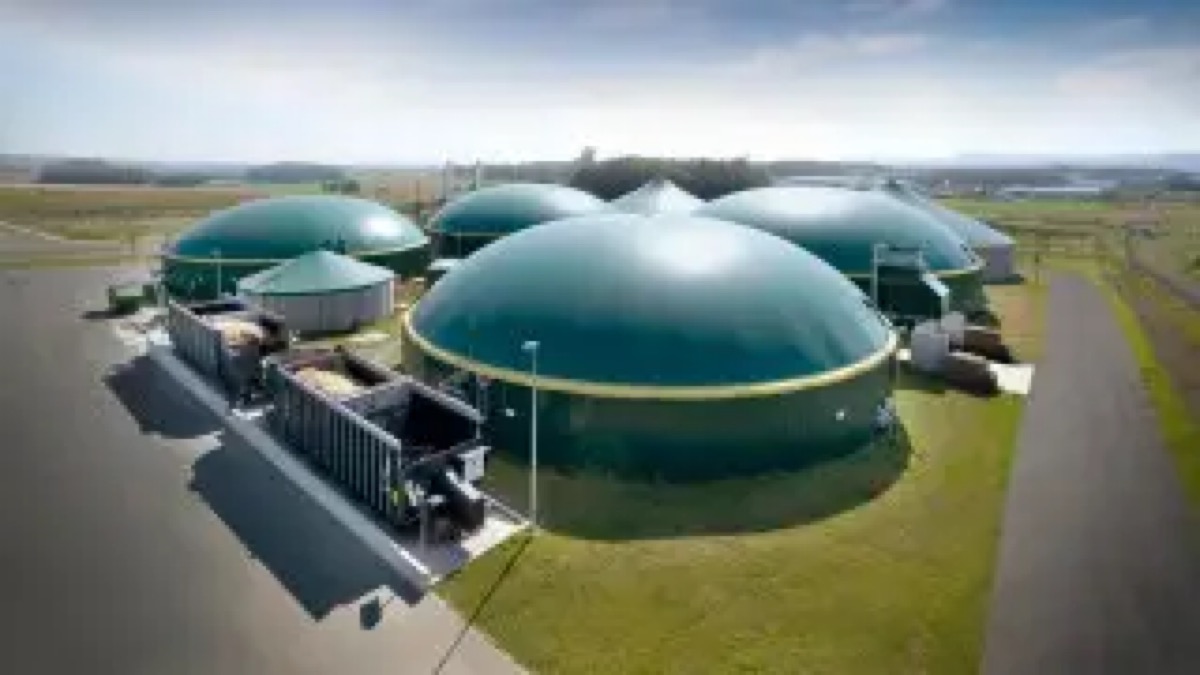
A large-scale investment project for the construction of a network of biogas plants with a total value of more than 20 billion tenge is planned to be implemented in Kazakhstan. This was reported to tengrinews.kz by Erik Yakubaev, a representative of ZOR-Biogas LLP.
Kazakhstan plans to establish infrastructure for the deep processing of organic waste — from the agro-industrial sector, the food industry, and municipal solid waste — by building a nationwide network of high-tech biogas plants.
Three regions have been selected for the implementation of the pilot project: Akmola, Almaty, and Turkestan regions.
The transition to biomethane (renewable natural gas) is a key trend in the global biogas market, involving the conversion of raw biogas into biomethane. By removing carbon dioxide and impurities, producers create a fuel that is chemically identical to natural gas.
According to the IEA’s summer 2025 report, global production of biogas and biomethane approached 50 billion cubic meters in 2023. Europe, as the world’s largest producer, accounted for nearly 50% of total output, followed by China, the United States, and India, ranking second, third, and fourth respectively. Despite this significant production volume, its share in the global energy system remains relatively low.
In 2023, the global biogas production base was still relatively small, amounting to only about 10 billion cubic meters, which is equivalent to 0.2% of natural gas demand. However, production is demonstrating rapid growth, with an average annual growth rate of around 20%.
Over a three-year period, the share of biogas and biomethane in the global energy balance had reportedly reached 5–10% by 2025, according to Yahoo Finance.
The global biogas market was valued at USD 171.19 billion in 2025 and is expected to grow from USD 178.88 billion in 2026 to USD 265.60 billion by 2035, reflecting a compound annual growth rate (CAGR) of 4.49%. The European biogas market dominated in 2025, accounting for the largest share at 42.66%.
Cons
Despite its enormous potential, the biogas industry faces numerous obstacles, primarily including higher production costs compared to traditional fuels; complex and lengthy licensing procedures (usually taking from 2 to 5 years, and sometimes up to 7 years); high feedstock logistics costs; a fragmented value chain; and the absence of unified technical standards.
In addition, major challenges include difficulties in project financing, ensuring stable feedstock supply, complicated negotiations over offtake agreements, and insufficient supporting infrastructure. From an environmental perspective, methane leakage remains a particularly critical risk. Leaks caused by improper management typically account for 2–5% of production capacity, potentially seriously undermining the greenhouse gas emission reduction benefits of biogas.
For example, in Tajikistan, the development of biogas energy is primarily linked to electricity shortages and vulnerability to climate change. The authorities have adopted a “green economy” strategy; however, in practice, biogas remains a localized solution. Attempts to introduce bioreactors with the support of international grants have not generated sustainable demand. Experts note that once donor funding ends, such projects often cease operations.
The main barriers include the high cost of equipment and technical limitations. Biogas plants cost between USD 5,000 and 17,000 and operate efficiently only within warm temperature ranges, thus failing to address winter energy deficits.
Nevertheless, studies confirm the practical benefits of the technology. Households with bioreactors reduce firewood consumption by 80–90%, save on gas expenses, and obtain organic fertilizers. The key problem remains the lack of accessible financing and a comprehensive regulatory framework. Without these conditions, biogas in Tajikistan remains merely a local solution rather than an integral part of the national energy system.
Pros
A growing trend is emerging in the use of biogas as a feedstock for biohydrogen production. Through steam methane reforming (SMR) of biomethane, enterprises are able to produce hydrogen while reducing their carbon footprint.
Rising consumer demand: Consumer preference for environmentally friendly energy solutions and the adoption of biogas technologies are driving innovation toward more sustainable and eco-safe practices.
Capture and utilization of bio-CO₂: During the biogas upgrading process, the producer avoids releasing carbon dioxide into the atmosphere. Instead, this high-purity bio-CO₂ is captured and used in the food industry, greenhouses, or as a feedstock for synthetic e-fuels.
Expansion in heavy transport: Biogas is increasingly being adopted as a fuel solution and is gaining momentum as a standard energy source for heavy-duty trucks, maritime transport, and public transportation, contributing to the achievement of net-zero carbon emission targets.
